The 1970s File Feature
I'll Be Right Here
"I'll Be Right Here" — Tyrone Davis's Summer Soul Statement The summer of 1970 was a pivotal moment for soul music. Marvin Gaye was finishing What's Going On…
01 The Story
"I'll Be Right Here" — Tyrone Davis's Summer Soul Statement
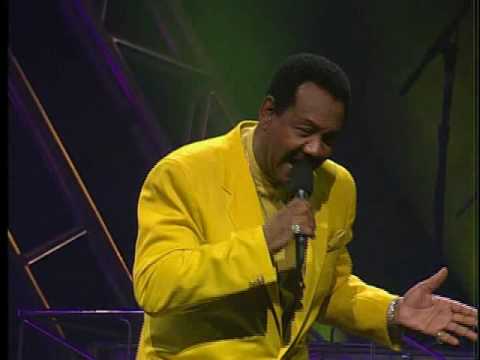
The summer of 1970 was a pivotal moment for soul music. Marvin Gaye was finishing What's Going On. Curtis Mayfield was developing the social consciousness that would define the best of his 1970s output. And on the Chicago soul circuit, Tyrone Davis was quietly becoming one of the genre's most consistent and underappreciated presences. His "I'll Be Right Here" arrived in the summer of that year, climbing the Hot 100 over nine weeks and reaching a peak that confirmed him as a genuine force in mainstream soul.
Tyrone Davis and the Chicago Sound
Tyrone Davis had emerged from the Chicago soul scene in the late 1960s with a voice that combined Southern warmth with Northern urban directness, a combination that reflected his own journey from Georgia to Chicago and that suited the emotional territory he was drawn to as a performer. His 1968 debut single "Can I Change My Mind" had reached number five on the Hot 100, establishing him immediately as a major presence in soul music and setting a commercial standard that he would spend the following decade trying to match. His recordings for Dakar Records gave him a consistent commercial home, and the label's production approach suited his voice perfectly.
The Song's Promise
"I'll Be Right Here" is built around one of the most fundamental romantic commitments available in the lyrical vocabulary of soul music: the promise of presence and constancy. In a genre that had spent years mapping the territories of longing, heartbreak, and erotic desire, a song about simple, reliable presence offered something that audiences of 1970 received with particular warmth. The cultural moment, with its various forms of upheaval and uncertainty, made the promise of stability in a personal relationship feel especially meaningful. Davis delivered the central commitment with the kind of unconditional conviction that his voice was particularly suited to carry.
Nine Weeks Building to 53
The song debuted on the Billboard Hot 100 on June 27, 1970, at position 95. It climbed steadily: to 70, then 62, then 54, where it held for two weeks, before reaching its peak of 53 on the week of August 1, 1970. Nine weeks on the Hot 100, peaking at number 53 on August 1, 1970: a solid mid-chart showing for a soul record in a summer when the genre was producing some of its most significant work. The steady climb over nine weeks suggests consistent radio support built through audience discovery rather than concentrated promotional push.
Soul Music's Promise Tradition
Soul music's lyrical tradition is rich with promises: promises of love, of fidelity, of return. These promises do different things at different cultural moments; in the context of 1970, with its various forms of social disruption, the interpersonal promise took on additional resonance. Tyrone Davis specialized in this kind of emotional directness, in songs that said clearly what the narrator felt and what they were committing to, without the ambiguity or the irony that was beginning to characterize other corners of popular music as the decade changed. His audience valued that straightforwardness.
A Career of Consistent Quality
Tyrone Davis continued recording through the 1970s and beyond, racking up an impressive string of R&B chart entries while maintaining a lower profile in the pop mainstream than his consistent quality might have predicted. "I'll Be Right Here" represents a mature entry in his early catalog, a track from the period when his voice was at its most commanding and his instinct for material at its sharpest. His legacy in Chicago soul is secure among those who know the genre well, even if his name does not appear in the popular histories as often as his contributions merit.
Find a warm summer evening, put this on, and hear what it sounds like when a man means every word he sings.
"I'll Be Right Here" — Tyrone Davis's singular moment on the 1970s charts.
02 Song Meaning
The Power of Staying: The Meaning of "I'll Be Right Here"
Soul music's great subjects are not all dramatic. Alongside the heartbreak and the erotic longing and the social consciousness, the genre has always made room for a quieter kind of song: the song that simply declares love's presence and commitment without requiring catastrophe or ecstasy as its occasion. "I'll Be Right Here" belongs to this quieter tradition, and understanding its meaning requires appreciating why constancy is, in its own way, as emotionally rich a subject as any other in the soul catalog.
Constancy as Drama
The promise of presence sounds simple but contains within it a recognition of how often presence fails. To say "I'll be right here" is implicitly to acknowledge that people leave, that constancy is not guaranteed, that the promise has value precisely because it is not the automatic outcome. The soul tradition understood this complexity and built songs around the promise of presence that were not simple declarations but affirmations against the background of all the ways human relationships fail at exactly this level. Davis's delivery makes this complexity audible without making it explicit.
Tyrone Davis's Vocal Authority
The meaning of a commitment song depends almost entirely on whether the performer convinces the listener that the commitment is real. A technically capable performance of this material is not sufficient; the voice must carry something that sounds like genuine feeling rather than professional simulation. Davis had the kind of vocal presence that could make this distinction credibly, which is precisely why he was consistently successful in this emotional territory. His voice has a warmth and a weight that suggests experience, not the bright enthusiasm of someone making promises they don't yet understand, but the measured confidence of someone who knows what they're offering.
The 1970 Moment for Soul
By 1970, soul music was expanding in multiple directions simultaneously. Social consciousness was becoming a viable mode for major commercial artists, and the genre's traditional romantic focus was being supplemented by political and communal concerns. In this context, a beautifully executed commitment ballad occupied an interesting position: it was traditional in its emotional territory but not reactionary, because the personal and the political have never been as separable as the analytical tendency to split them suggests. Constancy in personal relationships was not a trivial subject in 1970; it was one way of talking about what people needed from each other when everything outside the relationship felt unstable.
What Chicago Soul Contributed
The Chicago soul sound that Tyrone Davis was part of had specific qualities that distinguished it from the Detroit Motown Sound or the Memphis Stax sound. It was somewhat less polished than Motown, somewhat warmer and more gospel-rooted than some of the harder Stax productions, and it had a particularly close relationship to the church traditions of the Midwest. Davis's voice carried those church roots audibly, giving his commitment songs a quality of witnessed declaration, the feeling that what was being said was being said in the presence of something larger than the two people involved in the relationship.
The Universal Address
Songs about presence and constancy are among the most universally accessible in the popular music repertoire precisely because they speak to a need that is nearly universal across cultures and generations. The specific sonic context of 1970 Chicago soul will not be familiar to every listener who finds this song, but the emotional proposition, the simple, serious promise to remain, reaches across those specificities. That is what makes great soul music durable: the particular vehicle may be of its time, but what it carries travels further.
→ More from Tyrone Davis
View all Tyrone Davis hits →
→ More from the 1970s File
View all 1970s hits →




Keep digging