The 1970s File Feature
Turn Back The Hands Of Time
"Turn Back the Hands of Time" — Tyrone Davis Chicago Soul's Finest Hour The spring of 1970 was an extraordinary moment in American soul music. Marvin Gaye wa…
01 The Story
"Turn Back the Hands of Time" — Tyrone Davis
Chicago Soul's Finest Hour
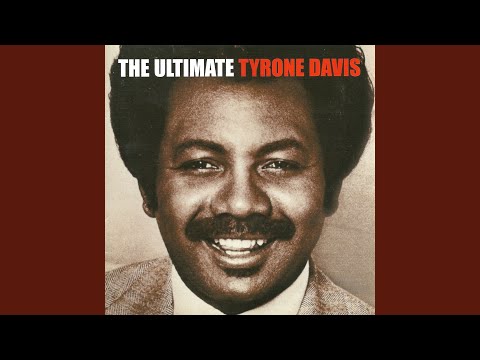
The spring of 1970 was an extraordinary moment in American soul music. Marvin Gaye was nearing the recording of What's Going On, Al Green was beginning his run at Hi Records in Memphis, and in Chicago, a singer who had been developing his craft for years was about to deliver the record that would define his career and his legacy. Tyrone Davis had been recording for Dakar Records since the late 1960s, and he had a regional following built on the deep Chicago soul circuit that was one of the most demanding and musically sophisticated audiences in the country. Turn Back the Hands of Time arrived in March 1970 and took everything he had built to a national level that few would have predicted from the modest chart history he carried into that year.
Davis had scored his first significant chart success with "Can I Change My Mind" in 1968-1969, a single that reached the top five on the R&B chart and crossed over to the Hot 100 meaningfully. That success had established him as a genuine commercial proposition, not merely a local talent, and the follow-up work he released in 1969 and into 1970 kept him visible on radio and in the clubs that were the lifeblood of Chicago soul. Turn Back the Hands of Time was the record that moved him from promising to significant.
The Recording and Its Architecture
The production of Turn Back the Hands of Time was handled at the Chicago facilities that served Dakar Records, and the arrangement reflected the sophisticated orchestral soul approach that characterized the best Chicago productions of the era. The song was written by Jack Daniels and Bonnie Thompson, a songwriting team whose understanding of what Tyrone Davis could do with the right material proved prescient. The track opens with an orchestral introduction that sets a tone of emotional weight before Davis's voice enters, and when that voice does arrive, the listener understands immediately that what they are hearing is a vocalist operating at his absolute peak.
Davis had a tenor quality that could convey vulnerability and pleading without sacrificing the masculine authority that Chicago soul audiences demanded of their artists. The arrangement supported him with the kind of lush orchestration that might have overwhelmed a less commanding voice, but Davis rode it with ease, finding spaces in the production to insert the kind of ad-lib embellishments and passionate interjections that gave Chicago soul its distinctive character.
An Extraordinary Climb to Number 3
The commercial performance of Turn Back the Hands of Time was exceptional. The single debuted on the Billboard Hot 100 on March 21, 1970, entering at number 72. The ascent over the following weeks was rapid and sustained. From 72, the track moved to 47, then 32, then 22, then 16, continuing its climb until it reached a peak of number 3 on May 23, 1970, where it held for two weeks. The record spent thirteen weeks on the Hot 100 in total, a run that confirmed its status as one of the major crossover soul records of the year.
A number-three peak in 1970 placed Turn Back the Hands of Time in elite company on the chart. The records that held the top two positions when Davis peaked at three reflected the extraordinary commercial strength of that moment in American music. For Davis to reach the top three in that environment reflected both the quality of the record and the genuine enthusiasm of a broad radio audience that crossed racial and regional lines.
Tyrone Davis and the Chicago Tradition
Chicago's contribution to soul music is sometimes overshadowed by the Memphis and Detroit stories, but the city produced a distinct and powerful soul tradition with its own aesthetic and its own stars. Tyrone Davis was one of the central figures of that tradition, a vocalist who embodied the particular combination of gospel fervor and blues pragmatism that made Chicago soul so emotionally resonant. His approach was less smooth than the Motown style and less raw than the roughest Memphis recordings; it occupied a middle ground that was simultaneously sophisticated and deeply felt.
The success of Turn Back the Hands of Time opened significant doors for Davis and allowed him to build the long career that followed, one that continued to produce R&B chart entries throughout the 1970s and beyond. He was not a one-record wonder but an artist with a genuine body of work, and the 1970 hit gave him the platform to demonstrate that over time.
A Record That Deserves to Be Heard
Among the great soul records of 1970, Turn Back the Hands of Time deserves a place in any serious discussion. The vocal performance alone justifies that claim: Davis gives everything to the song, navigating its emotional arc with conviction and skill, and the arrangement meets him at the level his performance demands. The combination of orchestral sophistication and deep soul feeling that the record achieves was exactly what the best Chicago soul was capable of at its peak, and this record represents that peak clearly. Turn it up and let the spring of 1970 come back in all its complicated, glorious detail.
"Turn Back the Hands of Time" — Tyrone Davis's singular moment on the 1970s charts.
02 Song Meaning
"Turn Back the Hands of Time" — Regret, Longing, and the Geometry of Lost Love
Time as the Central Metaphor
The wish to undo a mistake is one of the oldest emotional subjects in popular music, and soul music in particular has always given that wish its most direct, most aching expression. Turn Back the Hands of Time builds its entire emotional world around the desire to reach back into the past and correct a choice that led to loss. The clock as metaphor for romantic fate works here because time genuinely does function in the way the lyric suggests: once a moment has passed, no effort of will or feeling can recover it, and the awareness of that irreversibility is what transforms ordinary regret into something that sounds like grief.
Tyrone Davis sings the song as though the specific loss it describes has happened to him personally, which is the most powerful thing a soul vocalist can do with a lyric. The mechanics of the fantasy, if the clock could be turned back, if the hands could be moved to the moment before the wrong choice was made, are rendered with enough emotional specificity that the listener is drawn into the scenario rather than observing it from outside.
The Soul Tradition of Romantic Vulnerability
Chicago soul, like all the great soul traditions, treated male romantic vulnerability not as weakness but as the highest form of emotional honesty. The willingness to plead, to admit regret, to ask for another chance was not presented as unmanliness in this music but as the most direct expression of genuine feeling available to the protagonist. Davis embodies this tradition fully on the recording, and the performance's power comes precisely from the combination of vocal authority and emotional openness he brings to it.
This approach connected to a specific audience experience. The listeners who drove Turn Back the Hands of Time to number three on the Hot 100 included many people who knew from their own lives what the song was describing: the moment when you realize you made the wrong choice and the sick understanding that you cannot unchoose it. Music that speaks to that experience with this level of directness and skill earns its audience rather than merely finding it.
Nostalgia and the Specificity of Loss
The song draws a distinction between general nostalgia and the specific pain of a particular loss. It is not asking to return to a better time in general; it is asking for access to a precise moment, the point before a specific decision led to a specific consequence. This precision is what elevates the lyric above generic romantic sentiment into something that feels observed from life. The particularity of the loss matters to the emotional weight of the request. You cannot fix everything; you can only wish to fix the one thing that has broken in a way you cannot bear.
The orchestral arrangement enhances this sense of longing for something specific and irretrievable. The strings in particular carry a quality of elegiac beauty that suits the emotional content perfectly, creating an atmosphere in which the fantasy the lyric proposes feels both intensely desirable and profoundly impossible.
Legacy in Chicago Soul and Beyond
The themes of Turn Back the Hands of Time place it squarely in the main current of what Chicago soul was built to address. Dakar Records and the network of Chicago studios and songwriters that supported artists like Davis understood that their audience wanted music that dealt honestly with adult emotional experiences rather than packaging romance in the smoother, more aspirational terms favored by some other commercial soul approaches.
The record's commercial success confirmed that this approach resonated far beyond the city that produced it, finding listeners across the country who recognized the emotional truth the song was carrying. Half a century later, the feeling the song describes has not changed in structure, and the performance Davis gave has not lost its power to communicate that feeling to a new listener encountering it for the first time.
"Turn Back the Hands of Time" — Tyrone Davis's singular moment on the 1970s charts.
→ More from Tyrone Davis
View all Tyrone Davis hits →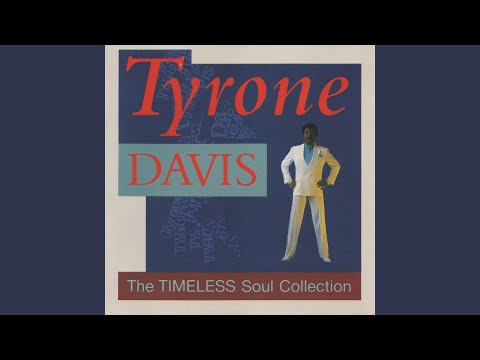
→ More from the 1970s File
View all 1970s hits →




Keep digging