The 1970s File Feature
You're Still A Young Man
"You're Still a Young Man" — Tower of Power's 1972 Soul Declaration Oakland Funk Finding Its National Voice Oakland, California in the early 1970s was produc…
01 The Story
"You're Still a Young Man" — Tower of Power's 1972 Soul Declaration
Oakland Funk Finding Its National Voice
Oakland, California in the early 1970s was producing some of the most muscular and rhythmically sophisticated music in American popular culture, and Tower of Power sat at the center of that scene. The band had formed in the late 1960s as a horn-driven soul and funk outfit, building their reputation in the Bay Area club circuit before landing a recording deal that would give their sound national distribution. By 1972, the group was ready to make a genuine impression on the broader market, and "You're Still a Young Man" became the vehicle for that breakthrough, a track that demonstrated everything the band could do when their considerable instrumental firepower was matched with material of genuine emotional weight.
The Song and the Horn Section
Tower of Power's identity rested in large part on their extraordinary horn section, a group of players whose precision and collective voice gave the band a sonic fingerprint unlike anything else on American radio in the early 1970s. The horn arrangements on "You're Still a Young Man" showcase that section's capacity for both punctuation and sustained melodic contribution, moving between sharp rhythmic figures and longer, more lyrical passages that frame lead singer Lenny Williams's vocal with orchestral richness. Williams's delivery on the track combines vulnerability with authority; the lyric addresses an older romantic partner from the perspective of someone who understands the generational difference between them but refuses to let that difference become an obstacle.
A Summer Climb Up the Charts
The song debuted on the Billboard Hot 100 on July 15, 1972, entering at position 81. The summer season proved hospitable to the track, which climbed steadily as radio stations in major markets programmed it alongside the soul and R&B that dominated Black radio and crossed over increasingly into broader pop playlists. The track peaked at number 29 on September 16, 1972, spending a total of 12 weeks on the Billboard Hot 100. That performance, while modest by the standards of the era's biggest hits, represented a genuine commercial achievement for a band whose core audience had been primarily regional up to that point. It established Tower of Power as a nationally known act rather than simply a Bay Area phenomenon.
The Album Context: Bump City
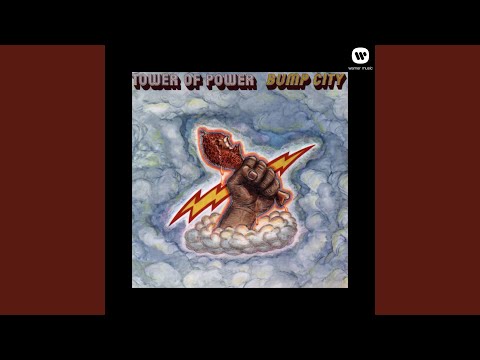
The recording appeared on Tower of Power's second album, Bump City, released on Warner Bros. Records in 1972. The album reflected the band's ambition to translate the visceral energy of their live performances onto a studio recording, a challenge that horn-heavy funk bands frequently struggled with, since the immediacy of a great horn section in a small room rarely survives the compression of vinyl without careful engineering and arrangement work. Bump City succeeded in capturing enough of that live energy to serve as an effective introduction to the band for listeners who couldn't experience them on stage. "You're Still a Young Man" was the album's most commercially accessible moment, the track most likely to connect with listeners beyond the core funk audience.
Legacy and Lenny Williams
Lenny Williams's tenure with Tower of Power was relatively brief; he would depart the band in 1974 and pursue a solo career that produced its own significant moments. But his recordings with the group, particularly "You're Still a Young Man," captured his voice at a moment of genuine freshness, before the commercial pressures of solo career management complicated the artistic equation. Tower of Power continued recording and touring long after Williams's departure, maintaining a reputation for live performance excellence that has kept them active across five decades. The band's influence on subsequent generations of funk and soul musicians is audible in countless recordings, and "You're Still a Young Man" remains one of the clearest statements of what made their early period so compelling. The track still rewards careful listening, particularly for what the horns are doing behind and around the vocal.
Let the horns carry you back to that Oakland summer of 1972, when this band was playing rooms that couldn't contain them for long.
"You're Still a Young Man" — Tower of Power's singular moment on the 1970s charts.
02 Song Meaning
"You're Still a Young Man" — Age, Desire, and the Courage of Romantic Honesty
A Love Song About the Gap Between Generations
The lyric at the center of "You're Still a Young Man" addresses a specific romantic situation: the speaker is in a relationship with someone older and is attempting to reassure that partner that age is not a barrier. The affirmation carried in the title phrase, repeated across the song's structure, is simultaneously emotional support and declaration of intent. That combination of reassurance and desire gave the song a texture that went beyond standard romantic pop, because it acknowledged openly a dimension of the relationship that many love songs would have handled obliquely or not at all. In 1972, a song that addressed age difference with this kind of directness stood out.
The Music as Emotional Reinforcement
Tower of Power built a musical framework around this lyric that amplified its emotional content through pure sonic authority. A horn section of that quality does not merely accompany; it validates, it confirms, it makes declarations feel official. When the horns come in behind Lenny Williams's vocal, the effect is of an entire community bearing witness to the sentiment he's expressing. Soul music has always understood this dimension of the horn section's social function, its roots in church music and communal celebration giving it an authority that a guitar or keyboard arrangement, however skillfully executed, rarely achieves in the same way.
Bay Area Soul and the Politics of Authenticity
Tower of Power emerged from Oakland's vibrant Black music scene, a community with its own distinct relationship to soul and funk traditions. The Bay Area had developed musical sensibilities that differed in interesting ways from those of the East Coast soul centers or the Los Angeles pop machine, and Tower of Power's approach reflected that difference: harder rhythmically, more horn-forward, less concerned with the smooth production sheen that characterized some of the era's more commercially polished soul recordings. That rawness gave their records an immediacy that resonated with listeners who found the more elaborate productions of Philadelphia or Motown slightly too perfect for the emotional states they were describing.
Vulnerability as Strength
One of the song's most interesting qualities is how it distributes emotional vulnerability. The speaker is reassuring someone else, yes, but the act of reassurance reveals its own need: the need for the relationship to work, the need for the partner to believe what's being said, the need for love to be sufficient against the anxieties that age difference can generate. Lenny Williams's vocal performance navigates this complexity without collapsing it into simple sentiment, maintaining enough emotional tension that the song feels genuinely at stake rather than merely declarative. That quality of felt need, the sense that something real is being worked through rather than simply stated, is what separates great soul performances from competent ones.
The Track's Place in a Larger Legacy
Tower of Power's influence on subsequent generations of funk and soul musicians has been substantial and widely acknowledged. Their horn arrangements became a reference point for anyone trying to understand how to deploy a large horn section with precision and feeling. "You're Still a Young Man" peaked at number 29 on the Billboard Hot 100, a respectable showing for a band still building its national profile. The recording remains a strong example of early 1970s funk-soul at its most emotionally direct, a track where the musicianship serves the feeling rather than calling attention to itself. Revisited today, it holds up as evidence of what Tower of Power was capable of when material, performance, and arrangement all aligned.
→ More from Tower Of Power
View all Tower Of Power hits →

→ More from the 1970s File
View all 1970s hits →




Keep digging