The 1970s File Feature
Down To The Nightclub
Down To The Nightclub — Tower of Power Hits the 1970s Hot 100 In the fall of 1972, if you wanted to hear what American funk sounded like when it was built on…
01 The Story
"Down To The Nightclub" — Tower of Power Hits the 1970s Hot 100
In the fall of 1972, if you wanted to hear what American funk sounded like when it was built on a genuine orchestral foundation rather than a stripped-down rhythm section, the answer was usually coming from one of two places: Memphis or Oakland. Tower of Power came from Oakland, and they brought with them a horn-driven, groove-locked approach to soul-funk that was unlike almost anything else on the charts at the time. Their brass section alone, considered by musicians and critics to be among the finest in the business, would have been enough to distinguish them. The fact that the rest of the band matched that section in precision and fire made them genuinely exceptional, and "Down To The Nightclub" was the record that began introducing them to mainstream audiences.
The Oakland Sound and Its Origins
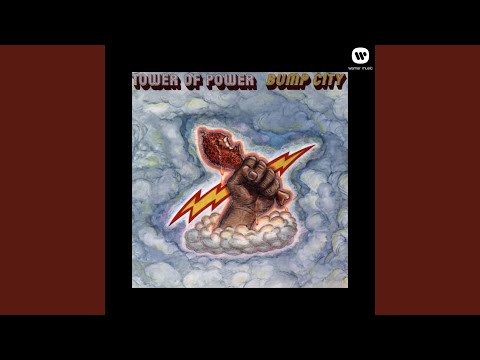
Tower of Power had been working the Bay Area circuit since the late 1960s, building a reputation among musicians and club audiences that far exceeded their national profile at the time of this record's release. The band formed in 1968 in Oakland, and from the beginning their sound incorporated elements of hard soul, jazz, and Latin music alongside the funk grooves that would become their primary commercial identity. By 1972, when they signed to Warner Bros. and released Bump City, the album that contained "Down To The Nightclub," they had developed an ensemble discipline that was formidable. The horns, the rhythm section, and the vocal contributions worked as a unit rather than a collection of individual parts.
A Horn Section as Calling Card
What set Tower of Power apart from contemporaries in the funk-soul space was the quality and ambition of their brass work. The horn arrangements on their records from this period occupy a middle ground between jazz complexity and funk directness that few bands have successfully navigated before or since. On "Down To The Nightclub," the brass is not decorative: it is load-bearing, carrying melodic and rhythmic functions that in other arrangements would be handled by guitars or keyboards. The result is a richness of texture that rewards close listening while also functioning perfectly on the dancefloor for which the song was designed.
Eight Weeks and a Peak at Number 66
"Down To The Nightclub" debuted on the Billboard Hot 100 on October 21, 1972, entering at number 94. The single climbed steadily through the late fall weeks: from 94 to 82, 78, 75, 74, moving with the gathering momentum of a record finding its audience through FM radio and word-of-mouth enthusiasm among the musicians and dancers who recognized its quality. The single reached its peak position of number 66 on December 9, 1972, ending a run of eight weeks on the chart. A top-70 finish for a debut national single from a band with this level of musical sophistication was a genuine commercial foundation to build on.
The Funk Landscape of 1972
The Hot 100 in the final months of 1972 was navigating an interesting moment in funk's commercial trajectory. James Brown remained the genre's presiding genius, Sly and the Family Stone had shifted the genre's parameters with their more eclectic approach, and a new generation of acts was beginning to organize around the possibilities that both had opened up. Tower of Power occupied a specific position in this landscape: more musically sophisticated than much of what passed for funk in the mainstream, but committed to the groove and the dancefloor in ways that kept them from retreating into the purely jazz category. They were genuinely hybrid artists in an era that was beginning to value hybridity.
The Foundation of a Long Career
Looking back from the vantage point of Tower of Power's subsequent decades of work, "Down To The Nightclub" reads as an announcement of everything the band would become. They went on to score more significantly with records like "So Very Hard to Go" and "What Is Hip?" and to establish a reputation as one of the most respected live bands in American music, a reputation they maintain to this day. The 179,000 YouTube views on this record represent an audience that knows the full catalog and values the early work for what it reveals about where everything else came from.
If the sound of a world-class horn section pushing a funk groove through your speakers sounds appealing, this is the place to start. Press play.
"Down To The Nightclub" — Tower of Power's singular moment on the 1970s charts.
02 Song Meaning
The Meaning Behind "Down To The Nightclub" by Tower of Power
There is a particular kind of song in the soul-funk tradition that exists not primarily to tell a story or make an argument but to conjure a place and a feeling: the release of the nightclub, the specific freedom of the dancefloor, the communal joy of a room full of people who have decided, at least for this evening, that the ordinary weight of the world can wait. "Down To The Nightclub" by Tower of Power belongs to this tradition, and it executes its purpose with the precision of a band that understood exactly what the dancefloor required and had the musicianship to deliver it at the highest possible level.
The Club as Escape and Community
In the early 1970s, the nightclub occupied a specific social function in African American urban life that popular music both reflected and amplified. It was a space where the pressures of everyday existence, economic uncertainty, racial tension, and the grinding routines of work and obligation, could be set aside for a few hours in favor of music, movement, and human connection. Songs that celebrated going to the club were not simply celebrating leisure; they were affirming the importance of spaces where Black social life could unfold on its own terms, with its own aesthetics and its own rules. Tower of Power, rooted in Oakland's Black community, understood this dimension of the music they were making.
The Lyrical Invitation
The narrative posture of the song is one of shared anticipation: the narrator and the listener are being invited into the experience together, encouraged to move toward the music and the crowd rather than away from them. This invitation is less a plot and more a gesture, the lyrical equivalent of someone opening a door and letting the music pour out into the street, making it impossible not to want to walk toward it. The simplicity of the premise is itself the point: this is not a song that requires unpacking. It requires participation.
When the Music Is the Message
In dance music of this quality, the instrumental content carries as much meaning as the lyrics, perhaps more. The Tower of Power horn section, pushing through those arranged passages with a precision and fire that few bands could match, is not background to the lyrical content; it is co-author of the song's argument. The horns say: this is what it feels like to be in a room where music this good is playing, this is the physical sensation of rhythm and brass working together at full pressure. The meaning of the song lives as much in the sound as in the words, which is why it functions so well as a dancefloor record and why it rewards listening on its own sonic terms.
Tower of Power's Musical Philosophy
What distinguished Tower of Power from many of their contemporaries was a commitment to musical substance that went beyond commercial calculation. Their horn arrangements drew on jazz harmony in ways that most funk bands did not bother with; their rhythm section had absorbed Latin influences that gave the groove an extra dimension; their approach to ensemble playing prioritized precision without sacrificing feel. All of this philosophy is present in "Down To The Nightclub," which manages to be simultaneously sophisticated and completely unpretentious, music made by serious musicians who wanted people to dance.
A Permanent Invitation
"Down To The Nightclub" has aged well precisely because the feelings it addresses are not historically specific. The desire to go somewhere the music is playing, to be in a room full of people who are moving together, to give oneself over to rhythm for a few hours, these are desires that recur in every generation. Tower of Power captured them in 1972 with a specificity and a musical authority that keeps the record sounding immediate, even now. Put it on and the invitation is still open.
→ More from Tower Of Power
View all Tower Of Power hits →

→ More from the 1970s File
View all 1970s hits →




Keep digging