The 1970s File Feature
A Dream Goes On Forever
"A Dream Goes On Forever" — Todd Rundgren The Eccentric Visionary at His Most Accessible The spring of 1974 found Todd Rundgren at one of the more paradoxica…
01 The Story
"A Dream Goes On Forever" — Todd Rundgren
The Eccentric Visionary at His Most Accessible
The spring of 1974 found Todd Rundgren at one of the more paradoxical moments in a career already distinguished by its refusal to follow conventional trajectories. The year before, he had released A Wizard, a True Star, an album so willfully experimental that it confused even his most devoted fans, a dense, heavily edited suite of music that seemed designed to resist mainstream consumption. By early 1974, he was releasing material from Todd, a double album that veered between arena-ready pop, progressive rock ambition, and the kind of plaintive balladry that his large and loyal following had come to expect from him. "A Dream Goes On Forever" emerged from this context as one of his most straightforwardly beautiful songs.
Todd Rundgren occupied a singular position in American rock of the early 1970s. As a solo artist he had produced a string of sophisticated pop recordings, and as a producer for hire he was working with some of the most significant acts of the era, from Grand Funk Railroad to Hall and Oates to Meat Loaf. His production instincts and his songwriting instincts fed each other in ways that gave his recordings an unusual degree of polish and structural clarity, even when the emotional content was raw and direct.
The Song Itself
The track arrived on the Billboard Hot 100 on April 6, 1974, entering at number 85. Over the following six weeks it moved steadily upward, reaching its peak position of number 69 on May 4, 1974. The chart run was not explosive, but it was consistent, the kind of performance that spoke to genuine affection from both radio programmers and audiences rather than a promotional push that burned bright and faded quickly.
The song itself was a piano-based ballad in the classic Rundgren mode, built on a melodic line of simple but precise beauty and lyrics that addressed the persistence of feeling and the way certain emotional experiences resist the normal processes of forgetting and moving on. The production was characteristic of Rundgren's work as his own record-maker: warm but not cluttered, emotionally transparent, arranged to put the voice and the melody at the center rather than to demonstrate technical prowess for its own sake. There is a restraint in the recording that made it feel honest in a way that more elaborate productions of the period sometimes could not achieve.
An Artist Navigating Commercial and Creative Pressures
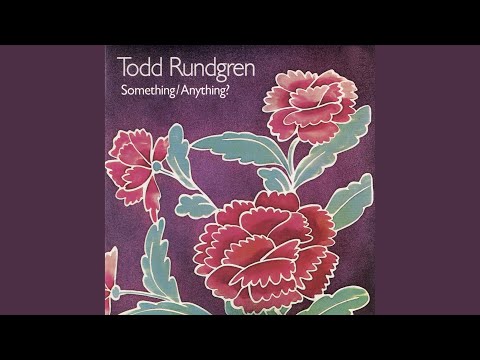
The tension in Rundgren's career between commercial accessibility and artistic experimentation was particularly acute in the period around 1973 and 1974. He had demonstrated with Something/Anything? in 1972 that he could construct pop records of genuine commercial appeal, with singles like "I Saw the Light" and "Hello It's Me" reaching mass audiences. The follow-up A Wizard, a True Star was a deliberate step away from that accessibility, and Todd represented something of a middle position, maintaining artistic ambition while including moments of melodic directness that could find a radio audience.
"A Dream Goes On Forever" was one of those moments of directness, a song that set aside the experimental tendencies in order to communicate a single feeling with maximum clarity. In the context of his full catalogue, it stands as evidence that Rundgren's pop instincts, however frequently he chose to subvert them, were among the finest of his generation. The song's six-week chart run confirmed that there was a substantial audience for exactly that kind of emotional clarity when Rundgren chose to deliver it.
Legacy in a Career of Constant Reinvention
Looking back at Rundgren's output across the 1970s, "A Dream Goes On Forever" occupies an interesting place in the catalogue. It is neither the most ambitious thing he recorded nor the most commercially successful, but it may be among the most purely achieved: a piece of writing and recording that accomplished exactly what it set out to do and nothing more. In a career marked by restless formal experimentation, that kind of focused simplicity stands out as a different kind of accomplishment.
Rundgren's influence on subsequent generations of musicians, both as a producer and as a songwriter, has been substantial. The particular quality of his melodic thinking, the way he could construct a tune that felt simultaneously effortless and architecturally precise, is something that many later singer-songwriters have tried to understand and replicate. "A Dream Goes On Forever" is one of the purest illustrations of that gift, pressed into a small and perfect frame. Cue it up and hear exactly what made him essential.
"A Dream Goes On Forever" — Todd Rundgren's singular moment on the 1970s charts.
02 Song Meaning
The Meaning of "A Dream Goes On Forever" by Todd Rundgren
Persistence Against Forgetting
The central idea embedded in the title of this Todd Rundgren ballad is not one of triumph or loss but of endurance. A dream that goes on forever does not speak of achieving what was desired; it speaks of the inability to stop desiring, the way certain emotional attachments refuse to submit to time, distance, or reason. The song's emotional subject is the persistence of longing, a state that most adults know intimately but that popular music often simplifies into either joyful consummation or clean heartbreak. Rundgren was interested in the messier middle territory where feeling simply continues.
That thematic territory connected naturally to the singer-songwriter tradition of the early 1970s, a movement defined by its willingness to examine interior emotional states with analytical precision. Artists like James Taylor, Carole King, and Jackson Browne had established an aesthetic in which the personal and introspective were legitimate and serious subjects for popular music. Rundgren was adjacent to that tradition while never quite belonging to it, bringing a more eclectic musical sensibility and a more overtly dramatic melodic instinct to similar emotional material.
The Image of the Dream
Dreams as a lyrical device carry specific implications in romantic songwriting. They suggest something beyond conscious control, something that happens to the dreamer rather than something the dreamer chooses. When the song insists that a dream goes on forever, it is describing the involuntary persistence of attachment, the experience of finding that feelings for someone do not diminish simply because circumstances have made them impossible or inadvisable. This is an honest observation about how human emotional life actually works, and its honesty is a significant part of what gives the song its resonance.
Rundgren's lyrical approach in his best ballads tended toward a clarity that bordered on plainness, trusting the melody to carry emotional weight that more ornate writing would have spelled out in detail. This restraint required the listener to bring their own experience to the song, to fill in the specifics that the lyric deliberately left open. That openness is part of why the song has maintained its emotional relevance across the decades since its release.
Piano Music and Emotional Exposure
The piano-based arrangement of "A Dream Goes On Forever" placed it in a specific cultural conversation about what intimate musical exposure sounded like in 1974. The early 1970s had seen the piano re-emerge as the primary instrument of emotional disclosure in popular music, carried there by singer-songwriters who treated it not as a showcase for virtuosity but as a direct conduit between interior feeling and the listener's ear. Rundgren's keyboard writing in this tradition was precise and purposeful, never using more notes than the emotional content required.
That economy of means was itself a statement. In a musical landscape that was beginning to push toward the elaborate production values of mid-1970s arena rock and the orchestral excess of the countrypolitan and adult contemporary scenes, a song built around voice and piano made a claim for authenticity simply by its spareness. What you heard was what was felt; nothing was being added to create an impression of depth that the music itself could not generate.
The Song's Place in the Emotional Vocabulary of Its Era
The early 1970s produced a remarkable body of music about the experience of unresolved feeling, and "A Dream Goes On Forever" is one of that body's more quietly significant contributions. It addressed with genuine precision the experience of carrying feeling past its natural expiration, the way dreams and memories and emotional attachments can outlast every reasonable expectation of their duration. That subject matter has not aged. If anything, in an era when the pace of modern life makes sustained interior attention increasingly difficult, music that insists on the depth and persistence of feeling may be more necessary than ever. Rundgren built a small monument to that insistence.
→ More from Todd Rundgren
View all Todd Rundgren hits →
→ More from the 1970s File
View all 1970s hits →




Keep digging