The 1970s File Feature
Out In The Country
Three Dog Night's "Out in the Country": Environmental Yearning in 1970 "Out in the Country" by Three Dog Night reached number fifteen on the Billboard Hot 10…
01 The Story
Three Dog Night's "Out in the Country": Environmental Yearning in 1970
"Out in the Country" by Three Dog Night reached number fifteen on the Billboard Hot 100 in the autumn of 1970 and spent eleven weeks on the chart, a solid commercial performance for a record that was somewhat more reflective and less immediately explosive than the group's biggest hits. The song became one of the defining recordings of a specific cultural moment: a period when a large segment of the American population was beginning to articulate what would coalesce into the environmental movement, when the accumulated industrial and social pressures of modern American life were generating a widespread longing for natural spaces.
The song was written by Paul Williams and Roger Nichols, one of the most commercially successful songwriting partnerships of the era. Williams and Nichols had developed a distinctive approach that combined sophisticated harmonic sensibility with lyrical content that managed to be simultaneously personal and universally accessible. Their songs for Three Dog Night and other artists in this period showed a consistent interest in the emotional textures of everyday life, and "Out in the Country" extended this interest into the specific territory of urban alienation and the desire for natural sanctuary.
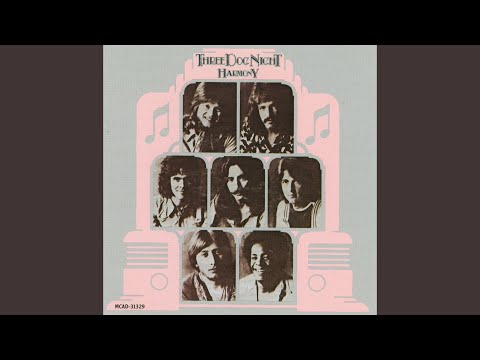
Three Dog Night was an unusual commercial proposition: a band with no primary songwriter, no dominant frontman, and three lead singers — Danny Hutton, Cory Wells, and Chuck Negron — who shared vocal duties across a catalog drawn almost entirely from outside composers. This arrangement, which might have seemed like a weakness, proved to be an extraordinary strength. The group had an almost infallible instinct for identifying songs that could be transformed by their particular combination of vocal power, rock-solid rhythm section work, and professional production into radio-ready hits.
For "Out in the Country," the vocal assignment went to Danny Hutton, whose voice brought an appropriate quality of yearning to the material. Hutton's approach was less flamboyant than Cory Wells's and less smooth than Chuck Negron's at his peak; he possessed a directness and emotional nakedness that suited the song's contemplative content. The arrangement around him was relatively spare by Three Dog Night's standards, allowing the lyrical content to breathe rather than burying it in the kind of energetic arrangement that characterized their more aggressive hits.
The production was handled by Richard Podolor, who had been the group's primary producer throughout their peak commercial period. Podolor had developed an approach for Three Dog Night that balanced radio-commercial production values with enough sonic character to give the records identity beyond mere technical proficiency. For "Out in the Country," he created a soundscape that suggested open space without resorting to obvious nature-sound effects or overly literal pastoral imagery in the arrangement. The music sounds expansive, but through the quality of its sonic choices rather than through the deployment of specific natural sounds.
The song appeared on the album It Ain't Easy, released in 1970 on Dunhill Records, the same label that had been home to The Grass Roots during their commercial peak. By 1970, Three Dog Night had established themselves as one of the most consistently successful pop-rock groups in the country, a position they would maintain for several more years before commercial pressures and internal tensions began to erode their commercial standing.
The environmental context of the song's release is crucial to understanding its reception. 1970 was the year of the first Earth Day, held in April of that year and drawing an estimated twenty million participants across the United States. The environmental movement was crystallizing into organized political action, and the broader cultural consciousness of environmental issues was growing rapidly. A song that expressed longing for natural spaces, that articulated the costs of modern urban and industrial life in emotional terms, was arriving at precisely the moment when that emotional experience was being most widely shared.
The eleven-week chart run "Out in the Country" achieved was consistent with Three Dog Night's established commercial pattern. The group's records rarely appeared briefly and disappeared; they tended to climb steadily, achieve respectable peak positions, and sustain their chart presence through genuine radio saturation. The record's peak at fifteen placed it comfortably in the group's solid commercial middle tier — not their biggest hits, but far from their smaller ones.
02 Song Meaning
The Urban Escape: What "Out in the Country" Expresses
"Out in the Country" by Three Dog Night gives musical form to one of the most persistent tensions in modern American life: the pull between the convenience and stimulation of urban existence and the restorative power of natural spaces. The song's central desire — to get out into the country, away from the noise and complexity of the city — is not presented as a political statement or a philosophical position but as an emotional need, something the narrator feels with the urgency of genuine physical longing. This is the song's particular achievement: it makes an environmental and cultural argument by making it feel personal.
Songwriters Paul Williams and Roger Nichols constructed the lyric around the accumulation of specific pressures — the noise, the crowds, the relentlessness of modern urban life — against which the natural world is proposed as an antidote. The country is not romanticized in the song as a place of pastoral perfection; it is valued primarily in contrast to what is being escaped. This negative definition of the natural world's appeal is psychologically accurate. The desire to be out in the country, for most urban and suburban Americans, is generated not by any abstract love of nature but by the specific discomforts of where they actually are.
The song engages with what might be called the American pastoral impulse: the recurring cultural desire to imagine a natural world that exists in productive tension with the commercial and industrial civilization that has transformed the American landscape. This impulse runs through American literature and music from the nineteenth century forward, manifesting in different ways in different eras. In 1970, it was being channeled into the emerging environmental movement, but the emotional content that animated that movement was older and deeper than any specific political cause.
There is also a social dimension to the song's meaning. The desire to be "out in the country" is not simply a desire to be in a different geographical location; it is a desire to be in a different social environment. The country, in this song's emotional geography, is a place of fewer people, fewer demands, less performance of social roles. The narrator is not seeking solitude exactly, but a reduction in the density and intensity of social obligation. This is a recognizable modern experience, and the song captures it with sympathy and precision.
Danny Hutton's vocal performance communicates the genuineness of this longing without making it melodramatic. His delivery is direct and unaffected, presenting the desire as simply real rather than as a crisis or an epiphany. This tonal modesty is what makes the song feel honest rather than theatrical, and honest longing is more persuasive than performed anguish.
Fifty-plus years after its release, "Out in the Country" continues to resonate because the tension it describes has not been resolved. Urban density has increased, natural spaces have diminished, and the psychological costs of constant connectivity and social stimulation have become more widely recognized rather than less. The song remains a precise description of an emotional need that millions of people still experience, which is a more durable form of artistic success than merely capturing a historical moment.
→ More from Three Dog Night
View all Three Dog Night hits →
→ More from the 1970s File
View all 1970s hits →




Keep digging