The 1970s File Feature
Joy To The World
Joy to the World: Three Dog Night, Hoyt Axton, and the Song That Owned 1971 "Joy to the World" by Three Dog Night stands as one of the defining pop singles o…
01 The Story
Joy to the World: Three Dog Night, Hoyt Axton, and the Song That Owned 1971
"Joy to the World" by Three Dog Night stands as one of the defining pop singles of the early 1970s, a song so thoroughly dominant during its chart run that it became inseparable from the cultural memory of 1971. Written by Hoyt Axton, the veteran folk and country singer-songwriter whose songs had been recorded by artists across a wide spectrum of American music, the song gave Three Dog Night their biggest commercial success and Axton a composition that would be performed, covered, and referenced for decades after its initial release.
Hoyt Axton had been a significant figure on the American folk scene since the early 1960s, when his song "Greenback Dollar" had been recorded by the Kingston Trio. He had written songs for artists including Steppenwolf, whose recording of his "The Pusher" became a touchstone of late-1960s rock, and his catalog demonstrated a consistent ability to write material that translated successfully across genres. "Joy to the World" was written as a somewhat whimsical piece, its narrator a kind of ecstatic figure addressing a bullfrog named Jeremiah and celebrating an uncomplicated joy in existence, and Axton himself did not expect it to become the commercial phenomenon it ultimately was.
"Joy to the World" was released by Three Dog Night on Dunhill Records in November 1970 and began its ascent up the chart in the months that followed. By the spring of 1971, it had reached the top of the Billboard Hot 100, where it would remain for six consecutive weeks, one of the longer stays at number one of the era. The single spent six weeks at number one on the Billboard Hot 100, giving Three Dog Night their most dominant chart performance and establishing the song as the kind of cultural artifact that transcends its immediate commercial moment.
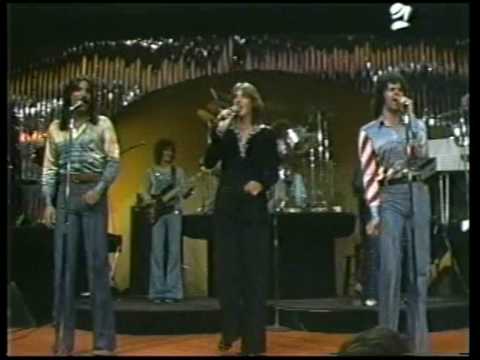
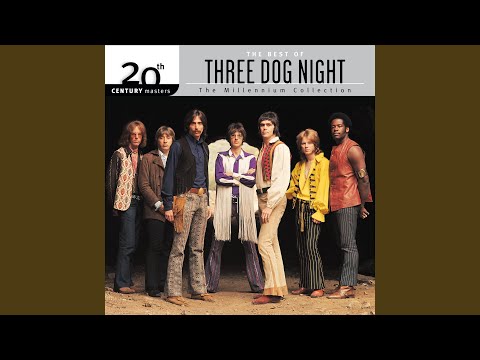
Three Dog Night was a commercial phenomenon of the early 1970s, an unusual configuration featuring three lead vocalists, Danny Hutton, Cory Wells, and Chuck Negron, who took turns on lead vocal duties across a catalog of songs written primarily by outside composers. The band had an extraordinary ability to identify and realize commercially viable material from a wide range of sources, and their track record with covers was remarkable: they had taken songs by composers including Nilsson, Randy Newman, and Elton John to the top of the charts before "Joy to the World" extended that record.
Chuck Negron sang lead on "Joy to the World," and his performance is central to the song's impact. His delivery manages to communicate both the song's playful, almost childlike quality and a genuine exuberance that prevents it from feeling merely silly. The production, handled by Richard Podolor, gave the track a driving, energetic quality that suited contemporary radio while the horn arrangements added a celebratory dimension that reinforced the song's emotional content.
"Joy to the World" became the best-selling single of 1971 in the United States, a commercial achievement that reflected both the song's ubiquity on radio and its appeal to an extremely broad demographic range. Unlike many contemporary rock singles that targeted youth audiences specifically, "Joy to the World" found listeners across age groups, its celebratory simplicity making it accessible to children and adults alike. This cross-demographic appeal is rare in any era of popular music and helps explain the song's exceptional commercial performance.
The song was also included on Three Dog Night's 1971 album Naturally, which benefited substantially from the single's success. The album's commercial performance demonstrated the band's sustained commercial strength during a period when they were arguably the most consistently successful rock group in the United States in terms of single-chart performance. Their run of Hot 100 top tens in the early 1970s remains one of the most impressive chart records of the era.
Hoyt Axton's authorship of the song gave him both financial rewards and a kind of retrospective recognition that his earlier work, though admired in folk circles, had not generated at comparable scale. The American Society of Composers, Authors and Publishers (ASCAP) has recognized "Joy to the World" as one of the most performed songs in American popular music history, a testament to its extraordinary durability in the performance repertoire. Whether performed by children's choirs, in stadiums, or at informal gatherings, the song's chorus has embedded itself so deeply in popular consciousness that it functions almost as a folk standard despite its known authorship.
02 Song Meaning
The Meaning of "Joy to the World": Unguarded Celebration and the Radical Simplicity of Happiness
"Joy to the World" by Three Dog Night, written by Hoyt Axton, is not a song that rewards interpretation through the lens of complexity or ambiguity. Its meaning is, in a sense, its most distinctive quality: it is a song that means exactly what it says and asks nothing more of the listener than that they participate in a mood of uncomplicated, exuberant celebration. In a pop landscape frequently organized around romantic longing, social critique, or personal confession, "Joy to the World" is notable precisely for what it refuses to do, which is to make any demand beyond the invitation to be joyful.
The narrator's central figure, the bullfrog named Jeremiah, is one of the more memorable characters in early-1970s pop, not because he is a complex character but because he is so plainly not. The bullfrog exists as a receptacle for the song's mood of generous exuberance, a being who has never had any other reason to exist than to participate in the celebration of existence itself. The narrator's affection for this creature, and the fantasy of sharing a bottle with it, establishes the song's emotional register as one of uncritical, democratic joy.
The philosophical tradition that most closely illuminates "Joy to the World" is not rock music's romantic or political strains but something closer to a secular version of the Epicurean celebration of simple pleasures. The song's narrator is not ambitious or reflective or troubled. He is simply happy, in the specific, grounded way that happiness becomes possible when it is not complicated by expectations or disappointments. This quality of uncomplicated gladness is rarer in popular music than its apparent simplicity suggests, because most songwriters, like most human beings, find unguarded happiness a difficult state to inhabit or describe without self-consciousness.
Hoyt Axton wrote the song with a quality of childlike directness that distinguished it from the more earnest folk material that characterized much of his catalog. The "every boy and girl" line in the song establishes the scope of the narrator's generosity, his wish to extend the feeling not to a romantic partner or a community of like-minded people but to everyone, universally and without condition. This universalism is central to the song's meaning and helps explain its extraordinary durability as a piece of communal singing across diverse contexts.
The song's relationship to its title is worth noting, given the title's associations. "Joy to the World" is, of course, also the title of one of the most famous Christmas carols, written by Isaac Watts in the eighteenth century. Axton's song is entirely unrelated to the carol, but the shared title inevitably invokes its associations with celebration, seasonal joy, and communal singing. Whether or not Axton intended this connection, it adds an additional layer of cultural resonance to the song, positioning it within a tradition of communal celebration that extends well beyond rock and pop music.
Within Three Dog Night's catalog, "Joy to the World" represents the perfect realization of their particular commercial identity: a band with extraordinary vocal talent, superb song selection instincts, and the ability to realize a composer's vision with infectious energy. Their genius was not compositional but interpretive, and "Joy to the World" gave them the ideal vehicle for that interpretive genius. The match between the song's exuberant simplicity and the band's capacity for communal, celebratory performance was as close to perfect as the hit-making process occasionally produces.
For audiences encountering the song in 1971 and in subsequent decades, its meaning has remained consistently accessible precisely because it asks so little and offers so much. It does not challenge or interrogate or illuminate difficult truths. It simply declares that joy is possible, that the world is worth celebrating, and that this celebration should be shared as widely as possible. In a period, the early 1970s, marked by significant social division and the continuing trauma of the Vietnam era, this uncomplicated affirmation was perhaps more meaningful than it might appear, a small insistence that gladness could be found and shared even in difficult times.
→ More from Three Dog Night
View all Three Dog Night hits →

→ More from the 1970s File
View all 1970s hits →




Keep digging