The 1970s File Feature
Darkness, Darkness
"Darkness, Darkness" — The Youngbloods' Psychedelic Elegy Reaches the Charts The Spirit of the Counterculture in Transition By May 1970, the spirit of the 19…
01 The Story
"Darkness, Darkness" — The Youngbloods' Psychedelic Elegy Reaches the Charts
The Spirit of the Counterculture in Transition
By May 1970, the spirit of the 1960s counterculture was in a complicated and painful state of reckoning. The optimism of 1967 and 1968 had fractured against the realities of Vietnam, the assassinations of Robert Kennedy and Martin Luther King Jr., the violence at the Democratic National Convention, and the tragedy at Altamont in December 1969. The music that had served as the counterculture's soundtrack was processing this disillusionment in real time, and some of the most powerful records of 1970 reflected this transition from hope to something darker and more uncertain. The Youngbloods and their recording of "Darkness, Darkness" belong entirely to this emotional moment.
The Youngbloods, formed in New York in the mid-1960s and subsequently based in California, had built their identity around a combination of psychedelic folk, blues, and rock that positioned them as authentic voices of the counterculture. Their earlier recording of "Get Together," with its call for unity and mutual love, had become an unofficial anthem of the movement. The shift to "Darkness, Darkness" represented a significant emotional reorientation, from exhortation toward reflection, from hope toward something more searching and unresolved.
Jesse Colin Young and the Song's Origin
"Darkness, Darkness" was written by Jesse Colin Young, the Youngbloods' lead vocalist and primary creative force. Young brought to the band a background that combined folk sensitivity with a willingness to engage the experimental production approaches that psychedelic rock was developing in the late 1960s. The song appeared on the 1969 Youngbloods album Elephant Mountain, produced by Charlie Daniels, which is considered the group's most fully realized studio achievement. The album's combination of pastoral imagery, blues-derived playing, and Young's keening, deeply felt vocal approach captured a particular West Coast sound of the late 1960s.
The song's title announces its emotional territory immediately. Darkness, in the context of the late-1960s folk-rock tradition, was both a literal image of night, of private grief and uncertainty, and a metaphorical address to the condition of political and spiritual despair that the counterculture was processing after years of hopes repeatedly disappointed.
Chart Appearance in Spring 1970
The single debuted on the Billboard Hot 100 on May 2, 1970, entering at number 93. It climbed through its first three weeks, moving to 89 and then reaching its peak of number 86 on May 16, 1970. The song then fell back to 89 in its fourth and final charted week before leaving the Hot 100. The four-week chart run was modest in commercial terms but represented meaningful radio airplay for a track of this emotional register.
The context of May 1970 deserves particular emphasis. The single's chart peak came in the weeks immediately following the Kent State shootings of May 4, 1970, when four students were killed by National Guard troops during a protest against the expansion of the Vietnam War into Cambodia. This event sent shockwaves through the counterculture and through American culture broadly, and songs that addressed darkness and loss suddenly resonated with a raw and immediate meaning that the recording could not have anticipated.
The Sound: Production and Performance
The recording of "Darkness, Darkness" is marked by a quality of aching restraint that distinguishes it from more overtly dramatic expressions of the era's anxieties. Young's vocal floats above the arrangement with a tone that suggests deep feeling held in careful suspension rather than released into catharsis. The instrumental support from the band provides a landscape of gentle psychedelic texture, guitar tones that shimmer at the edges of the acoustic and electric without fully committing to either, percussion that grounds without driving, and an overall sound that suits the song's meditative quality.
Charlie Daniels's production on Elephant Mountain served the material well, allowing the songs to develop their full atmospheric character without imposing the more conventional pop structures that would have been commercially safer but artistically limiting. This was the kind of production decision that reflected the relative creative freedom that some artists enjoyed in the late-1960s album-oriented era.
Legacy Within the Youngbloods' Catalogue
The Youngbloods remain best remembered for "Get Together," but "Darkness, Darkness" is the recording that most serious listeners regard as their artistic high point. The tension between the two songs, between optimism and elegy, between communal call and private reflection, captures the arc of an entire cultural moment with unusual precision. The chart appearance of the single in 1970, modest as it was commercially, placed this profound and carefully crafted piece of music in front of a wider audience at exactly the moment it had the most to say.
Press play on "Darkness, Darkness" now and it still lands with force: a voice reaching into the quiet with something that sounds less like a performance than a confession.
"Darkness, Darkness" — The Youngbloods' singular moment on the 1970s charts.
02 Song Meaning
"Darkness, Darkness" — Elegy, Surrender, and the Inner Life at the Edge of an Era
Darkness as Invitation Rather Than Threat
Most popular songs that address darkness treat it as an adversary, something to be overcome, escaped, or survived. "Darkness, Darkness" takes a fundamentally different position: the narrator addresses the darkness as one might address a trusted companion, with a kind of weary gratitude. The opening emotional stance is one of surrender rather than resistance, and this willingness to yield to rather than fight against the night gives the song an unusual and affecting quality. It speaks to the part of human experience that recognizes sometimes darkness is not the enemy but the only honest setting for certain thoughts.
The Language of Psychological Exhaustion
Jesse Colin Young's lyric works through imagery associated with rest, quietude, and the desire for relief from the weight of consciousness. The song addresses an interior state of profound tiredness, the kind that is not merely physical but existential: the fatigue of maintaining hope in circumstances that continuously undermine it. This emotional territory was acutely resonant in 1970, when the cumulative weight of the previous decade's losses and disappointments had produced in many listeners exactly this quality of exhausted longing for something quieter and less demanding than the world had been providing.
The particular genius of the lyric is that it does not specify its sources of despair. The darkness being addressed is general rather than particular, which means the listener can bring their own specific grief to the song and find it met with understanding. This openness to different interpretations is one of the qualities that distinguishes durable songs from merely topical ones.
Folk, Psychedelia, and the Spiritual Tradition
The Youngbloods drew on several traditions simultaneously, and "Darkness, Darkness" is most illuminating when heard within all of them. The folk tradition contributed the song's plain emotional directness and its comfort with melancholy as subject matter rather than problem to be solved. Psychedelic rock contributed the sonic landscape in which Young's voice operates, a shimmering atmospheric quality that turns the darkness from a binary state into something more textured and habitable. And behind both of these, more distantly but genuinely present, lies a spiritual tradition of contemplative retreat, the mystic's willingness to sit in the dark rather than demand illumination.
This convergence of traditions gave the song a depth that purely pop approaches to similar emotional material could not have achieved. The Youngbloods were not manufacturing a commercial approximation of sensitivity; they were working within traditions that had developed genuine resources for addressing what the song was trying to say.
The Historical Resonance of May 1970
The song's chart moment coincided with Kent State, and the weight of that timing is difficult to separate from the recording's emotional impact on its original audience. A song that had been recorded in 1969 as a meditation on inner life and the desire for rest acquired political and communal dimensions when it reached radio in the weeks following that event. Listeners who heard "Darkness, Darkness" in the aftermath of May 4, 1970 were not simply receiving a personal reflection; they were hearing a shared condition described with unusual precision and without false consolation.
This is one of the ways in which popular music's relationship to its historical moment exceeds the intentions of the artists who create it. Young wrote "Darkness, Darkness" as a personal and artistic statement, but it became, in the spring of 1970, a collective one as well.
Why the Song Endures
Decades removed from its original context, "Darkness, Darkness" retains its power because it addresses a psychological condition that has no historical expiration date. The desire for rest from consciousness, for relief from the accumulated weight of grief and disappointment, is not specific to 1970 or to any particular political moment. It is a permanent feature of human inner life, one that most popular art prefers to resolve or redirect rather than simply acknowledge and hold. The Youngbloods' recording does something rarer: it holds the feeling with compassion and without reassurance, which is what the best elegies do.
→ More from The Youngbloods
View all The Youngbloods hits →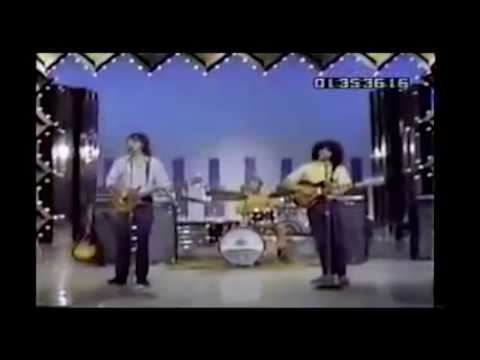

→ More from the 1970s File
View all 1970s hits →




Keep digging