The 1970s File Feature
Psychedelic Shack
"Psychedelic Shack" — The Temptations The Temptations Plug Into a New Current Something happened to the Temptations between 1968 and 1970 that is still remar…
01 The Story
"Psychedelic Shack" — The Temptations
The Temptations Plug Into a New Current
Something happened to the Temptations between 1968 and 1970 that is still remarkable to witness in retrospect. A group that had built its reputation on some of the smoothest, most elegantly crafted pop-soul in Motown's catalog, records built on romantic precision and harmonic sophistication, turned a corner and emerged on the other side making music that sounded like the psychedelic revolution run through Detroit's finest musical machine. "Psychedelic Shack" was a product of that transformation, and it arrived in January 1970 with the force of a manifesto.
The transformation was driven in significant part by Norman Whitfield, the producer who had been working with the Temptations since the mid-1960s. Whitfield, along with co-writer Barrett Strong, had begun pushing the group toward a sound he called "psychedelic soul" or "cloud nine music," named after the 1968 hit that signaled the new direction. Where "My Girl" had been smooth and warm, the new Temptations material was spacious, funky, and deliberately unsettling. The guitars were harder, the arrangements more sprawling, and the vocal performances more dramatic.
The Record's Architecture
"Psychedelic Shack" is built on a foundation of interlocking rhythmic parts that give the track an almost hypnotic forward momentum. The production layers wah-wah guitar, driving bass, and percussion in a way that owes something to Sly Stone's approach to funk and something to the psychedelic rock that was dominating rock radio at the time. The result is a piece of music that occupies its own space, neither straightforwardly soul nor straightforwardly rock but something that absorbed both traditions and produced a third thing.
The vocal performances from the group's constellation of distinctive voices, including Dennis Edwards (who had replaced David Ruffin in 1968) and the contrasting tones of Eddie Kendricks and Otis Williams, gave the track its human dimension. The machine-like precision of the rhythm section is offset by the expressiveness of the vocal performances, and this tension is part of what makes the record so compelling as a listening experience.
Into the Top Ten
The chart story of "Psychedelic Shack" is one of the more impressive climbs on the Hot 100 at the turn of the decade. The single debuted on the Billboard Hot 100 on January 17, 1970, entering at number 95. Its ascent was rapid: within two weeks it was at number 38, within three it had reached 21, and by February it had cracked the top ten. The track peaked at number 7 on the chart dated February 28, 1970, spending eleven weeks on the Hot 100.
That peak placed "Psychedelic Shack" among the major hits of early 1970, a period of considerable competition on the charts. The speed of the record's climb from debut to peak, just six weeks, suggests strong radio support and immediate audience connection, rather than the slow word-of-mouth build that characterized some of the era's more challenging artistic statements.
Whitfield's Vision and the Temptations' Range
Norman Whitfield's psychedelic soul project with the Temptations is one of the more daring experiments in the history of Motown, and "Psychedelic Shack" is among its most fully realized examples. The challenge Whitfield set himself was considerable: could the sleek, crossover-friendly Temptations carry the weight of heavier, more musically ambitious material without losing the pop audience they had built? The answer, as the chart performance of "Psychedelic Shack" and its predecessor "Cloud Nine" demonstrated, was clearly yes.
The Temptations proved adaptable in a way that few of their Motown contemporaries could match. They were not a one-register group; they had the vocal flexibility and the collective discipline to serve whatever material was put in front of them. Whitfield's gamble was that this flexibility could be pushed further than anyone had tried, and the top-ten chart result vindicated the gamble completely.
A New Era for Detroit Soul
"Psychedelic Shack" landed at the precise moment when Motown's position in the cultural landscape was shifting. The label had dominated Black pop for a decade but was now facing competition from a more politically conscious strain of soul music, as well as from the harder funk that James Brown had been developing. Whitfield's psychedelic soul was Motown's answer to both challenges: music with edge and substance, capable of reaching young Black audiences who might have found the classic Motown sound too polished and too conciliatory.
Put the record on today and the energy of that challenge still comes through. The track sounds like a band pushing against its own previous self, reaching for something larger and stranger and more urgently present. The year was 1970, the world was unsettled, and the Temptations were documenting that unsettlement from inside one of America's most accomplished musical operations. Press play and hear the seams of an era coming apart at the groove.
"Psychedelic Shack" — The Temptations' singular moment on the 1970s charts.
02 Song Meaning
"Psychedelic Shack" — Themes and Legacy
The Shack as Utopian Space
The central image of "Psychedelic Shack" is a gathering place, a space where people come together outside the ordinary structures of society to experience something different. This was a deeply resonant image in 1970, when the counterculture's communal impulses were still alive even as the idealism of the late 1960s was beginning to curdle under the weight of political violence, commercial co-optation, and the sheer difficulty of sustaining utopian communities in practice. The song's narrator invites the listener into this space with the enthusiasm of someone who has discovered something genuinely worth sharing.
The lyric, by Norman Whitfield and Barrett Strong, does not examine the counterculture critically or celebrate it naively; it inhabits it on its own terms, which is precisely the right approach for a song that wants to generate the feeling of communal joy rather than commentary on it. The "psychedelic shack" of the title is both a literal imagined space and a metaphor for the altered state of consciousness that the music itself induces.
Psychedelia and Soul: Two Traditions, One Groove
The meeting of psychedelic rock and soul music in the late 1960s and early 1970s produced some of the most interesting music of that era, and the Temptations' version of that meeting had distinctive characteristics that set it apart from what was happening in rock. Where white psychedelia often prioritized disorientation and sonic abstraction, the Temptations' psychedelic soul kept its roots in the body, in the groove, in the physical experience of dancing and community. The cosmic ambitions were present, but they were grounded in the R&B tradition's insistence on music you could feel as well as think about.
This grounding is what made the psychedelic soul moment commercially viable in ways that much of rock psychedelia was not. The music retained its accessibility even as it expanded its ambitions, which is a difficult balance to maintain and one that Norman Whitfield managed with considerable skill.
Race, Culture, and the Counterculture
One of the more interesting aspects of "Psychedelic Shack" is what it represents in terms of Black artists engaging with a cultural movement that had been substantially coded as white in mainstream media coverage. The counterculture of the late 1960s had Black participants and drew heavily on Black musical and spiritual traditions, but its media image was predominantly white. Motown's engagement with psychedelia, through the Temptations' work with Whitfield, was a form of reclamation: demonstrating that Black artists were not outside the cultural conversation but had been contributing to it all along.
The "psychedelic shack" as a space is notably inclusive in the lyric's vision. It is open to everyone, transcending the racial and generational divisions that defined the moment. That vision of transcendence through shared musical experience was not naively apolitical; it was a deliberate statement about what community could look like when the music was right.
Production Legacy and Influence
Norman Whitfield's production on "Psychedelic Shack" has had a long afterlife in hip-hop and R&B sampling culture. The track's distinctive rhythmic architecture, the interlocking guitars, the driven bass, the propulsive percussion, provided raw material that subsequent producers found endlessly generative. Sampling culture tends to gravitate toward records with strong, clearly defined grooves that can support a new melodic or lyrical element, and the Whitfield-produced Temptations records of this era meet that description perfectly.
The song's broader legacy also includes its place in the larger narrative of Motown's evolution away from the carefully polished crossover pop of its first decade toward a more muscular, politically aware, sonically adventurous approach. "Psychedelic Shack" demonstrates that this evolution produced genuinely great music, not just historically interesting music, which is the more meaningful measure of any record's lasting value.
→ More from The Temptations
View all The Temptations hits →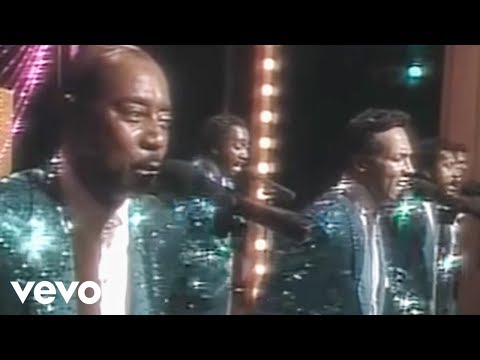


→ More from the 1970s File
View all 1970s hits →




Keep digging