The 1970s File Feature
Hey Girl (i Like Your Style)
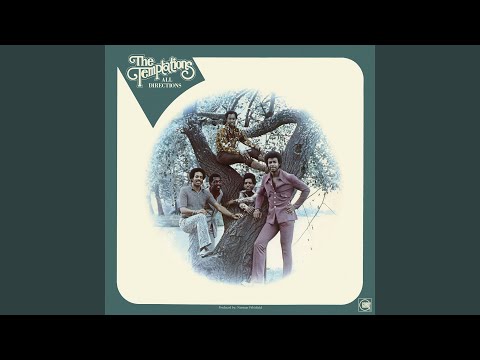
Hey Girl (I Like Your Style) — The Temptations Navigate a Changing Era Motown's Finest in Mid-Transformation The Temptations arrived at the summer of 1973 ca…
01 The Story
Hey Girl (I Like Your Style) — The Temptations Navigate a Changing Era
Motown's Finest in Mid-Transformation
The Temptations arrived at the summer of 1973 carrying more history than almost any other group in American pop music. The Detroit quintet had charted over forty singles since their first recordings in the early 1960s, including some of the most celebrated pop and soul recordings ever made. They had ridden the classic Motown production system to stardom, then evolved with remarkable flexibility into psychedelic soul, then into hard-funk social commentary, adjusting their sound and presentation with each new producer and each new cultural moment. By 1973 the lineup had shifted considerably from the golden-era configuration, but the group's identity and commercial capacity remained intact.
The Temptations had been recording for Motown Records since the early 1960s, and that long relationship had produced both extraordinary artistic success and, in the early 1970s, some uncertainty about direction. Norman Whitfield, who had produced their socially engaged work of the late 1960s and early 1970s, continued to shape their sound, but the landscape of Black music in 1973 was evolving rapidly, with new forms and new commercial pressures creating a more complex navigation challenge than any previous moment in the group's career.
A Lighter Touch in 1973
Hey Girl (I Like Your Style) represented a relative departure from the more serious, socially conscious material that had defined the Temptations' work in the immediately preceding period. The song was a lighter, more playful piece of romantic communication: a narrator directing enthusiastic appreciation toward a woman whose appearance and bearing have caught his attention. The lyric was not trying to make statements about society or render complex emotional situations; it was trying to make people feel good and perhaps dance. Norman Whitfield's production gave the track a groove that served that purpose with considerable effectiveness.
The production approach drew on funk influences that had been growing in Black popular music since James Brown had established the template in the late 1960s. The rhythmic emphasis was stronger and more persistent than classic Motown had typically employed, reflecting the genre's evolution and the changing expectations of Black radio audiences in the early 1970s. The result was a recording that felt current for its moment without abandoning the melodic accessibility that had always been central to the Temptations' appeal.
Eleven Weeks and a Peak at 35
The single entered the Billboard Hot 100 on August 18, 1973, debuting at position 70. Its trajectory through the late summer weeks was steady upward movement: 58, then 47, then 39, then 36, the song building audience consistently across its first month on the chart. The track reached its peak position of number 35 on September 22, 1973, spending 11 weeks on the chart in total. The upper-half positioning on the Hot 100, combined with a presumably stronger performance on R&B charts, represented a solid if not spectacular showing for a group of the Temptations' stature.
The pop crossover numbers for any soul or R&B act in 1973 should be understood against the context of format fragmentation; the Hot 100 was itself becoming more diverse in its tracked formats, and a group with the Temptations' core Black radio audience would have generated numbers on genre charts that the Hot 100 position alone does not fully capture.
Lineup Changes and Continued Identity
By 1973 the Temptations' original lineup had undergone significant changes. The classic five, including David Ruffin and Eddie Kendricks, had been replaced over the years by new members who maintained the ensemble's vocal tradition while bringing their own qualities to the material. The group's ability to sustain commercial viability through multiple lineup changes testified to the strength of the Temptations identity as an institution rather than the product of any particular combination of individuals.
Dennis Edwards, who had replaced David Ruffin as lead vocalist in 1968, remained the most recognizable voice on many of their early-1970s recordings, and his powerful, emotionally committed delivery gave even lighter material like "Hey Girl" a quality of genuine presence. Richard Street and Melvin Franklin provided the vocal foundation that had always been essential to the group's ensemble sound.
Motown's Evolving Landscape
The Motown of 1973 was in the midst of its own significant transformation. Berry Gordy was relocating the company to Los Angeles, distancing it from the Detroit infrastructure that had produced its golden-era sound. The tight in-house production system that had generated so many classics was loosening, and artists were working with a broader range of producers and collaborators. Norman Whitfield's continued work with the Temptations represented a thread of continuity within that transformation, keeping a recognizable production sensibility connected to the group's evolving identity.
The Temptations remained one of the most durable acts in American pop across five decades of recording, and this 1973 single was a component of that durability, a record that found its audience and delivered what it promised without attempting more than it could achieve. Spin it today and hear a group that had nothing left to prove still showing up and doing the work.
"Hey Girl (I Like Your Style)" — The Temptations' singular moment on the 1970s charts.
02 Song Meaning
Hey Girl (I Like Your Style) — Appreciation, Style, and the Pleasure of the Direct Compliment
The Compliment as Musical Act
There is a category of popular song organized around the simple act of expressing admiration: the narrator sees someone, responds to what they see, and turns that response into music. "Hey Girl (I Like Your Style)" belongs firmly to that category. The premise requires no complexity to work; it requires only that the admiration feel genuine and the expression feel enjoyable, and the Temptations delivered both. The song's pleasure is immediate and uncomplicated, which is not a critique but a description of what it was designed to do and what it accomplished.
Soul and R&B music has always had a strong tradition of this kind of direct romantic address, songs that speak from one person to another with a specificity and warmth that more abstracted romantic forms cannot achieve. The genre's roots in gospel music, in communal singing, in music made for bodies as well as minds, oriented it toward the immediate and the physical rather than the mediated and the intellectual.
Style as Character and Value
The title's emphasis on style is significant. The appreciation the narrator expresses is not purely visual or purely about physical attraction; it is about the way the object of admiration presents herself, the choices she makes in her appearance, the particular quality of character that individual style expresses. Style in this sense is understood as something active, something a person creates rather than simply possesses. That distinction between appreciation of a quality that is chosen versus one that is merely given elevates the compliment from simple admiration of appearance to acknowledgment of personality and intentionality.
In the early 1970s context, style carried particular significance in Black popular culture, where questions of self-presentation and self-definition had been infused with political meaning by the cultural politics of the Black Power era. To have style was to have agency over one's own image, and that agency had value beyond the merely aesthetic.
The Temptations and the Tradition of Ensemble Vocal Performance
Part of what made any Temptations recording more than the sum of its lyrics and melody was the group's ensemble vocal approach. Even on relatively straightforward material, the way multiple voices interacted, the call-and-response patterns, the layering of lead and supporting vocals, created a richness of texture that solo performances could not replicate. The group's ability to function as a unified vocal instrument while still allowing individual voices to register distinctly was one of the defining technical achievements of Motown's classic period, and it remained a characteristic of their recordings into the 1970s.
That ensemble quality gave even a lighter song like "Hey Girl" a depth of execution that sustained interest beyond what the lyrical content alone would support. Listening to the Temptations was always partly about listening to how they worked together, and that quality did not diminish with the passage of years or the change of members.
Pleasure as a Legitimate Artistic Goal
The critical tradition surrounding soul and R&B has sometimes privileged the more socially engaged work of the Temptations' catalog, the "Cloud Nine" and "Papa Was a Rolling Stone" recordings that made explicit claims about the state of American society, over the lighter, more purely pleasurable recordings like "Hey Girl." That hierarchy is worth questioning. Music that makes people feel good without apology, that delivers groove and warmth and the uncomplicated pleasure of shared admiration, serves genuine human needs that more "serious" art sometimes neglects.
The approximately 1.8 million YouTube views that the recording has accumulated represent listeners who did not need the song to carry sociological significance in order to find it worth their time. They came for the feeling, and the feeling was there. That is a complete artistic transaction, and it deserves recognition as such.
→ More from The Temptations
View all The Temptations hits →



→ More from the 1970s File
View all 1970s hits →




Keep digging