The 1970s File Feature
Ball Of Confusion (That's What The World Is Today)
Ball of Confusion: The Temptations' Psychedelic-Soul Protest Masterpiece of 1970 By 1970, the Temptations had undergone one of the most dramatic artistic tra…
01 The Story
Ball of Confusion: The Temptations' Psychedelic-Soul Protest Masterpiece of 1970
By 1970, the Temptations had undergone one of the most dramatic artistic transformations in the history of American popular music. The group that had defined smooth, sophisticated Motown pop with recordings like "My Girl" and "I Wish It Would Rain" had, under the influence of producer Norman Whitfield, evolved into one of the most politically engaged and sonically adventurous acts in the soul and R&B world. "Ball of Confusion (That's What the World Is Today)" was the most powerful expression of this transformation, a record that took the formal conventions of psychedelic soul and loaded them with an extraordinary density of political and social commentary.
"Ball of Confusion" was released on Gordy Records, a Motown subsidiary, in 1970, arriving in the middle of one of the most tumultuous periods in modern American history. The United States was engaged in an increasingly unpopular war in Vietnam, cities had experienced devastating riots in the wake of the assassination of Martin Luther King Jr., the civil rights movement was fracturing under the combined pressures of the Nixon administration's opposition and internal ideological divisions, and the optimism that had characterized the early 1960s had given way to something much more anxious and uncertain. The song addressed this atmosphere directly and comprehensively, cataloguing the discontents of the moment with a specificity and force that was unusual for commercial popular music.
The single reached number three on the Billboard Hot 100 in 1970, an extraordinary commercial achievement for a record with such explicitly political content and such an unconventional sonic approach. The song was simultaneously a protest record, a psychedelic production experiment, and a commercially viable pop single, a combination that reflected both the extraordinary musical sophistication of the Temptations-Whitfield partnership and the openness of the early 1970s pop audience to music that engaged seriously with the world outside the studio.
Norman Whitfield's production was the engine that made the song work at every level. Drawing on techniques he had developed in his earlier productions for the Temptations and for other Motown acts, he created an arrangement of considerable complexity: swirling psychedelic guitar work, a thundering rhythm track, horn punctuation, and a layered vocal arrangement that used the individual voices of the Temptations as distinct characters within the song's overall narrative. The production was dense and overwhelming in exactly the way that the song's subject matter demanded, creating a sonic environment that communicated the confusion of the title before a single lyrical point had been registered.
The songwriting, credited to Norman Whitfield and Barrett Strong, assembled a catalogue of contemporary anxieties and social fractures into a rapid-fire verbal collage that moved from race relations to the Vietnam War to urban decay to political corruption to environmental degradation. The technique was bold and the effect was cumulative and overwhelming, building to a conclusion that offered no resolution but simply more confusion, a formally appropriate response to a historical moment that itself offered no resolution. Whitfield and Strong had previously collaborated on "I Heard It Through the Grapevine," one of the most commercially successful and critically acclaimed songs in the Motown catalog, and "Ball of Confusion" represented an extension of their ambitions into explicitly political territory.
The individual Temptations who recorded the song at this point in the group's history included Dennis Edwards, who had replaced David Ruffin as lead vocalist, along with Otis Williams, Melvin Franklin, Paul Williams, and Eddie Kendricks. The group's vocal power was extraordinary, and the way Whitfield deployed their individual voices, using different members to deliver different sections of the lyric and creating a sense of multiple perspectives converging on the same overwhelming situation, was a stroke of production genius. The effect was of a society so fractured that it took multiple voices to begin to describe it.
The song peaked at number three on the Hot 100 and reached number two on the R&B chart, demonstrating its crossover reach. It appeared on the album Greatest Hits and later on dedicated Temptations compilations, and it has been regularly cited by critics and historians as one of the defining political songs of the early 1970s and one of the greatest achievements of the Motown catalog's later period. The record stood as evidence that commercial popular music could engage directly with political reality without sacrificing either its commercial viability or its artistic integrity.
Norman Whitfield continued working with the Temptations in this vein for several more years, producing a series of recordings that pushed the boundaries of what the Motown sound could accommodate. But "Ball of Confusion" remains the apex of that collaboration, the moment when the psychedelic-soul protest approach achieved its fullest and most powerful expression. Its position in the history of American popular music is secure, a record that captured a specific historical moment with extraordinary fidelity while also creating something whose artistic achievement transcended its immediate context.
02 Song Meaning
The World on Fire: The Meaning of "Ball of Confusion"
"Ball of Confusion (That's What the World Is Today)" is one of the most explicit and comprehensive political statements in the history of American commercial popular music. Where most protest songs of the era focused on a single issue or a specific event, "Ball of Confusion" attempted something more ambitious and more formally challenging: a panoramic survey of American social dysfunction that accumulated grievance upon grievance until the cumulative weight of the list itself became the point. The world the song describes is not merely troubled in one or two respects but comprehensively disordered, with each new problem revealed to be entangled with all the others in ways that preclude simple solution.
The formal strategy of the song is inseparable from its meaning. The rapid-fire delivery of social and political problems, each announced and then immediately succeeded by the next, enacts the cognitive overload that was a characteristic feature of the historical moment the song addressed. By 1970, the United States had experienced assassinations, urban uprisings, an escalating and increasingly unpopular war, and the effective collapse of the political consensus that had sustained the post-war decades. The song's form, its refusal to slow down and analyze any single problem in depth, accurately captured the experience of living through a period in which events were moving faster than understanding could accommodate them.
Norman Whitfield's production choices reinforce this meaning at every level. The dense, swirling arrangement does not provide a stable musical foundation from which the lyric can deliver its points in orderly sequence. Instead, the music is itself in a state of controlled chaos, with multiple elements competing for attention, the psychedelic guitar weaving through the horn punctuation, the thundering drums driving the whole forward without resolution. To listen to "Ball of Confusion" is to experience something of the sensory and cognitive overwhelm that the song is describing.
The song's relationship to the Temptations' identity as a group was also meaningful. They had been Motown's most polished and sophisticated pop act, their presentation immaculate, their harmonies refined, their public image carefully managed. The Norman Whitfield productions of this period, of which "Ball of Confusion" was the most extreme example, represented a deliberate disruption of that image in favor of something rawer, angrier, and more explicitly political. The Temptations under Whitfield's guidance became spokespeople for a community's frustration in a way that their earlier Motown identity had not permitted, and "Ball of Confusion" was the clearest statement of that new identity.
The song's refrain, with its insistence that what the world is today is confusion, is not defeatist but diagnostic. The song does not counsel despair but demands acknowledgment, insisting that the problems it catalogues are real and that pretending otherwise is itself a form of complicity. In this sense, "Ball of Confusion" participates in the tradition of prophetic witness, of the singer who names the world's condition accurately in order to confront the listener with the necessity of response.
The multiple vocal performances within the track, with different Temptations delivering different sections of the lyric, give the song a collective rather than individual character. There is no single narrator who has achieved the perspective from which to survey and judge the scene; instead, the voices represent different aspects of a community's attempt to make sense of what is happening to it. This formal choice reflects a democratic and collective understanding of the social situation the song addresses, suggesting that the confusion is shared and that its resolution, if one is possible, must also be collective.
The song's enduring relevance has been repeatedly demonstrated by its recurrence in critical and public discourse during subsequent periods of American social and political crisis, each new moment of national confusion sending listeners back to a recording that had already described the condition with such completeness and force that its diagnosis seemed perpetually applicable rather than historically limited.
→ More from The Temptations
View all The Temptations hits →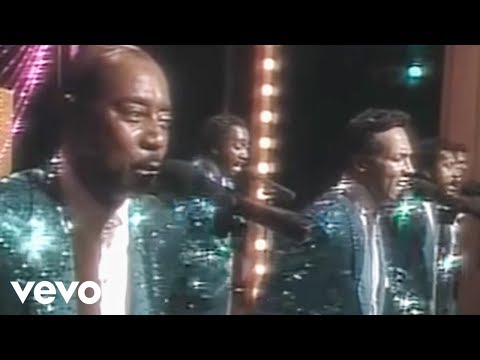


→ More from the 1970s File
View all 1970s hits →




Keep digging