The 1970s File Feature
You're A Big Girl Now
You're a Big Girl Now: The Stylistics and the Birth of Philadelphia Soul Sophistication Note: This article concerns "You're a Big Girl Now" by The Stylistics…
01 The Story
You're a Big Girl Now: The Stylistics and the Birth of Philadelphia Soul Sophistication
Note: This article concerns "You're a Big Girl Now" by The Stylistics (Avco Records, 1971), a Philadelphia soul recording produced by Thom Bell. It is entirely distinct from Bob Dylan's song of the same name, which appeared on his 1975 album "Blood on the Tracks."
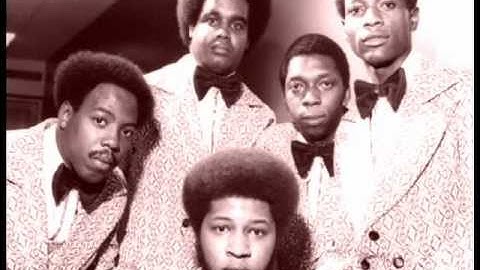
When The Stylistics released "You're a Big Girl Now" in 1971, they were at the earliest stages of what would become one of the most commercially and artistically successful runs in the history of Philadelphia soul. The group had formed in Philadelphia in the late 1960s from the remnants of two local vocal groups, and their partnership with producer and arranger Thom Bell would prove to be one of the most generative artist-producer relationships in the broader Philadelphia International and adjacent soul scene of the early 1970s. "You're a Big Girl Now" was among the first recordings that demonstrated what that partnership was capable of producing.
Thom Bell occupied a unique position in American popular music by the early 1970s. He had developed an approach to soul production that was distinguished by its harmonic sophistication, its use of orchestral strings and woodwinds in ways borrowed from classical arranging, and its emphasis on vocal blend and emotional nuance over raw power. Bell's production philosophy was built on the idea that soul music could sustain the same degree of compositional refinement as any other genre, and The Stylistics' extraordinary vocal capacities, particularly the falsetto of lead singer Russell Thompkins Jr., gave him an instrument perfectly suited to realizing that philosophy.
The Stylistics as a vocal group were distinguished by the range and expressiveness of their collective sound. Thompkins' falsetto was the group's most distinctive element, a voice of remarkable purity and emotional transparency that could inhabit the most intimate and vulnerable registers of a lyric without ever sounding forced or strained. Bell understood that this vocal quality required a production environment that supported rather than competed with it, and his arrangements for the group's early recordings reflect that understanding in every detail.
"You're a Big Girl Now" was released on Avco Records in 1971 and represented an early commercial indication of the group's potential. Avco was not one of the dominant soul labels of the period, lacking the resources and promotional infrastructure of Motown or Atlantic, but it was sufficiently well-connected to radio and retail markets to give The Stylistics' recordings meaningful exposure. The single performed well enough on the rhythm and blues chart to confirm that there was a genuine audience for Bell's sophisticated approach to vocal soul, and it established the template that the group would refine over the following several years.
The Philadelphia sound that Bell helped define, alongside Kenny Gamble, Leon Huff, and their collaborators at Philadelphia International Records, was in the process of formation in 1971, and "You're a Big Girl Now" can be heard as an early artifact of that formation. The lush orchestral arrangements, the sophisticated chord voicings, and the emphasis on melodic grace over rhythmic aggression all point toward the sound that would come to define an era and influence the development of disco, quiet storm, and contemporary R&B in the decade to come.
The group went on to achieve considerably greater commercial success with subsequent singles, including "Stop, Look, Listen (To Your Heart)" and particularly "Betcha by Golly, Wow" in 1972, which reached number three on the Billboard Hot 100 and became one of the signature recordings of the Philadelphia soul movement. "You're a Big Girl Now" is best understood as the foundation on which those successes were built, a recording that established the emotional and sonic vocabulary that The Stylistics and Thom Bell would develop into one of the most celebrated bodies of work in soul music.
Bell's arrangements for The Stylistics during this period drew on a wide range of influences, including his studies of classical music and his deep familiarity with the jazz harmony that had been part of his musical formation. The string writing in the group's early recordings was notable for its inventiveness and its emotional integration with the vocal performances: the strings did not merely provide a cushion of sound but moved in ways that responded to and amplified the emotional content of the vocal lines. This degree of arrangement sophistication was unusual in soul production of the period and contributed significantly to the music's appeal among listeners who might not ordinarily have been drawn to the genre.
The legacy of "You're a Big Girl Now" within the Stylistics' catalog is that of an important early statement, a recording that announced the group's potential and Thom Bell's vision without yet achieving the commercial and critical peak that was coming. It belongs to a tradition of soul recordings that are valued less for their individual chart performance than for their role in establishing the conditions for subsequent greatness, and in that tradition it holds an honorable and well-documented place.
02 Song Meaning
Growing Into Loss: The Emotional Architecture of "You're a Big Girl Now"
Note: This article concerns the Philadelphia soul recording "You're a Big Girl Now" by The Stylistics (1971), not Bob Dylan's composition of the same name.
"You're a Big Girl Now" by The Stylistics addresses a particular and emotionally complex situation: the end of a relationship in which one partner has undergone a transformation that the other can no longer follow. The title phrase carries a double meaning that the song exploits with considerable craft. On one level, it acknowledges the growth and increasing independence of the person being addressed. On another level, it registers the emotional cost of that growth from the perspective of someone who finds himself left behind by it. This ambivalence, the ability to celebrate someone's development while mourning what that development means for the relationship, gives the song a depth that distinguishes it from more straightforward love-song compositions.
Russell Thompkins Jr.'s falsetto voice was ideally suited to the emotional demands of this material. The falsetto register in soul and gospel music has historically been associated with expressions of extreme emotional vulnerability, states of feeling that ordinary chest-voice singing cannot adequately convey. Thompkins' performance inhabits precisely this territory, locating the song's emotional content in a register that communicates simultaneously the beauty of the feeling being described and the fragility of the narrator who is experiencing it. The voice does not merely carry the lyric; it enacts the emotional situation, making audible the quality of a love that is precious and painful in equal measure.
Thom Bell's arrangement served the song's emotional meaning with remarkable precision. The string writing, in particular, participated actively in the lyrical narrative rather than simply providing harmonic support. The orchestral textures Bell deployed suggested the kind of elegance and sophistication associated with the "big girl" of the title, creating a sonic environment that honored both the person being addressed and the emotional gravity of the situation. This kind of arrangement intelligence was characteristic of Bell's best work and is one reason why the Stylistics' recordings from this period have aged so well.
The song's emotional register is one of loving acceptance in the face of loss, a combination that is more emotionally sophisticated than either simple celebration or simple grief. The narrator's situation is one in which the very qualities he admires in the person he loves, her growth, her increasing confidence, her independence, are the qualities that are making the relationship untenable. This paradox, admiring what you are losing precisely because of what it is, gives the song its particular emotional texture and explains why it resonates beyond the specific circumstances it describes.
Within The Stylistics' early catalog, "You're a Big Girl Now" established the group's capacity for emotional nuance that would be developed and refined in subsequent recordings. The song demonstrated that Bell's production approach and Thompkins' vocal instrument could work together to create recordings of genuine emotional complexity, not merely polished commercial product. This early demonstration of artistic possibility was essential to the group's subsequent development, as it established the creative foundation from which their most celebrated work would grow.
The song also reflects a broader cultural moment in which African-American popular music was expanding its emotional vocabulary and its production ambitions simultaneously. The early 1970s Philadelphia soul movement of which this recording was an early instance represented a deliberate and successful effort to claim the full range of romantic and emotional experience as subject matter for Black popular music, presented with production values that asserted equality with the most sophisticated orchestral pop being made anywhere in the world. "You're a Big Girl Now" belongs to that project, and its emotional intelligence is inseparable from the cultural ambition that produced it.
→ More from The Stylistics
View all The Stylistics hits →


→ More from the 1970s File
View all 1970s hits →




Keep digging