The 1970s File Feature
Can't Give You Anything (but My Love)
Can't Give You Anything (but My Love): The Stylistics and the Peak of Philadelphia Elegance "Can't Give You Anything (but My Love)" arrived at a moment when …
01 The Story
Can't Give You Anything (but My Love): The Stylistics and the Peak of Philadelphia Elegance
"Can't Give You Anything (but My Love)" arrived at a moment when the Stylistics were at the absolute zenith of their commercial powers, a group whose exquisite falsetto-led arrangements had become the gold standard for polished Philadelphia soul. Released in 1975 on Avco Records in the United States and reaching number one in the United Kingdom, the song demonstrated both the extraordinary commercial reach of the Philly sound and the group's ability to project emotional vulnerability through a production framework of almost absurd sonic elegance.
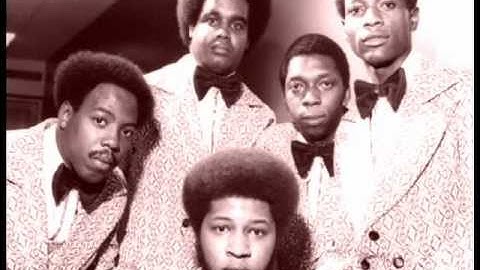
The Stylistics had formed in Philadelphia in 1968 from the merger of two local vocal groups, the Percussions and the Monarchs. The classic lineup that defined their commercial peak included Russell Thompkins Jr., Airrion Love, James Smith, Herbie Murrell, and James Dunn. Thompkins's extraordinarily high tenor, capable of sustaining falsetto phrases with a precision and expressiveness unusual even in a genre that prized vocal gymnastics, became the group's most distinctive asset, one that their producers exploited with considerable skill.
Their partnership with producer Thom Bell had produced a remarkable run of hits from 1971 onward. Bell's production style, characterized by elaborate orchestral arrangements, sophisticated chord changes drawn from jazz harmony, and an attention to the relationship between the lead vocal and the orchestral backdrop, transformed the Stylistics into something more than a pop vocal group. With arrangements also credited to Bell and later to Van McCoy, these records occupied a space between pop soul and something closer to orchestral pop, a space that had been pioneered by Burt Bacharach and Hal David but was being thoroughly reimagined by the Philadelphia International and associated acts of the early 1970s.
"Can't Give You Anything (but My Love)" was produced by Hugo Peretti and Luigi Creatore, who also wrote the song alongside George David Weiss. This production team, sometimes known as Hugo and Luigi, had a long history in the American pop industry and brought a classicist sensibility to the production that complemented the Stylistics' vocal sophistication. The arrangement drew on the established Philly soul vocabulary while adding its own emphases, constructing a framework that allowed Thompkins's vocal to sit at the center of a rich sonic environment.
The song's United Kingdom performance was particularly remarkable. It reached number one on the UK Singles Chart during the summer of 1975, a success that reflected the enormous popularity of Philadelphia soul in Britain, where the Sound of Philadelphia was received with an enthusiasm that sometimes exceeded its American reception. British audiences had embraced the Stylistics from their earliest releases, and "Can't Give You Anything" was their biggest UK hit, spending three weeks at the top of the charts and selling heavily enough to make it one of the commercial touchstones of that year in British pop.
In the United States, the track also performed strongly, reaching the top twenty on the Billboard Hot 100 and spending considerable time on the R&B singles chart, where it confirmed the group's status as one of the premier vocal acts in soul music. The period between 1971 and 1975 was the group's most productive commercially, and "Can't Give You Anything" represented the final major statement of that golden run before the changing musical climate of the late 1970s began to alter the landscape in which polished orchestral soul could thrive.
The cultural context of the song's success is worth noting. By 1975, disco was beginning to emerge as a commercial force, and the landscape for soul music was shifting toward heavier rhythm sections and simpler harmonic structures suited to sustained dancing. The elaborate orchestrations of the Stylistics' peak period would soon seem slightly out of step with where popular music was heading, which gives "Can't Give You Anything" a quality of late-period perfection, the fullest flowering of a style that was approaching its commercial horizon.
Russell Thompkins Jr.'s vocal performance on the track is widely regarded as among the finest of his career, which is a significant claim given the consistent excellence of his work throughout the early 1970s. The falsetto work in the chorus sections in particular represented a technical accomplishment that impressed fellow musicians and critics alike. The song was included on the album "Thank You Baby," one of several Stylistics albums from this period to achieve substantial commercial success on both sides of the Atlantic.
The song's legacy has been sustained by extensive sampling, interpolation, and cover versions across the decades following its release. Its combination of emotional directness and sonic sophistication made it attractive to subsequent generations of producers who wanted to reference the warmth and elegance of the Philly soul era without simply recreating it. The original recording remains in active streaming use, having accumulated considerable audiences through its inclusion in various compilation and mood-based playlists that the digital era made newly popular.
02 Song Meaning
Meaning and Themes: Honest Poverty of the Heart in "Can't Give You Anything (but My Love)"
The title of "Can't Give You Anything (but My Love)" announces its emotional position with unusual directness for a pop love song. Most love songs of the era either celebrated abundance, the gifts and devotion a lover can shower on the beloved, or mourned loss. This one occupies a different territory: it is a song about material limitation that treats emotional richness as the only currency that matters. The narrator has nothing to offer in conventional terms but insists, with complete conviction, that love is the one thing he does possess and that it is sufficient.
This is a romantic narrative with a long history in both folk and pop traditions, the poor but devoted lover who positions emotional authenticity as more valuable than wealth or status. But what distinguishes the Stylistics' version of this theme is the disconnect between the content of the message and the sonic luxury of its delivery. Russell Thompkins Jr.'s vocal rides over an arrangement of considerable opulence, strings and brass and precisely calibrated orchestral textures that themselves represent a kind of lavishness. The narrator claims poverty while the music demonstrates extravagance, and this ironic gap is part of what makes the track so interesting to listen to carefully.
The emotional core of the song is the assertion that love is enough, that it compensates for what it cannot provide materially, and that a relationship built on genuine feeling rather than material exchange is the more valuable arrangement. This is a recurring theme in soul music of the period, one that connects to both the gospel tradition's elevation of spiritual over material value and to the social circumstances of the African American communities from which this music primarily emerged. Offering love as the paramount gift was not merely a romantic convention but a meaningful cultural statement about what could not be taken away.
The lyrical construction builds through accumulation, cataloguing what the narrator cannot provide before arriving repeatedly at what he can. This structure gives the song a slightly self-deprecating quality that makes the affirmation of love more rather than less convincing: a narrator who is honest about limitations is more trustworthy when he makes his positive claim. The technique is rhetorically sophisticated even within the apparent simplicity of the song's emotional statement.
Within the Stylistics' catalog, the song represents the apex of their capacity to combine vulnerability with elegance. Earlier hits had sometimes leaned further toward heartbreak; later work would move toward a disco-adjacent brightness. "Can't Give You Anything" finds the exact midpoint between emotional exposure and dignified restraint, which is precisely the zone in which Thompkins's voice was most effective. The production matched the vocal in its balance of lushness and control, never becoming overwrought even as it deployed resources that lesser producers might have used to smother rather than support the performance.
The song's endurance across five decades is in part a function of this emotional honesty. Audiences continue to find in it a statement about love that feels both specific to its moment and applicable to any romantic situation in which one partner has more to offer emotionally than financially. In the streaming era, it functions as a kind of gold standard for a certain kind of sophisticated, orchestral soul love song, a record that achieves its effects through restraint and elegance rather than through intensity or drama.
→ More from The Stylistics
View all The Stylistics hits →

→ More from the 1970s File
View all 1970s hits →




Keep digging