The 1970s File Feature
You'll Never Get To Heaven (If You Break My Heart)
You'll Never Get to Heaven (If You Break My Heart) — The Stylistics: History Note: This entry concerns The Stylistics' 1973 recording of "You'll Never Get to…
01 The Story
You'll Never Get to Heaven (If You Break My Heart) — The Stylistics: History
Note: This entry concerns The Stylistics' 1973 recording of "You'll Never Get to Heaven (If You Break My Heart)" on Avco Records, produced by Thom Bell. Dionne Warwick recorded the original version of this Burt Bacharach and Hal David composition in 1964.
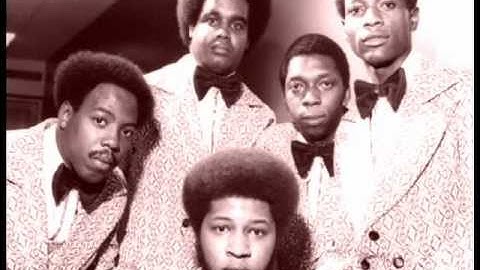
The Stylistics were one of the defining acts of the Philadelphia soul era, a period stretching roughly from 1970 through the mid-1970s in which Philadelphia International Records and the surrounding ecosystem of labels and producers made the city the center of American soul music production. The group formed in Philadelphia in 1968 from the merger of two local vocal groups and achieved their commercial breakthrough with "You Are Everything" in 1971. By 1973, when "You'll Never Get to Heaven" was released on Avco Records, the Stylistics were established as one of the leading vocal groups in contemporary soul music, recognized for the extraordinary range and emotional expressiveness of lead tenor Russell Thompkins Jr.
The production of the record was handled by Thom Bell, the Philadelphia-based arranger and producer who was responsible for some of the most sophisticated and commercially successful recordings in the soul canon of the early 1970s. Bell had developed an approach that combined elaborate string and brass arrangements, influenced by classical music's sense of architecture and development, with the rhythmic precision and vocal tradition of rhythm and blues and gospel. His productions with the Stylistics, the Delfonics, and the Spinners during this period represent a body of work that has no peer in terms of consistent quality and commercial achievement in the genre.
Bell's decision to record "You'll Never Get to Heaven (If You Break My Heart)," the Burt Bacharach and Hal David song that Dionne Warwick had recorded originally in 1964, reflected a deliberate strategy of reaching back into the Great American Songbook tradition of sophisticated pop composition and demonstrating that contemporary soul production could bring new dimensions to songs already recognized as classics. Bacharach and David were among the most admired songwriting teams of the 1960s, and their compositions had a harmonic and melodic sophistication that rewarded elaborate production treatment.
Russell Thompkins Jr.'s falsetto lead vocal on the Stylistics' recording brought a quality of aching emotional intensity to the material that transformed what had been a relatively crisply produced Warwick recording into something altogether more baroque and emotionally overwhelming. Thompkins's range extended well into the falsetto register, giving him access to an upper range that few male vocalists of the period could match, and Bell's arrangements were constructed to feature that range to maximum effect, building the song's arrangement around Thompkins's vocal in a way that made his performance the centerpiece of a carefully engineered emotional experience.
The record performed well on both the rhythm and blues chart and the pop chart, reflecting the Stylistics' characteristic ability to cross over without compromising the soulful quality of their music. The Avco Records label had been a committed partner in developing their commercial profile, and "You'll Never Get to Heaven" continued a remarkable run of chart successes that had included "Betcha by Golly, Wow," "I'm Stone in Love with You," and "Break Up to Make Up." Each of these recordings combined Bell's intricate production with Thompkins's extraordinary vocal and the group's tight ensemble singing in harmonies that complemented but never obscured the lead.
The song's position in the Stylistics' catalog reflects the group's willingness to work across different types of material, original compositions alongside carefully chosen covers, always filtered through Bell's production aesthetic and Thompkins's vocal approach. The Bacharach-David catalog was particularly well suited to this treatment: songs constructed around sophisticated harmonic changes, unusual melodic leaps, and lyrics that treated romantic emotion with a kind of philosophical gravity rather than simple sentiment.
The 1973 soul landscape was in transition. The disco movement was beginning to coalesce, Motown was relocating from Detroit to Los Angeles, and the orchestral soul that Bell and contemporaries like Barry White and producer Norman Whitfield had developed was reaching its commercial peak even as new sounds were beginning to develop in parallel. The Stylistics' recordings of this period, including "You'll Never Get to Heaven," capture a moment of genuine artistic maturity in the genre, when the production resources and creative ambition aligned to produce music of extraordinary sophistication and emotional power.
Critical appreciation for Thom Bell's productions with the Stylistics has grown consistently since the 1970s, and "You'll Never Get to Heaven" is regularly cited as an example of his greatest work, a recording in which every element, from the string arrangement to the rhythm track to the vocal production, is in perfect service of the song's emotional intention. The record stands as evidence of what was possible when the Philadelphia soul model was operating at its highest level of achievement, and it remains one of the most beautiful soul recordings of its decade.
02 Song Meaning
You'll Never Get to Heaven (If You Break My Heart) — Meaning and Themes
Note: This discussion concerns The Stylistics' Avco Records recording, produced by Thom Bell. The original composition is by Burt Bacharach and Hal David, who wrote it for Dionne Warwick in 1964.
"You'll Never Get to Heaven (If You Break My Heart)" makes an argument about the moral dimension of romantic faithfulness that is both playful and genuinely serious. The song posits that breaking another person's heart is not merely a personal failing but a spiritual one, a transgression with consequences beyond the emotional pain of the immediate victim. This conflation of romantic fidelity with religious obligation gives the song a theological weight that distinguishes it from simpler please-don't-leave-me ballads, and it reflects the deep influence of gospel and sacred music traditions on both the Bacharach-David songwriting partnership and on the Philadelphia soul production aesthetic that Thom Bell brought to the Stylistics' recording.
Burt Bacharach and Hal David's compositional approach consistently brought harmonic and structural sophistication to emotional content that might in lesser hands seem conventional. The melody of "You'll Never Get to Heaven" includes unexpected leaps and turns that mirror the emotional complexity of the lyrical situation, the combination of sweetness and warning that the narrator delivers to the lover whose faithfulness is being implored. The Stylistics' recording amplifies these qualities through Thom Bell's orchestration, which surrounds the vocal with string and brass arrangements of considerable intricacy.
Russell Thompkins Jr.'s falsetto performance on the Stylistics' version brings a quality of spiritual intensity to the material that transcends the literal meaning of the words. In the African American musical tradition, the falsetto voice carries associations with gospel music's most emotionally elevated moments, the points in a church service when the music lifts toward the sacred rather than the earthly. When Thompkins deploys that voice in the service of a secular love song about faithfulness and its consequences, he brings the full weight of that tradition into the romantic context, making the plea for fidelity feel like something more than a simple request.
The warning structure of the song, organized around the conditional logic of "if you break my heart, you'll never get to heaven," places the narrator in an unusually assertive position for a ballad about romantic vulnerability. Most songs in this emotional register express suffering or pleading; this one adds moral authority to the emotional appeal. The narrator is not simply asking to be treated well but is making a claim about the spiritual stakes of romantic behavior, which is a more complex and interesting rhetorical position than simple vulnerability.
For the Stylistics' catalog as a whole, the recording exemplifies the group's characteristic combination of extraordinary vocal beauty and emotional depth. Their best recordings, of which this is undeniably one, operate simultaneously as popular entertainment and as genuinely affecting emotional experiences, the production and vocal performance working together to create something that feels larger than the sum of its parts. Thom Bell's arrangement creates a sonic architecture that supports and amplifies rather than merely accompanies the vocal, and the result is a record of unusual emotional and musical richness.
The song's position at the intersection of the Bacharach-David songwriting tradition and the Philadelphia soul production aesthetic is historically significant. It demonstrates that the Great American Songbook and the contemporary soul tradition were not separate musical worlds but overlapping ones, sharing harmonic sensibilities and emotional values even when their surface styles differed. Bell's production of the Stylistics' version honors both traditions simultaneously, and the recording stands as evidence of their underlying compatibility.
→ More from The Stylistics
View all The Stylistics hits →



→ More from the 1970s File
View all 1970s hits →




Keep digging