The 1970s File Feature
You Are Everything
You Are Everything: The Stylistics and the Birth of Philadelphia Soul Philadelphia, 1971: A New Sound Rising Toward the end of 1971, a particular kind of mus…
01 The Story
You Are Everything: The Stylistics and the Birth of Philadelphia Soul
Philadelphia, 1971: A New Sound Rising
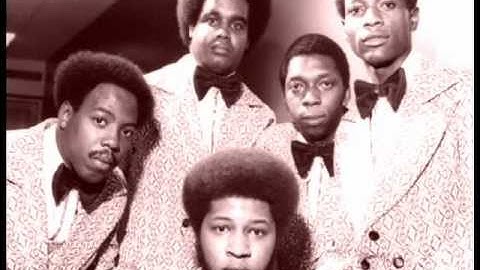
Toward the end of 1971, a particular kind of music was beginning to crystallize in the studios of Philadelphia. The Motown sound that had defined the previous decade's Black pop music was yielding to something both lusher and more melancholic: fuller orchestration, more intricate vocal arrangements, tempos that allowed the emotional content to breathe and settle rather than driving urgently forward. The production team of Thom Bell and the songwriting team of Linda Creed were at the center of this development, and the group that would carry their vision most fully into the pop mainstream was the Stylistics, a quintet from North Philadelphia whose harmonies seemed designed for exactly this moment.
The Stylistics had formed in 1968 from the merger of two local groups, and by 1971 they had developed a sound built on the extraordinary falsetto of Russell Thompkins Jr., one of the most distinctive lead voices in the history of soul music. Their debut album that year introduced them to a national audience, but it was their second single's chart campaign that announced them as a genuine commercial and artistic force.
The Architecture of a Classic
The track was produced by Thom Bell, whose approach to Philadelphia Soul was already fully formed by late 1971. Bell was a meticulous arranger who understood how to use strings, woodwinds, and rhythm section together to create a sound that was simultaneously sophisticated and emotionally direct. The orchestration on this recording is expansive without being overwhelming, providing a cushion of sound beneath Thompkins's falsetto that elevates the performance to something approaching the operatic.
The lyric, co-written by Bell and Linda Creed, employed a device that would become one of Creed's signatures: the song-within-a-song reference, the narrator hearing a familiar record and having it trigger a rush of remembered feeling. The specific song being referenced is never named; the power lies in the act of recognition itself, the way that music can collapse time and return the listener to a moment they thought was past. It was a brilliant conceit, and the Stylistics performed it with a vulnerability that made the artifice feel entirely real.
Climbing Toward the Top Ten
The single debuted on the Billboard Hot 100 on November 6, 1971, entering at number 76. Its rise was steady and impressive: 59 in week two, 43 in week three, 35 in week four, and 27 by early December. The momentum carried through the holiday season and into the new year. The track peaked at number 9 on January 22, 1972, spending sixteen weeks on the Hot 100 in total and crossing the crucial top-ten threshold. The R&B chart performance was even stronger, confirming the depth of the song's connection with Black American audiences.
Reaching the top ten on the pop chart was a significant commercial achievement that demonstrated the Stylistics' crossover appeal. Their audience was genuinely biracial, drawn by the universality of the emotional content and the sheer sonic beauty of the recording.
Bell and Creed: The Partnership Behind the Sound
It is worth pausing on the creative partnership that produced this record, because it was one of the most fruitful in American pop history. Thom Bell and Linda Creed would go on to write and produce some of the most celebrated Philadelphia Soul recordings of the decade, developing a collaborative vocabulary that combined Bell's musical sophistication with Creed's gift for lyrical emotional precision. The Stylistics catalog that emerged from their work together stands as one of the most consistently beautiful bodies of recorded work in seventies pop.
This track was an early peak of that collaboration, demonstrating what they were capable of when all the elements aligned: the right group, the right song, the right production, and the right moment in music history.
The Foundation of a Legacy
In retrospect, this recording is one of the founding documents of Philadelphia Soul, a genre that would shape Black American pop music for the entire first half of the seventies. The sound that Bell and the Stylistics developed here would influence countless artists and would ultimately flow into the disco era of the late seventies with its own signature intact. Put this record on and you are hearing something that felt like a revelation in the autumn of 1971, and still carries that quality half a century later.
"You Are Everything" — The Stylistics' singular moment on the 1970s charts.
02 Song Meaning
You Are Everything: Memory, Music, and the Eternal Return of Lost Love
Music as a Time Machine
The central conceit of this song is one of the most psychologically true ideas in the pop canon: the experience of hearing a familiar record and being transported instantly, involuntarily, to the person and the moment associated with it. The narrator hears a song on the radio and in that instant the absent beloved is everywhere. The phenomenon is universal; anyone who has ever been in love and lost that love has experienced the particular cruelty of a familiar melody arriving without warning and making the loss suddenly present again.
What makes the lyric remarkable is its specificity about this experience. The song is not content to gesture at the feeling; it locates it precisely, in the act of recognition, in the gap between the beauty of the music and the pain of the memory, in the narrator's awareness that the record playing is both a pleasure and a wound.
The Philadelphia Soul Emotional Register
The Philadelphia Sound that Thom Bell and his collaborators developed was distinguished partly by its emotional palette. Where earlier soul music had often foregrounded assertiveness, drive, and communal energy, the Philadelphia Sound leaned into introspection, longing, and a kind of refined melancholy that suited the lush orchestration Bell brought to his productions. This track is a perfect specimen of that emotional sensibility. It is suffused with ache, with the particular sadness of beauty remembered and lost, and the music serves that emotional content without ever overwhelming it.
Russell Thompkins Jr.'s falsetto, riding above the strings and the rhythm section, added its own layer of meaning. The falsetto in Black American vocal tradition has always been associated with extreme emotional states, with feeling that has exceeded the ordinary range, and Thompkins deployed it with extraordinary precision throughout this recording.
Love and Loss as Universal Language
The song's crossover success, reaching number 9 on the pop chart while performing strongly on the R&B chart simultaneously, reflected the universality of its emotional subject matter. Romantic loss and the pain of memory are not culturally specific experiences. They belong to everyone who has ever loved, and a song that rendered them with sufficient beauty and emotional truth would find audiences across demographic lines. This one did exactly that.
The specific cultural location of the song (Black Philadelphia, the emerging Philadelphia Soul sound) shaped its musical vocabulary without limiting its emotional reach. Bell and Creed wrote from inside a specific tradition and produced something that spoke beyond it.
Legacy and Lasting Resonance
This recording has been revisited, sampled, and reimagined many times in the decades since its original release, which is the clearest possible evidence of its lasting power. Songs that continue to generate new responses from new artists across multiple generations are doing something essential, capturing a truth about human experience that remains true regardless of the musical context it is placed in. The emotional core of "You Are Everything" is exactly that durable.
Heard today, the recording still carries its full weight. The production sounds warm and considered, the vocal performance is extraordinary, and the lyrical conceit remains as true as it was in 1971. Time has been very kind to it.
"You Are Everything" — The Stylistics' singular moment on the 1970s charts.
→ More from The Stylistics
View all The Stylistics hits →


→ More from the 1970s File
View all 1970s hits →




Keep digging