The 1970s File Feature
Betcha By Golly, Wow
"Betcha By Golly, Wow" — The Stylistics and Philadelphia's Velvet Sound Philadelphia Soul at Its Peak The early 1970s belonged, in significant ways, to Phila…
01 The Story
"Betcha By Golly, Wow" — The Stylistics and Philadelphia's Velvet Sound
Philadelphia Soul at Its Peak
The early 1970s belonged, in significant ways, to Philadelphia. While Motown continued to produce hits and California soft rock was taking shape, the particular sound coming out of Philadelphia's Sigma Sound Studios was carving out its own unmistakable corner of the pop landscape. Producers Thom Bell and Linda Creed were among the principal architects of what became known as Philadelphia Soul or Philly Soul: lush string arrangements, layered horns, meticulous production, and melodies that felt genuinely inevitable, as if they had always existed and the recording simply uncovered them.
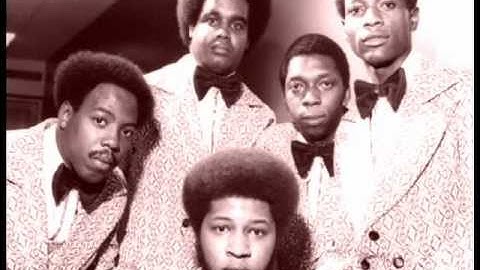
The Stylistics were among the flagship acts of that Philadelphia moment. The group had formed in the late 1960s from the merger of two Philadelphia-area vocal groups, and by the time they reached Avco Records and connected with Bell and Creed as their principal production and songwriting team, the chemistry was immediate. Their debut album arrived in 1971, and by 1972 they were producing some of the most commercially and artistically successful recordings of their careers.
The Song and Its Creation
"Betcha By Golly, Wow" was written by Thom Bell and Linda Creed, the same partnership responsible for many of the group's most beloved recordings. Creed's lyrics created a world of affectionate, slightly formal romantic declaration, the narrator so overwhelmed by the object of his devotion that even language itself seemed inadequate to the task. The exclamatory title phrase captured exactly that quality of speechless admiration. Bell's production surrounded those lyrics with an arrangement of extraordinary richness: strings that moved with genuine melodic purpose, not merely as atmospheric texture, and a rhythm section that kept the emotional temperature warm without ever becoming urgent.
Russell Thompkins Jr.'s falsetto lead vocal was the centerpiece of the recording. His voice operated in a register that should have been fragile but was instead remarkably powerful, combining emotional transparency with technical precision. The falsetto communicated vulnerability without weakness, and that combination is exactly what the lyrical content required. Thompkins was one of the great falsetto voices in soul music, and "Betcha By Golly, Wow" captured him at peak form.
A Historic Chart Run
"Betcha By Golly, Wow" debuted on the Billboard Hot 100 on February 26, 1972, at position 79. What followed was one of the more dramatic ascents of that chart year: the single moved from seventy-nine to sixty in its second week, then to thirty-four, demonstrating the kind of momentum that radio programmers and retailers could both measure and amplify. The single ultimately peaked at number 3 on May 6, 1972, spending sixteen weeks total on the chart. A top-three Hot 100 showing was a major commercial achievement, placing the recording among the year's biggest pop hits and introducing the Stylistics to the widest possible mainstream audience.
Sixteen weeks on the chart represented the kind of sustained presence that distinguished a genuine pop phenomenon from a flash-in-the-pan success. The recording held listener attention across an entire spring season, generating repeated plays and continued sales well after its initial promotional push had concluded.
The Stylistics' Wider Legacy
The success of "Betcha By Golly, Wow" established the Stylistics as major figures in early-1970s soul, opening the door for a series of subsequent hits through the mid-1970s. Their collaboration with Thom Bell and Linda Creed produced a body of work that stands as one of the great recorded legacies in Philadelphia Soul, an era whose influence on subsequent R&B and pop production has been enormous. Artists across multiple generations have drawn on the Philly Sound template that recordings like this one helped to define.
Still Worth Every Second
There is a particular pleasure in returning to recordings where every element is exactly right: the voice, the arrangement, the production, the song itself. "Betcha By Golly, Wow" offers that pleasure completely. Four decades and more of listening have not diminished the impact of Thompkins' first phrase or the moment when the strings enter. If you have not heard it in a while, now is the time. Put it on and remember what the beginning of the 1970s sounded like at its very best.
"Betcha By Golly, Wow" — The Stylistics Featuring Russell Thompkins, Jr.'s singular moment on the 1970s charts.
02 Song Meaning
The Meaning of "Betcha By Golly, Wow" by The Stylistics
Romantic Awe as Lyrical Mode
The emotional territory of "Betcha By Golly, Wow" is a specific and somewhat underexplored corner of the romantic landscape: the state of being so thoroughly captivated by another person that ordinary language fails. The title phrase itself enacts that failure, substituting an exclamatory sound for the precise articulation of feeling that the narrator cannot quite achieve. The lyrics are organized around this experience of romantic overwhelm, where admiration has exceeded the capacity of available words to contain it.
That emotional mode resonated deeply with listeners in 1972 because it captured something genuinely recognizable. The experience of finding another person so compelling that one becomes almost inarticulate in their presence is universal, crossing lines of age, background, and circumstance. Linda Creed's lyrics gave that universal experience a form that felt both specific and broadly accessible, no small achievement in popular songwriting.
The Falsetto and Its Emotional Function
Russell Thompkins Jr.'s falsetto vocal was not merely a stylistic choice but a meaningful one in the context of the song's emotional content. The falsetto register in soul and R&B has a long tradition of signaling emotional exposure, a voice reaching into a register it does not occupy comfortably in order to communicate feelings that exceed ordinary expression. Thompkins' performance in this register was extraordinary in its control, finding genuine emotional transparency without the artificiality that less accomplished falsetto singing sometimes produces.
The relationship between the voice's vulnerability and the lyrics' subject matter created a unified emotional argument: this is a person so moved by feeling that even their voice has risen beyond its usual range to try to express what the words alone cannot capture. The technical achievement and the emotional communication were inseparable.
Philadelphia Soul's Emotional Architecture
Thom Bell's production philosophy treated strings and arrangements as emotional amplifiers rather than decorative elements. The lush orchestration on "Betcha By Golly, Wow" did not exist simply to make the recording sound expensive or sophisticated; it existed to expand and deepen the emotional experience the song was trying to create. Philadelphia Soul in this period was committed to the idea that popular music could be emotionally ambitious without sacrificing accessibility, and this recording exemplified that commitment.
The result was music that spoke to listeners across demographic categories. The emotional language of Philly Soul was universal enough to reach mainstream pop audiences while remaining deeply rooted in the African American musical traditions from which it emerged.
Why the Song Still Moves People
Decades of listening and relistening have not exhausted the recording's emotional capacity. Songs that accurately describe genuine human experiences do not age out of relevance because the experiences they describe continue to occur in each generation. The feeling of being so moved by another person that language becomes inadequate is not a period artifact; it is a feature of human emotional life. Thompkins' voice, Bell's production, and Creed's lyrics conspired to capture that feeling with unusual precision, which is why the recording continues to find new listeners and move them exactly as it moved its original audience.
→ More from The Stylistics Featuring Russell Thompkins,Jr.
View all The Stylistics Featuring Russell Thompkins,Jr. hits →


→ More from the 1970s File
View all 1970s hits →




Keep digging