The 1970s File Feature
Break Up To Make Up
Break Up To Make Up: The Stylistics and Thom Bell's Philadelphia Soul Masterwork In the early 1970s, Philadelphia was producing some of the most sophisticate…
01 The Story
Break Up To Make Up: The Stylistics and Thom Bell's Philadelphia Soul Masterwork
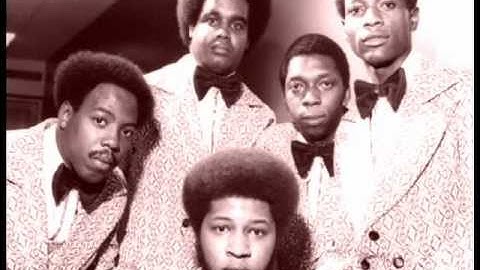
In the early 1970s, Philadelphia was producing some of the most sophisticated and emotionally resonant popular music in American history, and the creative partnership between producer-arranger Thom Bell and vocal group The Stylistics was at the center of that achievement. "Break Up To Make Up," released in late 1972 and climbing to number 5 on the Billboard Hot 100 in 1973, spent fourteen weeks on the chart and became one of the era's most beloved recordings, demonstrating with precision why the Philadelphia International and surrounding ecosystem had become the dominant force in sophisticated Black popular music.
The Stylistics had formed in Philadelphia in 1968 through the merger of two local vocal groups, and their lineup featured one of the most distinctive lead vocal instruments in soul music: Russell Thompkins Jr.'s falsetto. Thompkins possessed a voice of extraordinary purity and emotional expressiveness in the upper register, capable of conveying tenderness, yearning, and joy with a delicacy that contrasted beautifully with the lush orchestral arrangements Thom Bell constructed around it. The combination of Thompkins's falsetto with the group's warm, precisely calibrated harmony vocals created a sound that was unique in the soul landscape of the period.
Thom Bell was among the most complete musical talents of his generation. He wrote, arranged, produced, and played on the records he made with The Stylistics, and the holistic control he exercised over the recording process allowed him to achieve a seamless integration between compositional intent and sonic realization that few producers of any era have matched. His arrangements drew on the traditions of classical orchestration while remaining rooted in the rhythmic and harmonic languages of Black popular music, creating a Philadelphia sound that was simultaneously sophisticated and deeply soulful.
"Break Up To Make Up" was co-written by Bell with Linda Creed, his longtime creative collaborator, and the songwriting partnership produced material of consistent quality and emotional intelligence. The song's lyrical construction is carefully crafted to map the emotional logic of a particular kind of romantic relationship, one characterized by recurring cycles of conflict and reconciliation, and Bell's melody and arrangement give that emotional narrative a musical shape that makes the experience legible and deeply felt.
The string arrangement on the record is particularly remarkable. Bell's orchestration creates a cushion of sound that supports the vocal performance without overwhelming it, providing emotional amplification without emotional manipulation. The strings respond to the vocal line rather than simply accompanying it, creating a dialogue between the orchestra and the singers that gives the production a conversational quality. This kind of orchestral responsiveness was one of the hallmarks of Bell's work and one of the qualities that distinguished his productions from the many imitators that the Philadelphia sound attracted.
The song's commercial performance reflected both the strength of the record itself and the extraordinary position that Philly soul occupied in the early 1970s marketplace. Philadelphia International Records, the label founded by Kenny Gamble and Leon Huff, had established a brand identity for sophisticated, orchestrated soul that had enormous commercial traction, and artists associated with that ecosystem, including The Stylistics, who recorded for Avco Records but worked within the same creative community, benefited from the genre's cultural momentum.
Fourteen weeks on the Hot 100 with a peak of number 5 placed "Break Up To Make Up" among the most successful singles of the 1972-1973 period and cemented The Stylistics' position as one of the most commercially significant vocal groups in soul music. The record performed even more strongly on the R&B charts, where it reached the top position and remained a dominant presence for an extended period. This dual success reflected the record's ability to appeal to both the core Black popular music audience and the broader pop marketplace that had been opened to sophisticated soul by the work of Motown, Stax, and the Philadelphia scene.
The song has endured in the decades since its release as one of the essential recordings of the early 1970s soul era. It appears regularly on retrospective compilations, has been covered by artists working across multiple genres, and remains a touchstone for listeners who associate it with a particular moment of personal or cultural significance. Russell Thompkins Jr.'s falsetto performance, preserved at its most affecting on this record, is one of the most emotionally direct vocal performances in the soul canon, and the song's continued capacity to move listeners is inseparable from the quality of that original recorded moment.
02 Song Meaning
The Cycle of Conflict and Desire in "Break Up To Make Up"
"Break Up To Make Up" engages with one of romantic life's most psychologically complex patterns: the relationship that sustains itself through recurring cycles of conflict and reconciliation, in which the breaking up and the making up have become so intertwined that they are essentially two halves of the same dynamic. The Stylistics articulate this pattern not with condemnation or analysis but with the warm, unsentimental recognition of people who understand exactly what they are describing because they have lived it.
The song's emotional honesty about this pattern is part of what gives it its staying power. It does not pretend that the cycle it describes is entirely healthy or rational. But it also does not condemn it, because the song understands that the intensity of feeling generated by conflict and reconciliation is real and that the desire that pulls people back together after separation is genuine. The making up after breaking up produces a specific emotional experience, a heightened awareness of the relationship's value and a renewal of tenderness, that the song treats as one of the genuine pleasures of romantic life even as it acknowledges that pleasures purchased through conflict carry their own complications.
There is a dimension of self-awareness in the song's emotional architecture that distinguishes it from more straightforwardly romantic treatments of similar material. The narrator knows what is happening. He understands that the pattern repeats, that the reconciliations will be followed by new conflicts, that the cycle is ongoing. But the knowledge does not produce the desire to exit the cycle; it produces, instead, a kind of loving acceptance of the relationship as it actually is rather than as a more idealized version would have it be. This acceptance is not resignation but something more like mature recognition of the terms on which this particular love exists.
Thom Bell's musical realization of these themes is itself meaningful. The song's melodic and harmonic structure is built on tension and resolution in ways that mirror the lyrical content: musical phrases that create expectation and then fulfill it, harmonic progressions that move toward dissonance before resolving into consonance. The music enacts the emotional pattern it is describing, making the listener's experience of the song a version of the relationship experience being narrated.
Russell Thompkins Jr.'s falsetto adds another layer of meaning to the song's emotional content. The falsetto register in soul music has historically been associated with emotional extremity, with longing, with the expression of feelings too intense for the normal speaking voice to contain. Thompkins's performance in this register gives the song's emotional acknowledgments a quality of genuine vulnerability, suggesting that the cycle being described, for all its difficulties, involves real depth of feeling and real stakes. The voice alone communicates that this is not a casual relationship but one in which significant emotional investment has been made, and that investment is what makes the cycle both painful and irresistible.
→ More from The Stylistics
View all The Stylistics hits →



→ More from the 1970s File
View all 1970s hits →




Keep digging