The 1970s File Feature
You're Throwing A Good Love Away
You're Throwing A Good Love Away — The Spinners' Plea From Philly Soul's Peak The Spinners in 1977 By the spring of 1977, the Spinners had accumulated one of…
01 The Story
You're Throwing A Good Love Away — The Spinners' Plea From Philly Soul's Peak
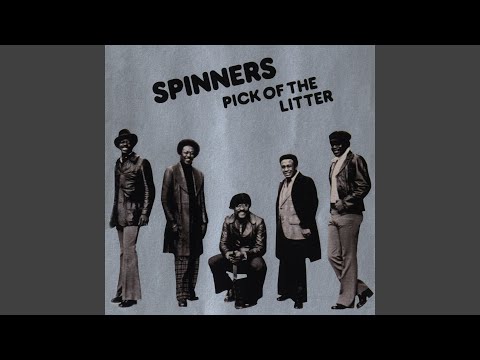
The Spinners in 1977
By the spring of 1977, the Spinners had accumulated one of the most impressive run of hit records of any vocal group in the soul era. Their partnership with producer Thom Bell and Atlantic Records had yielded a string of charting singles through the early-to-mid 1970s that placed them among the finest performing groups in popular music. Songs that combined Bell's meticulous orchestrations with the group's five-part vocal blend had defined a specific kind of Philadelphia-adjacent soul that was sophisticated, emotional, and built to last. "You're Throwing A Good Love Away," released in early 1977, arrived near the end of that particularly productive period and demonstrated that the combination still had life in it.
The Spinners had navigated a remarkable career arc by 1977. Originally from Detroit, they had struggled commercially through most of the 1960s before finding their footing in the early 1970s when they signed with Atlantic and began working with Bell. The creative partnership with Thom Bell produced some of the most celebrated recordings in soul music history, including "Could It Be I'm Falling in Love" and "I'll Be Around," and it established the Spinners as one of the premier vocal groups in a highly competitive field.
The Sound and its Architecture
Thom Bell's production approach was distinctive for the care he brought to the interplay between the orchestra and the vocal group. Where some producers treated the backing arrangement as a bed on which the vocals simply rested, Bell constructed arrangements in which the orchestral and vocal elements were in genuine dialogue, responding to each other rather than simply coexisting. The strings, horns, and rhythm section on a Spinners production were always doing specific emotional work, amplifying or commenting on what the vocalists were expressing rather than providing neutral backdrop.
On "You're Throwing A Good Love Away," this approach is audible in the way the arrangement rises and falls with the emotional content of the lyric, the orchestral texture becoming warmer and denser during the most emotionally intense passages and pulling back to create space for the group harmonies in the more reflective moments. This kind of craft was Bell's signature, and it required musicians of considerable ability to execute it convincingly.
The Billboard Chart Run
"You're Throwing A Good Love Away" debuted on the Billboard Hot 100 on March 19, 1977, at position 84. The track climbed steadily over the following weeks, reaching a peak of number 43 on April 16, 1977, after seven weeks on the chart. That trajectory, steady upward movement from a modest debut to a solid mid-chart peak, reflected the typical pattern of a well-crafted soul single finding its audience through radio adds and word of mouth rather than through the kind of immediate mass impact that was sometimes possible for higher-profile releases.
A peak of 43 placed the track in the top 50 of the Hot 100, a genuine commercial achievement in a chart landscape where soul and R&B records faced consistent competition from the growing disco phenomenon on one side and mainstream pop on the other. The Spinners' established audience gave them a foundation of reliable listeners who pushed their records into chart territory that newer acts would have struggled to reach.
The Group's Vocal Dynamics
One of the Spinners' great strengths was the variety of vocal textures available within the group. Lead vocalists Philippé Wynne and Bobby Smith provided different emotional registers that the group could deploy depending on the material. Wynne, who was the more theatrical and improvisatory of the two, brought an ecstatic, gospel-inflected quality that suited certain kinds of up-tempo material; Smith offered a more intimate, conversational warmth that worked beautifully for reflective ballads. The allocation of material between the two vocalists was one of the production decisions that made the Spinners' catalog so varied and so consistently satisfying.
The harmonies that supported whichever lead was singing were themselves an instrumental resource, capable of creating emotional depth through texture and blend rather than through individual vocal display.
The Legacy of the Spinners Sound
Looking back at the Spinners catalog from a distance of nearly five decades, what stands out is how consistently well-crafted the work is. The Bell-produced recordings in particular have aged with remarkable grace, the orchestral arrangements feeling warm rather than dated, the vocal performances retaining the immediate emotional accessibility that made them radio hits in the first place. "You're Throwing A Good Love Away" is a representative example of this quality, a song that earns its emotional claims through craft rather than through mere formula. Hear it once and it becomes familiar; hear it several times and you start to notice all the architectural detail underneath.
Find a quiet evening, put on the Spinners, and let Thom Bell's strings do what they were always designed to do.
"You're Throwing A Good Love Away" — The Spinners' singular moment on the 1970s charts.
02 Song Meaning
You're Throwing A Good Love Away — The Cost of Emotional Negligence
A Warning Issued Too Late
The emotional premise of "You're Throwing A Good Love Away" is one of the most fundamental in the soul tradition: the narrator who can see, with devastating clarity, that the person they love is about to make an irreversible mistake, and who uses the song to issue a warning that may or may not be heeded. The specific nature of the mistake is emotional negligence, the failure to recognize and preserve something valuable before it is gone. This is not a song about betrayal or cruelty; it is about inattention and the cost of taking genuine devotion for granted. That distinction matters, because it places the blame not on wickedness but on something more common and more sad: the human tendency to undervalue what is reliably present.
Soul music had a particular gift for this kind of emotional precision. The genre's roots in gospel, with its vocabulary of consequence and redemption, informed even its most secular expressions with an awareness that choices matter and that love, once lost, does not necessarily return.
The Philadelphia Sound and Emotional Architecture
The Spinners' recording of this material carried the distinctive emotional architecture of Thom Bell's production philosophy. Bell understood that great soul music needed to earn its emotional peaks by building toward them carefully, establishing a musical and emotional context that made the climactic moments feel inevitable rather than merely loud. The orchestral arrangement that Bell constructed for the Spinners' recordings was always doing this kind of preparatory work, setting up the listener for an emotional arrival that the vocal performance then fulfilled.
In the context of "You're Throwing A Good Love Away," this approach served the lyric well. The warning at the heart of the song needed to feel urgent without being panicked, serious without being melodramatic. The production calibrated that balance with care, giving the vocalists a setting in which the measured delivery of a serious emotional truth could land with the weight it deserved.
What "Good Love" Means
The particular phrase at the center of the title deserves some attention. "Good love" is a specific and meaningful distinction in the vocabulary of soul and R&B. It implies not merely affection but the right kind of affection: reliable, generous, attentive, worthy of the effort it requires to maintain. The song's argument is not simply that the beloved is wasting love in the abstract; it is that the specific quality of love being discarded is rare and difficult to replace. Good love, in this context, means something that has been earned and sustained and that deserves better than casual neglect.
That argument resonated with audiences who had their own experience of recognizing the difference between love that merely exists and love that is actively chosen and maintained. The Spinners gave that distinction a specific musical language, and listeners heard their own situations reflected in it.
Gender Dynamics and the Pleading Narrator
Soul music frequently places its male narrator in a position of supplication: pleading for recognition, warning against a mistake, declaring devotion in the hope that it will be returned. This is a reversal of the stoic emotional register that mainstream culture typically associated with masculinity in the 1970s, and soul music's willingness to inhabit that reversed position consistently was one of its culturally significant qualities. The Spinners' harmonies, with their combined vocal weight and their gospel-inflected emotional directness, gave the pleading narrator a dignity that transformed the posture from mere desperation into something more like prophetic witness.
The narrator of the song knows what is coming and cannot prevent it. The song is the record of that knowing, preserved in sound.
Enduring Resonance
Soul songs about the recognition of value, about seeing clearly what others fail to see and trying to communicate that clarity before it is too late, have a particular durability. The experience they describe is universal enough to remain accessible across generations and contexts. The Spinners' recordings have that quality of universal accessibility combined with specific craft, which is why they continue to be sought out and listened to by people who have no particular connection to the era that produced them. "You're Throwing A Good Love Away" is part of that legacy: a song that knows what it is about and says it with grace.
"You're Throwing A Good Love Away" — The Spinners' singular moment on the 1970s charts.
→ More from The Spinners
View all The Spinners hits →
→ More from the 1970s File
View all 1970s hits →




Keep digging