The 1970s File Feature
It's A Shame
It's A Shame — The Spinners (1970) The Spinners occupied an unusual position in the Motown constellation during the late 1960s and early 1970s: a group of de…
01 The Story
It's A Shame — The Spinners (1970)
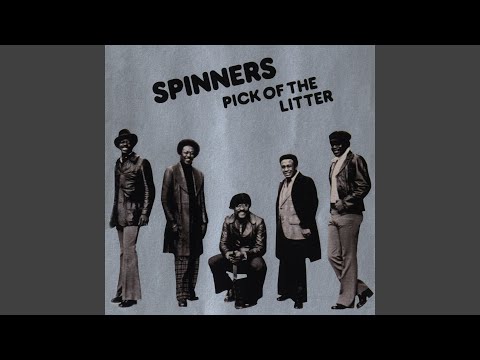
The Spinners occupied an unusual position in the Motown constellation during the late 1960s and early 1970s: a group of demonstrable vocal talent that the label's primary creative machinery had not quite figured out how to deploy at the highest level. Their chart history at Motown had been intermittent rather than consistent, producing occasional successes without establishing the sustained commercial presence that groups like the Four Tops or the Temptations enjoyed. "It's A Shame," released in 1970, changed that calculation dramatically, providing both the group and its co-writer with a moment of breakthrough that reconfigured what was possible for both.
The song was co-written by Stevie Wonder, at the time a twenty-year-old Motown artist in the process of renegotiating his relationship with the label and asserting increasing creative control over his own work. Wonder was also developing his skills as a producer and writer for other artists, and "It's A Shame" was among the most successful early results of that development. He collaborated on the writing with Lee Garrett and Syreeta Wright, who would later become his wife, and the composition showed already the harmonic sophistication and rhythmic intelligence that would define his celebrated 1970s output.
The production placed the Spinners' five-part vocal blend over a rhythmic arrangement that drew on the classic Motown template while incorporating elements that felt slightly ahead of the label's standard production line. The piano-led groove and the horn accents gave the record a propulsive energy that suited the Spinners' ability to shift between lead and ensemble configurations. G.C. Cameron took the primary lead vocal on the recording, his urgent, emotionally direct delivery providing an effective counterpoint to the group's more measured harmonic support.
The record was released on V.I.P. Records, one of Motown's subsidiary labels, which was used for acts and projects that didn't fit neatly into the main label's promotional priorities. Despite this relatively peripheral release configuration, "It's A Shame" performed strongly on the Billboard charts. The single reached number 14 on the Billboard Hot 100 and climbed to number four on the Billboard R&B chart, making it the most commercially successful Spinners record to that point and demonstrating that the group had an audience larger than their intermittent Motown chart history had suggested.
The song also achieved meaningful recognition in the United Kingdom, where it charted respectably and helped establish the Spinners as an internationally recognized act rather than a purely domestic phenomenon. British soul audiences of the early 1970s were attentive to Motown product and to sophisticated American vocal harmony groups generally, and the Spinners' combination of technical excellence and emotional directness played well in that market.
For Stevie Wonder, the song's success as a composition written for another artist validated his growing confidence as a songwriter capable of tailoring material to specific performers rather than only writing for himself. The experience of working with the Spinners contributed to his development as a complete musical architect, a role he would occupy with increasing authority as the decade progressed. The writing credit also demonstrated that Wonder's gifts extended to understanding what made other voices work, not just his own.
The broader significance of "It's A Shame" within the Spinners' career is considerable. It proved that the group could generate mainstream chart success with the right material and production, a proof of concept that informed their subsequent move to Atlantic Records in 1972, where producer Thom Bell would transform them into one of the most successful soul acts of the decade. The Motown years, culminating in this recording, established the vocal foundation that Bell's Philadelphia-influenced productions would build upon. In retrospect, "It's A Shame" reads as both a conclusion and a beginning: the best work the Spinners did at Motown and the demonstration of potential that made their Atlantic period possible.
The song's production values also reflected Motown's house approach during this transitional period, when the label was beginning to allow individual creative personalities slightly more latitude than the highly systematized approach of the previous decade had permitted. The result was a record that sounded identifiably Motown in its sonic palette while carrying the distinctive harmonic fingerprints of a gifted young writer developing his voice across multiple projects simultaneously. It remains one of the more compelling artifacts of that transitional moment in the label's history.
02 Song Meaning
The Meaning Behind "It's A Shame"
"It's A Shame" operates in the emotional territory that soul music of the early 1970s had mapped with particular care: the space between love and frustration, between devotion to a partner and the recognition that the relationship is causing damage. The song's central statement functions as both accusation and lament, directed at a partner whose behavior falls short of what the relationship deserves, while also containing an implicit acknowledgment of the singer's continued emotional investment despite that shortcoming. This ambivalence gave the song its psychological complexity and made it more than a simple complaint.
The emotional argument of the lyric is grounded in contrast. The singer expresses genuine feeling while documenting behavior that undermines the possibility of a satisfying relationship. The word "shame" is doing substantial work in this framework, carrying a moral weight that transforms what might have been a simple break-up narrative into something more like a moral accounting. The relationship is not simply failing; it is falling short of what love ought to be, and that gap between the ideal and the actual is where the song lives.
Stevie Wonder's compositional instincts shaped this emotional argument at the level of structure. The melody and harmonic progression create a sense of wistful momentum, moving forward while looking backward, which mirrors the psychological state the lyric describes. The production's energy is propulsive without being aggressive, which allows the emotional content to feel urgent rather than angry. The Spinners' vocal arrangement reinforced this balance, with the ensemble harmonies softening and contextualizing the individual grievance.
For G.C. Cameron, who delivered the primary lead vocal, the song provided a vehicle for demonstrating a range of emotional colors within a compact format. His performance moved through resignation, frustration, and residual tenderness with a naturalness that made the psychological portrait feel lived-in rather than performed. This quality of emotional authenticity was characteristic of the best Motown vocal performances of the period and was directly related to the material's compositional strength.
The song also addressed questions of reciprocity that were central to the soul tradition. The grievance at the heart of the lyric is not simply about behavior but about the failure of mutual care, the sense that the emotional investment being made is not being matched. This concern with fairness and balance in intimate relationships connected the song to a broader cultural conversation about what relationships between men and women should look like, a conversation that was being conducted with increasing directness in Black music of the early 1970s.
In the context of the Spinners' catalog, "It's A Shame" established a template for how the group could handle emotionally complex material without reducing it to either sentimentality or bitterness. That balance would become a signature of their best Atlantic Records work later in the decade, suggesting that the song was not only their Motown breakthrough but a genuine creative touchstone that shaped their subsequent artistic identity.
→ More from The Spinners
View all The Spinners hits →


→ More from the 1970s File
View all 1970s hits →




Keep digging