The 1970s File Feature
The Rubberband Man
The Rubberband Man: The Spinners, Thom Bell, and a Top Two Billboard Smash "The Rubberband Man" was one of the great pop-soul singles of 1976, a record that …
01 The Story
The Rubberband Man: The Spinners, Thom Bell, and a Top Two Billboard Smash
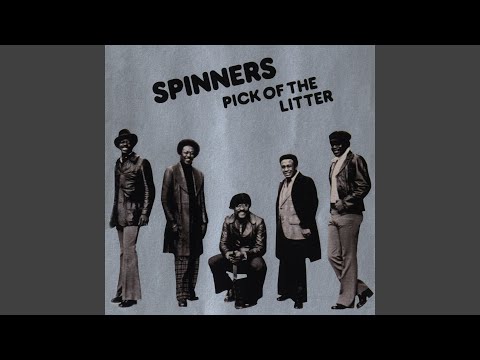
"The Rubberband Man" was one of the great pop-soul singles of 1976, a record that reached number two on the Billboard Hot 100 and demonstrated in four concentrated minutes everything that made the Spinners and their producer Thom Bell one of the most formidable partnerships in American popular music during the 1970s. The song was produced and co-written by Bell with Linda Creed, a collaboration that had already yielded a remarkable string of hits and that continued here with what many listeners and critics regard as one of the pair's most irresistible creations.
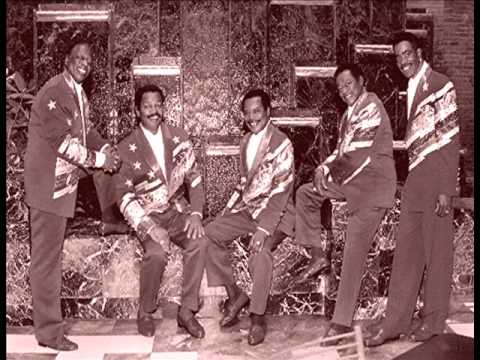
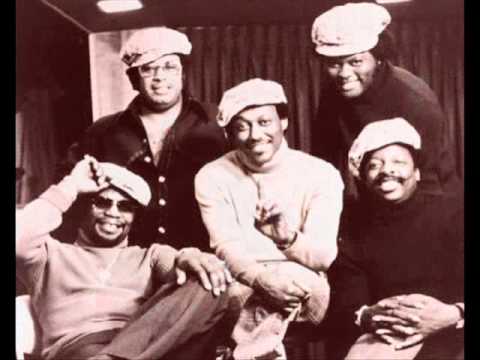
The Spinners had been active since the early 1960s, recording for Tri-Phi and then Motown before their career was transformed by a move to Atlantic Records and the beginning of their collaboration with Thom Bell. Bell was a Philadelphia producer and arranger who had developed a distinctive approach to orchestral soul, using string and brass arrangements of unusual sophistication to frame the kind of vocal performances that required genuine soul craft to carry. The Spinners, a group with exceptional vocal range and a talent for ensemble singing, were ideally suited to Bell's production aesthetic, and their Atlantic recordings from the early 1970s onward represented a sustained peak of commercial and artistic achievement.
Thom Bell's production philosophy emphasized the relationship between the arrangement and the vocal as a dialogic exchange rather than a simple accompaniment relationship. His string writing, in particular, had a melodic independence that gave the arrangements their own emotional life. On "The Rubberband Man," this approach was deployed in service of a track that was considerably more uptempo and playful than some of the more melancholic material he and the Spinners had recorded together. The song had an exuberance that matched the energy of its central metaphor, and Bell's production matched that exuberance with a tight, rhythmically propulsive arrangement that retained all his characteristic sophistication.
The lead vocal duties on "The Rubberband Man" were shared across the group's vocal lineup, which at this point included Philippe Wynne, who had joined the group in 1972 and become one of their most distinctive voices. Wynne's improvisatory vocal style, which drew on gospel and jazz traditions and frequently went beyond the written melody to add ornamental phrases and call-and-response patterns, was central to the track's energy. His contributions made the recording feel spontaneous and alive even within Bell's meticulously arranged production framework.
Atlantic Records released the single in 1976, and it quickly became one of the most successful records in the Spinners' catalog. The song performed exceptionally well across multiple formats, including R&B radio and pop radio, reflecting the crossover appeal that the Bell-Spinners partnership had been generating for several years. Songs like "I'll Be Around" and "Could It Be I'm Falling in Love" had already established the template for this crossover success, but "The Rubberband Man" reached an audience that was, if anything, even broader.
The record's commercial success was reflected in its sustained chart presence. It spent multiple weeks in the top five of the Hot 100 and performed similarly well on the R&B chart. At a moment when the music industry was navigating the competing pressures of disco, soft rock, and the declining commercial profile of classic soul, the Spinners and Bell demonstrated that meticulously crafted vocal group pop-soul could still generate genuine blockbuster singles. Their ability to move units while maintaining artistic credibility was a considerable achievement in the mid-1970s landscape.
Linda Creed, who co-wrote the song with Bell, was a significant contributor to Philadelphia soul's commercial success during this period. Her collaboration with Bell extended across a wide range of recordings, and her ability to produce lyrics that were simultaneously memorable and emotionally resonant was a consistent feature of their joint work. On "The Rubberband Man," her contribution helped shape a lyrical concept that was immediately visual and metaphorically rich, giving Bell's production a clear thematic anchor.
The song's cultural footprint proved durable. It was sampled and referenced in subsequent decades, and it appeared on numerous compilation albums documenting the Philadelphia soul sound and the Spinners' career. In the context of 1976 specifically, it was one of the best arguments available for the continued vitality of orchestral soul at a moment when the form was facing increasing competition from newer sounds. The record's chart performance and critical reception cemented Thom Bell's reputation as the premier craftsman working in the Philadelphia soul tradition and confirmed the Spinners as one of the most commercially effective vocal groups of their era.
02 Song Meaning
Resilience and Elasticity: The Rubberband Man as Character and Metaphor
"The Rubberband Man" presents one of the more memorable character portraits in 1970s soul music: a figure defined by his extraordinary resilience, his ability to absorb pressure and setback and bounce back with undiminished energy. The central metaphor, comparing the protagonist to a rubberband that stretches but does not break, is immediately intelligible and emotionally satisfying. It captures something real about how certain people move through the world, absorbing difficulty without losing their essential character or their capacity for joy.
The song situates this character on the dance floor, or more broadly in a social space where his physical expressiveness makes him stand out. He moves in a way that seems to defy ordinary physical constraints, with a looseness and freedom that draws attention. This physical description is not merely decorative; it is the outward manifestation of an internal quality. The rubberband man's way of moving reflects his way of being, his elasticity, his refusal to be rigid or defeated, his fundamental commitment to pleasure and vitality even under pressure.
Thom Bell and Linda Creed's approach to lyrical subject matter consistently favored human resilience and emotional strength, and "The Rubberband Man" represents a particularly celebratory version of this theme. Rather than a song about overcoming difficulty in a triumphant but serious way, it presents resilience as something joyful, even playful. The rubberband man is not heroic in a solemn sense; he is just irrepressibly himself, and that irrepressibility is presented as a form of grace.
Philippe Wynne's vocal performance was crucial to the song's meaning in performance. His improvisatory additions gave the track a quality of spontaneous self-expression that reinforced the thematic content. A more controlled, more formally constrained vocal performance would have undercut the message; Wynne's willingness to stretch beyond the written melody was itself a demonstration of the rubberband principle, of elasticity and freedom within a structural framework.
The song also functions as a celebration of communal joy on the dance floor, which in 1976 carried particular cultural weight. The mid-1970s were a moment of significant development and codification of Black social dance spaces, from soul clubs to the emerging disco scene. A song that celebrated the exceptional dancer, the person whose movement inspired and delighted those around him, was participating in a broader cultural conversation about the social function of music and movement. The rubberband man is not performing for an audience in the formal sense; he is part of a community whose collective joy he intensifies through his presence.
For the Spinners as a group, the song added another dimension to their artistic identity. Their catalog included deeply romantic ballads, melancholic songs about loss and longing, and uptempo soul celebrations, and "The Rubberband Man" sat firmly in the latter category. But even among their uptempo recordings, it stood out for the specificity and humor of its central conceit. The rubberband metaphor was memorable in a way that vaguer celebrations of dancing or joy were not, and it gave the song a character-based depth that elevated it above the level of generic good-time music.
The lasting appeal of "The Rubberband Man" lies in the universality of the character it describes combined with the specificity of the metaphor used to describe him. Most people have known someone with that quality of resilience, that elastic capacity to be pressed down and spring back unchanged. The song gave a name and a sound to that quality, and in doing so, created something that resonated far beyond its immediate moment of production. As Thom Bell and Linda Creed collaborations go, it stands as one of their most purely pleasurable achievements, a piece of music that made joy feel effortless precisely because so much craft had gone into its making.
→ More from The Spinners
View all The Spinners hits →
→ More from the 1970s File
View all 1970s hits →




Keep digging