The 1970s File Feature
Love Don't Love Nobody - Pt. I
Love Don't Love Nobody (Pt. I) — The Spinners' Soul Masterwork of 1974 Philadelphia Soul at Full Flood Imagine the fall of 1974. Bell-bottoms are ubiquitous,…
01 The Story
Love Don't Love Nobody (Pt. I) — The Spinners' Soul Masterwork of 1974
Philadelphia Soul at Full Flood
Imagine the fall of 1974. Bell-bottoms are ubiquitous, AM radio is a democratic sprawl of sounds, and somewhere between the glam rock coming from England and the funk rumbling up from the South, Philadelphia International Records is quietly assembling some of the most emotionally precise popular music the decade would produce. The Spinners had already established themselves as one of soul music's indispensable acts, and "Love Don't Love Nobody" arrived at exactly the moment when the group's creative partnership with producer Thom Bell was operating at its absolute peak.
The Spinners had made their mark at Motown before finding their true commercial and artistic home at Atlantic Records, where Bell's productions gave them the lush, orchestrated backdrop that suited their five-part harmonies. By 1974, they were one of Atlantic's most reliable hitmakers, and "Love Don't Love Nobody" would prove to be one of their most searching and affecting recordings.
Thom Bell and the Architecture of Heartbreak
The song emerged from the Philadelphia soul infrastructure that Bell had helped build, a studio approach that combined meticulous string arrangements with deeply felt vocal performances. Thom Bell co-wrote "Love Don't Love Nobody" with Linda Creed, his frequent collaborator who had already helped craft some of the group's most celebrated material. Their partnership was one of the most productive songwriting teams in 1970s soul, and this track demonstrates why.
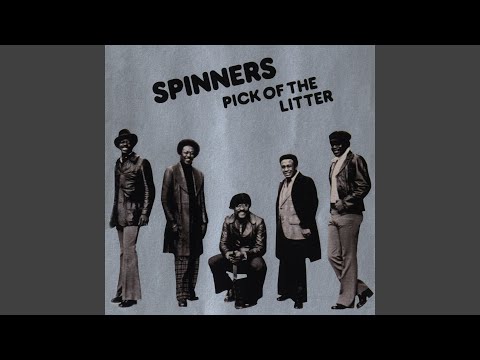
Bell's production layered orchestral strings against a rhythm section that kept things grounded and rhythmically purposeful. The arrangement builds from a relatively restrained opening into something genuinely expansive, creating the sense of emotional weight accumulating as the track progresses. Philippe Wynne's lead vocal is particularly remarkable here: his performance rides the line between control and surrender, technically precise while sounding emotionally unguarded. The other Spinners, including Bobby Smith, Henry Fambrough, Pervis Jackson, and Billy Henderson, provide the harmonic cushion that made the group's recordings so distinctive.
A Climb Through the Autumn Charts
The single entered the Billboard Hot 100 on September 21, 1974, debuting at number 84. It climbed methodically through the following weeks, gaining traction with each chart update as soul radio embraced the track's emotional directness. The song reached its peak position of number 15 on November 16, 1974, after spending thirteen weeks on the chart. That sustained climb, from the lower reaches of the chart all the way to the top twenty, speaks to the kind of organic word-of-mouth momentum that characterized the best soul singles of the era.
The record also charted strongly on the Billboard R&B charts, where the Spinners had established a devoted audience. Their Hot 100 crossover success was notable because it demonstrated that their appeal extended well beyond the core R&B audience, a testament to both the universality of Bell and Creed's songwriting and to the group's extraordinary vocal quality.
Part I of a Larger Statement
The designation "Pt. I" in the title is significant. The song was structured as the first of a two-part release, a format that allowed the Spinners and Bell to explore a theme at greater length than a standard single would permit. The two-part single format was a feature of 1970s soul that allowed artists to develop emotional narratives more fully, and Bell used it with particular skill. Part I establishes the emotional stakes, laying out the painful logic of unrequited love and the specific kind of loneliness it produces, while creating enough forward momentum to make listeners eager for the continuation.
The Spinners' Place in Soul History
By 1974, the Spinners had accumulated enough chart history to be considered veterans, yet their music showed no signs of creative fatigue. Mighty Love, the album that included "Love Don't Love Nobody," reached number sixteen on the Billboard 200 and is considered one of the group's essential recordings. The Spinners' run of Thom Bell productions in the mid-1970s stands as one of the great creative partnerships in soul history, matching vocal excellence with compositional sophistication in ways that still reward close listening.
Put this record on, and you will understand immediately why Philadelphia soul captivated so many listeners in 1974. The combination of orchestral grandeur and intimate feeling is a difficult balance to strike, and the Spinners struck it with apparent ease.
"Love Don't Love Nobody (Pt. I)" — The Spinners' singular moment on the 1970s charts.
02 Song Meaning
Love Don't Love Nobody (Pt. I) — Heartbreak, Harmony, and the Wisdom of Loss
The Paradox at the Center
There is a philosophical sharpness tucked inside what might sound, at first listen, like a conventional soul ballad. The title "Love Don't Love Nobody" is a compressed statement of one of the most painful truths in human experience: that the capacity to love does not guarantee being loved in return, and that love as a force in the world operates without regard for the people it moves through. Linda Creed and Thom Bell's lyric takes this paradox seriously and builds an entire emotional world around it.
The song addresses the disorientation that follows when deep feeling goes unreciprocated. The narrator is not bitter in any simple sense but is instead grappling with the recognition that emotional investment carries no promise of return. This is a more honest and ultimately more adult treatment of heartbreak than the genre's default modes of complaint or celebration.
Soul Music as Emotional Philosophy
The Philadelphia soul tradition that the Spinners inhabited in 1974 had an explicit commitment to emotional depth. This was music that took its listeners' inner lives seriously, that assumed the audience could handle complexity and contradiction in their popular songs. Philadelphia International's entire aesthetic was built on this premise: that soul music could be simultaneously physically irresistible and intellectually and emotionally substantive.
"Love Don't Love Nobody" exemplifies this approach. The orchestral arrangement gives the song a grandeur that matches the seriousness of its subject, while the rhythm section ensures it never becomes purely contemplative. The track moves you physically while asking you to think and feel simultaneously. This dual address, to the body and the mind at once, is what distinguished the best Philadelphia soul from simpler pop constructions of the same period.
The Cultural Context of 1974
The mid-1970s were a moment of significant social recalibration in American life. The optimism of the 1960s had curdled, political disillusionment was widespread, and the culture was searching for new frameworks for understanding personal experience. Soul music during this period often served as an emotional archive, a place where the difficulties of love and connection could be examined honestly. The Spinners' recordings in this era participated in that larger cultural project, offering music that acknowledged difficulty without collapsing into despair.
The two-part structure of the song also reflects something about how deeply felt emotional experiences actually unfold: not in neat single episodes but in extended, revisited, ongoing processes. Structuring a recording this way was a formal choice that aligned with the song's thematic content.
Vocal Harmony as Emotional Architecture
The Spinners' use of five-part harmony on this recording deserves particular attention. Philippe Wynne's lead vocal carries the explicit narrative of the lyric, but the group harmonies do something equally important: they create an emotional context that makes Wynne's lead feel less isolated, less alone. Even when the lyric describes loneliness and unreciprocated love, the warmth of the group vocal arrangement provides a kind of communal comfort. The listener is being told about loneliness by a group of people who are, quite obviously, not alone together.
This paradox is built into the very structure of the recording, and it gives "Love Don't Love Nobody" an emotional richness that purely solo performances of comparable material sometimes lack. The song resonated with audiences in 1974 and continues to move listeners today because it addresses a universal experience with both honesty and care, insisting that heartbreak deserves to be treated as the serious human matter that it is.
→ More from The Spinners
View all The Spinners hits →

→ More from the 1970s File
View all 1970s hits →




Keep digging