The 1970s File Feature
How Could I Let You Get Away
How Could I Let You Get Away — The Spinners and the Philadelphia Sound in Full Bloom Detroit Origins, Philadelphia Destination The Spinners spent the 1960s a…
01 The Story
How Could I Let You Get Away — The Spinners and the Philadelphia Sound in Full Bloom
Detroit Origins, Philadelphia Destination
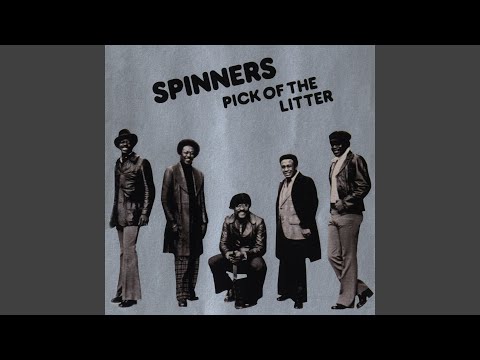
The Spinners spent the 1960s as a Motown group who never quite found the commercial footing their talent warranted. The Detroit label had a roster of extraordinary depth, and the Spinners, despite possessing genuine vocal firepower, found themselves perpetually behind artists who had the label's full promotional attention. It was a frustrating situation for a group that featured some of the most technically accomplished voices in soul music. The move to Atlantic Records at the start of the 1970s changed everything, because Atlantic paired them with Philadelphia producer and arranger Thom Bell, and the combination produced one of the great creative partnerships in early 1970s soul.
Thom Bell's Philadelphia International approach suited the Spinners' multi-vocal group dynamic perfectly. Bell understood how to arrange for an ensemble that featured multiple lead voices, how to write melodies that moved between registers and personalities without losing coherence, and how to frame the kind of romantic storytelling that the Spinners delivered best. The results were immediate and sustained. "I'll Be Around" in 1972 reached number 3 on the Hot 100; "Could It Be I'm Falling in Love" reached number 4. The Spinners were suddenly among the most commercially successful soul groups in America.
A Smaller Chart Moment
"How Could I Let You Get Away" arrived in the summer of 1972, a period when the Spinners were establishing their new commercial identity. The single debuted on the Billboard Hot 100 on August 19, 1972, at position 91, and spent four weeks on the chart, reaching its peak position of number 77 on September 9, 1972. By the standards of the Spinners' peak Atlantic releases it was a modest chart showing, but it reflected a moment when the group was producing material at a pace that generated multiple singles simultaneously.
The track's relatively brief chart run does not diminish its value as a document of the Spinners' early Philadelphia period. In a catalog as strong as the one they were building, not every release could match the commercial peaks of the lead singles. The deeper tracks reveal the range and consistency of the group's artistry during this extraordinarily productive stretch.
The Sound of Romantic Regret
The emotional territory of "How Could I Let You Get Away" is characteristic of the Spinners' Atlantic material at its best. The song addresses the particular anguish of recognizing a missed opportunity for love, of looking back and understanding that the moment existed and passed. That quality of retrospective regret, of being able to name what was lost and when the loss occurred, gives the lyric a specificity that general heartbreak songs often lack.
The group's vocal arrangement, with its characteristic interplay between lead and ensemble voices, suited this emotional content naturally. The Spinners' sound had always been built on the relationship between voices in dialogue, and a song about recognizing what one should have said or done differently lends itself to that conversational vocal mode. The melody is warm and slightly mournful, with the kind of melodic generosity that characterized the best Philadelphia productions of the early 1970s.
The Philadelphia Context
The early 1970s Philadelphia soul scene was one of the most creatively fertile environments in American music. Thom Bell alongside Kenny Gamble and Leon Huff at Philadelphia International Records were developing a sound that would dominate R&B for much of the decade, characterized by lush string arrangements, sophisticated rhythmic structures, and a commitment to adult emotional themes rather than the simpler romantic declarations of early soul. The Spinners' Atlantic recordings with Bell were parallel to and consistent with this broader Philadelphia movement.
What Philadelphia soul offered listeners in 1972 was music that took adult emotional life seriously, that recognized the complexity of relationships and the difficulty of love without reducing them to simple formulas. "How Could I Let You Get Away" participates in that tradition, treating its subject with the kind of mature, reflective care that distinguished the Philadelphia approach from much of what was commercially dominant at the time.
The Spinners in Retrospect
The Spinners' run of Atlantic recordings between 1972 and the late 1970s constitutes one of soul music's great sustained artistic statements. The peaks, "I'll Be Around," "Could It Be I'm Falling in Love," "Then Came You" (a 1974 duet with Dionne Warwick that reached number 1), are celebrated. But the catalog around those peaks is equally worthy of attention, and "How Could I Let You Get Away" is part of that catalog: a track that demonstrates the group's ability to find genuine emotional depth in romantic material even when the production context was less grandly scaled than their signature hits.
Listen to the interplay between the lead vocal and the supporting voices and hear a group at the height of their ensemble craft, making music that sounds effortless because years of development had made it that way.
"How Could I Let You Get Away" — The Spinners' singular moment on the 1970s charts.
02 Song Meaning
How Could I Let You Get Away — Missed Connection, Retrospective Longing, and the Soul Group Ensemble
The Anatomy of Missed Opportunity
Pop music has explored romantic loss from nearly every angle imaginable, but the specific feeling of watching an opportunity pass and only understanding its value afterward is less commonly addressed with precision. "How Could I Let You Get Away" occupies that particular emotional territory. The song's central question is retrospective, posed not in the heat of feeling but from a position of clarity that came too late. That temporal structure gives the lyric a distinctive melancholy, more resigned than anguished, more reflective than urgent.
This kind of retrospective emotional positioning requires a certain sophistication from the listener. The narrator is not simply heartbroken; the narrator understands exactly what happened and why, and that understanding makes the loss feel complete in a way that more straightforward heartbreak songs rarely achieve. The Spinners' vocal delivery captures this complexity without over-dramatizing it.
The Ensemble Voice as Emotional Architecture
One of the defining characteristics of the Spinners' sound during their Atlantic years was the relationship between individual lead vocals and the group's ensemble response. The call-and-response tradition of gospel and soul music was embedded deeply in the group's approach, and it gave their romantic material a communal quality that solo performers could not replicate. When the lead voice asks "how could I let you get away," the answering voices are not merely backing harmonies; they are witnesses and commentators, lending the private emotional experience a collective weight.
This ensemble quality is particularly meaningful in a song about regret. Regret is often understood as a solitary experience, the private replay of a moment that cannot be recovered. The Spinners' vocal arrangement socializes that experience, making it something that can be shared and witnessed, and therefore something that can be partially healed through the act of communal musical expression.
Philadelphia Soul and Adult Emotional Life
The Philadelphia sound that Thom Bell was developing with the Spinners in 1972 was committed to a vision of soul music as the soundtrack to adult emotional experience in all its complexity. The lush arrangements, the sophisticated chord structures, the attention to lyrical nuance: all of these elements were in service of music that took grown-up feelings seriously.
That commitment distinguished the Philadelphia approach from some of the simpler commercial soul that populated the charts simultaneously. Where many romantic songs resolved quickly into affirmation or despair, Philadelphia productions were more willing to sit with ambiguity, to let the emotional complexity breathe without forcing resolution. "How Could I Let You Get Away" exemplifies this patience. The song does not offer a lesson or a redemptive turn; it simply inhabits the feeling it describes with care and craft.
What the Track Represents in the Broader Catalog
Within the context of the Spinners' Atlantic catalog, this track belongs to the category of deep cuts that reward repeated listening more than they demand immediate attention. The production is warm and unfussy, serving the vocal performances and the emotional content without architectural ambition. The song does not try to be a statement. It tries to be true to its subject, and it succeeds at that with quiet assurance.
For listeners exploring the early 1970s soul landscape, tracks like this one provide crucial context for understanding the peaks. The Spinners' signature hits did not emerge from nowhere; they were built on a foundation of consistent craft and emotional intelligence, of which "How Could I Let You Get Away" is a representative and rewarding example.
"How Could I Let You Get Away" — The Spinners' singular moment on the 1970s charts.
→ More from The Spinners
View all The Spinners hits →

→ More from the 1970s File
View all 1970s hits →




Keep digging