The 1970s File Feature
I'll Be Around
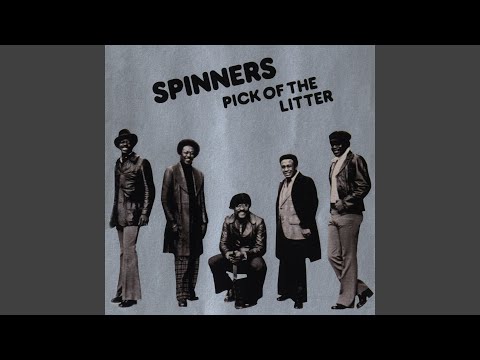
"I'll Be Around" — The Spinners Find Their Philadelphia Sound A Group Reborn There are second acts in American music, and then there is the story of the Spin…
01 The Story
"I'll Be Around" — The Spinners Find Their Philadelphia Sound
A Group Reborn
There are second acts in American music, and then there is the story of the Spinners in 1972. The Detroit vocal group had spent most of the 1960s on Motown, recording without significant commercial traction and watching other acts on the label achieve the stardom that always seemed just out of reach. By the time they arrived at Atlantic Records and fell under the creative guidance of producer Thom Bell, they were a group with something to prove. What followed was one of the most remarkable creative resurgences in the history of soul music.
Thom Bell was at the center of the Philadelphia soul movement, a lush, orchestrated approach to rhythm and blues that emphasized sophisticated string arrangements, close vocal harmonies, and a certain emotional elegance that distinguished it from the grittier Detroit sound or the harder-edged funk coming out of James Brown's operation. Bell had already worked with the Delfonics and would go on to define the sound of the Stylistics. When he began working with the Spinners, the combination proved immediately transformative.
The Making of a Classic
"I'll Be Around" was written by Thom Bell and Philip Hurtt and released as the B-side of the Spinners' single "How Could I Let You Get Away." Radio programmers, recognizing something special, began flipping the single and giving the B-side heavy rotation. This kind of reversal, where a B-side overtakes its intended A-side, happens occasionally in pop history, but it rarely produces results of quite this magnitude. "I'll Be Around" climbed the charts with the unstoppable momentum of a song that simply belongs in the air.
The production is a masterclass in Philadelphia soul architecture. Strings sweep through the mix with controlled grandeur, the rhythm section maintains a loose, unhurried groove that never feels mechanical, and the vocal arrangement showcases the interplay between the Spinners' lead voices and their harmonizing ensemble. Phillipe Wynne, who had recently joined the group, brought an expressive lead vocal range that added considerable emotional depth to the arrangement. His voice could pivot from pleading tenderness to full-throated declaration within the span of a few bars.
Rising Through the Autumn of 1972
The single entered the Billboard Hot 100 on September 16, 1972, debuting at position 74. Its ascent through the autumn was steady and confident, gathering momentum week by week as radio programmers and listeners responded to its distinctive combination of heartache and hopefulness. By November, the song had reached its peak position of number 3 on the chart, spending fifteen weeks in total on the Hot 100, with its highest point registered on November 18, 1972.
Peaking at number 3 on the Hot 100 represents genuine mainstream crossover success, the kind of chart performance that moves beyond a dedicated soul audience into the general pop marketplace. The Spinners were reaching listeners who had no particular prior investment in them, converting new fans on the strength of a song that seemed to speak across demographic lines. The track also performed significantly on the R&B charts, where it reached the top position, confirming that the group's existing core audience embraced the new direction just as enthusiastically as newcomers.
Atlantic Records and the Philadelphia Partnership
The Spinners' move to Atlantic Records represents one of those productive label-artist-producer alignments that periodically reshape what a particular kind of music can sound like. Atlantic gave Thom Bell the creative latitude to develop his orchestral approach without commercial interference, and Bell in turn built production frameworks that suited the Spinners' vocal strengths precisely. The partnership would produce a run of hit singles through the mid-1970s that collectively stand as some of the most elegant recordings of the era.
"I'll Be Around" was the opening statement of that collaboration. It established immediately that this would be a partnership of considerable ambition. The song's combination of romantic melancholy and graceful resolve set a template that Bell and the Spinners would return to and refine across subsequent recordings.
Legacy of a Flipped B-Side
The fact that "I'll Be Around" began life as a B-side adds something interesting to its story. The song that the label considered secondary, the track that programmers discovered rather than were handed, turned out to be one of the defining recordings of its year. It has since become a reliable presence on classic soul playlists, sampled, covered, and cited by artists working decades after its release. The orchestral string arrangement in particular has influenced the production aesthetics of subsequent generations of soul and R&B producers who heard in its richness a model worth studying.
For anyone who wants to understand why Philadelphia soul became such an influential genre current, "I'll Be Around" offers as good a primer as exists. Put it on, listen to the way the strings breathe through the arrangement, the way the voices interweave, and the way the whole production feels simultaneously polished and genuinely felt.
"I'll Be Around" — The Spinners' singular moment on the 1970s charts.
02 Song Meaning
"I'll Be Around" — Graceful Endings and the Dignity of Letting Go
The Breakup Song Reconsidered
Popular music has produced thousands of songs about romantic endings, and most of them traffic in bitterness, despair, or defiant anger. "I'll Be Around" takes a different path entirely. The song describes a relationship concluding, with one partner acknowledging that the other is choosing to leave, and its emotional stance is something rare in the genre: a kind of dignified, clear-eyed acceptance that refuses self-pity without pretending the pain is not real. The emotional intelligence of the lyric is part of what made the song resonate so widely and endure so long.
Written by Thom Bell and Philip Hurtt, the song offers a farewell that is neither recrimination nor collapse. The narrator understands that love cannot be held by force, that the person leaving has made a choice that must be respected, and that what remains after the relationship ends is a continuing care for the other person's wellbeing. This is a sophisticated emotional position to occupy in a pop song, and it landed with audiences because it reflected an experience most people recognize: the love that remains even when the relationship cannot.
The Philadelphia Sound as Emotional Architecture
Thom Bell's production choices for "I'll Be Around" do important work in shaping how the song's emotional content is received. The orchestral arrangement does not swell with melodrama or underline every emotional moment with sonic emphasis. Instead, the strings provide a kind of containing warmth, holding the song's feeling steady without amplifying it to the point of sentimentality. Philadelphia soul's distinctive quality was precisely this balance: emotion rendered at full intensity but with a certain compositional restraint that kept the feeling grounded.
This approach allowed listeners to project their own emotional experiences onto the song without the music dictating a specific emotional register. The song is about loss, but the production never fully tips into grief, which meant it could function simultaneously as a sad song, a hopeful song, and a mature song about human connection.
Permanence in Impermanence
One of the song's most affecting thematic gestures is its insistence on availability without demand. The narrator's promise to remain present and reachable is offered without strings attached, without expectation of return, without manipulation. This unconditional quality elevates the lyric above ordinary romantic pop. The person offering the promise is not waiting for a reversal of the other's decision; they are simply maintaining a continuity of care regardless of outcome.
In the early 1970s, this kind of lyrical emotional maturity found ready audiences. The singer-songwriter movement had raised general expectations for authenticity in popular song, and listeners were responsive to lyrics that treated adult emotional experience with genuine seriousness. The Spinners' delivery, particularly through the vocal interplay in their harmonies, added a communal warmth to the individual emotion in the lyric.
Why It Still Resonates
Decades after its initial chart run, "I'll Be Around" remains immediately recognizable to anyone who encounters it. Its emotional core has not aged because the experience it describes is universal. Relationships end across every era, and the combination of sadness, dignity, and continuing love that the song articulates speaks to something that does not change with fashion or technology or cultural context.
The song has been sampled and interpolated by subsequent artists, testifying to its enduring appeal as source material. Its melodic contours, its production warmth, and above all its emotional intelligence have made it a reference point for artists working in soul and R&B across several generations. For listeners encountering it fresh, it delivers that rare pop music experience: a song that seems to know exactly what it wants to say and says it with grace.
"I'll Be Around" — The Spinners' singular moment on the 1970s charts.
→ More from The Spinners
View all The Spinners hits →

→ More from the 1970s File
View all 1970s hits →




Keep digging