The 1970s File Feature
Where Evil Grows
Where Evil Grows: The Poppy Family's Dark Pop Narrative on London Records "Where Evil Grows" arrived in 1971 as one of the more unusual entries in the early-…
01 The Story
Where Evil Grows: The Poppy Family's Dark Pop Narrative on London Records
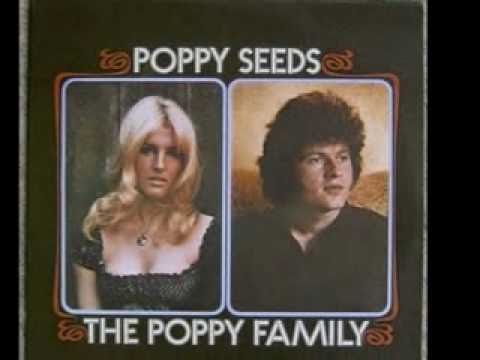
"Where Evil Grows" arrived in 1971 as one of the more unusual entries in the early-1970s pop landscape, a song built around a gothic domestic narrative that borrowed the language of danger and corruption to describe the experience of falling under another person's influence. The Poppy Family, the Canadian group centered on the husband-and-wife partnership of Susan and Terry Jacks, released the single on London Records and found considerable commercial success with it in both Canada and the United States, extending a remarkable run of chart activity that had begun with their debut single two years earlier.
The Poppy Family had announced themselves to North American audiences with "Which Way You Goin' Billy?" in 1969, a song that displayed the group's ability to work in an emotionally ambiguous register, combining appealing melody with lyrical darkness in a way that proved extremely effective on commercial radio. That single had been a major hit in Canada and had also crossed over to significant American chart success. "Where Evil Grows" continued and deepened that approach, and in some ways represented the fullest realization of what the group did best.
Susan Jacks's lead vocal was the central instrument of the recording and the primary reason the song worked as well as it did. Her voice possessed a quality of wide-eyed vulnerability combined with genuine emotional power, a combination that made the narrator's account of being drawn into a corrupting relationship both believable and dramatically compelling. The contrast between the relative sweetness of her tone and the darkness of the lyrical content created a productive tension that drove the song's appeal.
Terry Jacks produced the recording and also contributed to the songwriting, reflecting the couple's collaborative creative partnership. The production on "Where Evil Grows" was characteristic of the group's overall sound: carefully constructed, melodically clean, with arrangements that supported rather than overwhelmed Susan's vocals while incorporating enough sonic detail to reward close listening. The record achieved a kind of controlled unease, sounding pleasant on first encounter but revealing its more troubling thematic content as the listener engaged more closely with the lyric.
The Canadian music industry in the early 1970s was in a period of significant development, partly in response to the Canadian Radio-television and Telecommunications Commission regulations introduced in 1971 that required Canadian content on domestic radio. The Poppy Family predated those regulations and had achieved their success through the quality of their recordings rather than through regulatory support, but the broader environment of growing attention to Canadian popular music gave acts like the Jackses an increasingly receptive context for their work.
On the Billboard Hot 100, "Where Evil Grows" achieved a respectable chart position, continuing the American crossover success the group had established with "Which Way You Goin' Billy?" The song performed particularly well in Canada, where the Poppy Family were already regarded as one of the country's most successful pop acts. The combination of domestic dominance and American crossover charting was characteristic of the Poppy Family's commercial pattern and reflected a broader tendency in Canadian pop of the era to produce music that translated successfully across the border.
The Poppy Family ultimately had a relatively brief recording lifespan, as Susan and Terry Jacks separated both professionally and personally in the early 1970s, leading to the dissolution of the group. Terry Jacks went on to record as a solo artist and achieved his own major hit with "Seasons in the Sun" in 1974, while Susan Jacks pursued a solo career of her own. "Where Evil Grows" stands as one of the Poppy Family's most fully realized recordings, capturing the group's particular combination of commercial accessibility and lyrical darkness at close to its peak.
The London Records distribution arrangement gave the group access to American radio programming networks that might otherwise have been difficult for a Canadian act to navigate in the pre-CRTC era, and the label's promotional support was part of the reason the American chart crossover worked as effectively as it did. The Poppy Family's willingness to engage with darker thematic material within a commercial pop framework was relatively unusual for the period and contributed to their distinctiveness within the early-1970s pop landscape on both sides of the border.
02 Song Meaning
Where Evil Grows: Darkness in a Pop Framework and the Language of Dangerous Attraction
"Where Evil Grows" uses the extended metaphor of a plant or living thing that takes root and spreads to describe the experience of being drawn into a relationship or situation that the narrator recognizes as corrupting even as she finds herself unable to resist its pull. The song treats the attraction to something harmful not as a simple moral failing but as something almost ecological, a process of gradual infiltration that happens before the affected person fully understands what is occurring.
The choice of botanical or organic imagery to describe psychological and moral contamination was not new in 1971, but the Poppy Family deployed it with particular effectiveness by embedding it in a pop arrangement that seemed, on the surface, pleasant and accessible. The single was released on London Records and reached pop audiences in both Canada and the United States. The contrast between the melodic agreeableness of the music and the disturbing content of the lyric was a deliberate artistic strategy, one that created a kind of cognitive dissonance in the listener who paid attention to what the song was actually saying while responding to how it sounded.
The narrator's position in the song is one of someone who perceives the danger clearly and is unable to prevent herself from being drawn in regardless. This is a more psychologically sophisticated stance than simple victimhood, as the song does not allow the narrator to be entirely passive. She knows what is happening to her and continues toward it, which makes the situation more troubling than one in which she is simply deceived. The song thus captures something accurate about certain kinds of human experience: the full knowledge of a bad situation coexisting with an inability to escape it.
Susan Jacks's vocal performance was crucial to making this psychological complexity register emotionally rather than merely intellectually. Her delivery communicated the narrator's self-awareness without making her seem coldly analytical, keeping the song's emotional center in genuine feeling rather than detached observation. The warmth of her tone gave the listener a way into the narrator's experience even as the lyrical content pushed toward something darker and more uncomfortable.
The song's thematic territory was somewhat unusual for mainstream pop radio of the early 1970s, which tended to favor more straightforward romantic narratives or protest songs that identified their concerns explicitly. "Where Evil Grows" occupied a middle ground, using romantic or domestic relationships as the setting for what was essentially a story about psychological vulnerability and the seductiveness of harmful situations. This gave the song a quality of emotional truth that distinguished it from more conventional pop fare.
Within the Poppy Family's body of work, "Where Evil Grows" sits alongside "Which Way You Goin' Billy?" as evidence of the group's consistent interest in emotional ambiguity and psychological complexity within commercial pop formats. Both songs were hits because they were melodically appealing and vocally strong, but both also offered something more than simple entertainment, a willingness to engage with the less comfortable aspects of human experience that gave the group's best work a lingering quality that purely pleasurable pop often lacks.
The song's lasting resonance comes from its recognition of something genuine about certain kinds of relationships and situations: that the things that are worst for us can feel compelling in ways that are difficult to articulate and impossible to simply think one's way out of. By setting this observation within a pop song format designed for radio play and broad commercial appeal, Terry Jacks and the Poppy Family managed a small but real achievement, making something genuinely uncomfortable accessible to a mass audience without diluting its essential honesty about human experience.
→ More from The Poppy Family
View all The Poppy Family hits →
→ More from the 1970s File
View all 1970s hits →




Keep digging