The 1970s File Feature
Doesn't Somebody Want To Be Wanted
Doesn't Somebody Want To Be Wanted — The Partridge Family's Second Wave Saturday Mornings and the Making of a Pop Machine Picture a Saturday morning in early…
01 The Story
Doesn't Somebody Want To Be Wanted — The Partridge Family's Second Wave
Saturday Mornings and the Making of a Pop Machine
Picture a Saturday morning in early 1971, television sets flickering in living rooms across America as The Partridge Family unspooled its cheerful family-band adventures to an audience of children and teenagers who had fully bought into the premise. The show had launched in September 1970, and almost immediately its tie-in music had crossed from the fictional world of the television screen into the very real world of the Billboard Hot 100. I Think I Love You had hit number one in November 1970, selling over two million copies and establishing the Partridge Family as a genuine commercial force rather than a mere promotional novelty. By early 1971, the machine was running at full speed.
At the center of it all was David Cassidy, who played Keith Partridge on the show and whose face had become the dominant presence on bedroom walls across the country. Cassidy was not simply a television actor providing vocals for a manufactured concept; he possessed real musical instincts and a voice that translated convincingly to radio. The billing on the records, "The Partridge Family Starring Shirley Jones Featuring David Cassidy," reflected both the television property and the emerging solo star power that would eventually pull Cassidy away from the ensemble entirely.
The Sound of Bell Records in Its Prime
The Partridge Family recordings were produced by Wes Farrell, who crafted a sound perfectly tuned to the AM radio landscape of the early 1970s: bright, melodic, rhythmically propulsive without being aggressive, and consistently centered on an appealing lead vocal. Doesn't Somebody Want To Be Wanted followed this formula with considerable skill. The track opened with an immediately recognizable arrangement, the kind of production that communicated within three seconds that this was a Partridge Family record, which by early 1971 was itself a mark of commercial assurance.
The song debuted on the Billboard Hot 100 on February 13, 1971, entering at number 57. Its climb was impressively rapid. Within six weeks it had vaulted to number 9, and by the week of March 27, 1971, it had reached its peak position of number 6, spending a total of twelve weeks on the chart. That peak placed it comfortably among the top records of the spring season, confirming that the initial success of I Think I Love You was not a fluke but the opening statement of a genuine pop run.
The Teen Idol and the TV Family
What made the Partridge Family phenomenon interesting as a cultural moment was the dual nature of its appeal. For younger viewers, the show provided a warm, aspirational family narrative with catchy music embedded in each episode. For teenagers, and particularly for teenage girls, the draw was almost entirely David Cassidy, whose image was relentlessly promoted through fan magazines, television specials, and the records themselves. Doesn't Somebody Want To Be Wanted fed both audiences simultaneously: its title expressed a universal human longing that worked equally well as a television story beat and as a pop song hook.
The song's production placed Cassidy's vocal prominently in the mix, letting the emotional directness of the lyric carry the performance. Bell Records, the label releasing the Partridge Family material, understood that the act's commercial moment was finite and needed to be maximized quickly. The frequency with which they released singles during 1971 reflected that awareness, and Doesn't Somebody Want To Be Wanted was a key entry in a release schedule calibrated for maximum chart saturation.
A Peak Season in a Brief Window
The spring of 1971 represented, in retrospect, the creative and commercial peak of the Partridge Family as a chart force. That year the act placed multiple singles on the Hot 100 and maintained a level of public visibility that rivaled any established pop act in the country. Doesn't Somebody Want To Be Wanted was central to that run, its six-week climb to number 6 demonstrating the kind of sustained radio momentum that money alone could not manufacture. The song worked because the production was tight, the vocal was convincing, and the emotional content of the lyric translated across age groups.
By 1972 and into 1973, the Partridge Family's chart momentum had begun to fade, and Cassidy moved toward a solo career that generated its own devoted following. But the peak years of 1970 and 1971 stand as a remarkable case study in the integration of television and pop music. No act of that era fused the two media more effectively or with more genuine chart impact. Queuing up Doesn't Somebody Want To Be Wanted today is a fast trip back to a specific American pop moment: naive, bright, perfectly crafted, and briefly irresistible.
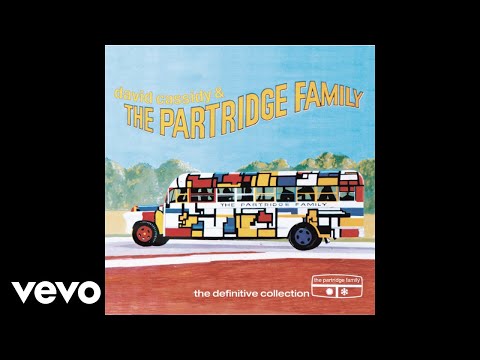
"Doesn't Somebody Want To Be Wanted" — The Partridge Family Starring Shirley Jones Featuring David Cassidy's singular moment on the 1970s charts.
02 Song Meaning
Doesn't Somebody Want To Be Wanted — The Ache Beneath the Pop Sheen
Universal Longing in a Bright Package
There is something quietly poignant about a song this cheerfully produced asking a question this fundamentally human. Doesn't Somebody Want To Be Wanted wraps a genuine emotional need in an arrangement so bright and propulsive that the underlying ache can almost be missed on first listen. That tension between the surface pleasure of the music and the vulnerability of the lyric's central question is what gave the song its staying power beyond the Partridge Family's television-driven moment.
The need to feel wanted is one of the most universal human experiences, and the song's title frames it as a rhetorical question that invites the listener to supply the answer. The rhetorical posture is not aggressive or self-pitying; it is curious and slightly wondering, which suited both the sunny production values of the record and the age of the listeners most likely to connect with it. Teenagers, who feel the social pressures of belonging and desirability most acutely, found a precise articulation of their own interior anxieties in the song's central question.
Desire, Identity, and the Early 1970s Teen Experience
Early 1971 was an interesting moment in which to release a song about wanting to be wanted. The counterculture was fading, and with it some of the communal idealism that had briefly suggested belonging was easy, natural, and freely available to everyone willing to show up. In its place, mainstream youth culture was beginning its return to more individualistic concerns. The school cafeteria, the high school dance, the bedroom poster of a favorite idol: these were the actual social spaces where most teenagers experienced longing and belonging, and Doesn't Somebody Want To Be Wanted spoke directly to those spaces.
David Cassidy's presence as the voice and face of the recording added another layer to the theme. He embodied the object of teenage desire for millions of listeners, which gave the song a delightful irony: the most wanted young male in America was singing about the universal human fear of not being wanted. That irony was likely unintentional but proved commercially powerful, as it allowed fans to project their own feelings onto a performer who seemed, from the outside, to have no reason to feel unwanted at all.
The Emotional Architecture of Pop Simplicity
Pop songs of the early 1970s, especially those associated with television properties, are sometimes dismissed as shallow or formulaic. But the best of them, and Doesn't Somebody Want To Be Wanted belongs in that category, achieved something that more ambitious records often failed to accomplish: they found an emotional truth and expressed it with absolute clarity. The song makes no attempt at poetic complexity. Its power comes from directness, from naming a feeling plainly and inviting the listener to recognize it.
This kind of emotional transparency is harder to achieve than it looks. Songwriters who aim for simplicity and miss produce songs that feel empty; those who achieve it produce songs that feel inevitable. The lyric's uncomplicated expression of longing worked because it never strained for effect or dressed its central idea in unnecessary metaphor. It said what it meant, and what it meant was real.
Why It Still Resonates
The song's afterlife on YouTube and streaming platforms confirms that its emotional core has outlasted the television franchise that launched it. Listeners discovering the Partridge Family catalog today are not watching the original broadcasts; they are responding to the music itself. The recording retains its charm precisely because the central question it poses has never gone out of date. The production sounds of its era, yes, but the human need it describes is timeless, and that combination of period character and emotional universality is exactly what keeps catalogue pop alive across generations.
→ More from The Partridge Family Starring Shirley Jones Featuring David Cassidy
View all The Partridge Family Starring Shirley Jones Featuring David Cassidy hits →
→ More from the 1970s File
View all 1970s hits →




Keep digging