The 1970s File Feature
Time To Get Down
The O'Jays and the Sound That Defined Philadelphia Soul By the summer of 1973, the Philadelphia International Records operation run by Kenny Gamble and Leon …
01 The Story
The O'Jays and the Sound That Defined Philadelphia Soul
By the summer of 1973, the Philadelphia International Records operation run by Kenny Gamble and Leon Huff had become the most commercially potent production enterprise in American popular music. Their roster included Harold Melvin and the Blue Notes, the Three Degrees, and Billy Paul, but no act carried the label's ambitions more fully than The O'Jays. The group had traveled a long road to reach that summit, having recorded under several names and for multiple labels through the 1960s before Gamble and Huff reshaped them into one of soul music's premier vehicles.
"Time To Get Down," released in the spring of 1973, arrived in the wake of the group's extraordinary breakthrough with "Back Stabbers" (1972), which had reached number three on the Billboard Hot 100 and established The O'Jays as major commercial forces. The new single entered the chart on May 19, 1973, debuting at number ninety and climbing steadily week by week, reaching its peak of number thirty-three on July 7, 1973, where it remained for a portion of its twelve-week chart run. That trajectory, methodical and assured, mirrored the precision engineering of the Gamble-Huff production style itself.
The O'Jays at this point consisted of Eddie Levert, Walter Williams, and William Powell, a trio that had coalesced after years of personnel shifts. Levert served as the lead voice most listeners associated with the group's signature sound: a warm, commanding baritone capable of conveying both social urgency and dancefloor invitation. "Time To Get Down" leaned firmly into the celebratory mode, presenting the kind of call-to-dance energy that Gamble and Huff understood as inseparable from the political consciousness threading through their deeper catalog.
Philadelphia International had developed a sonic infrastructure that was itself a form of artistry. The MFSB collective, the house band whose name stood for Mother Father Sister Brother, supplied the lush orchestral underpinnings that separated the Philadelphia sound from the rawer textures of Stax or Motown's Detroit period. Arranger Thom Bell contributed to the broader label aesthetic, though Gamble and Huff personally supervised the O'Jays sessions with particular care. The result was a brand of rhythm and blues that aspired to the grandeur of film scoring while remaining rooted in the functional demands of the dancefloor.
"Time To Get Down" served a specific cultural function in 1973. The year itself was one of pronounced political exhaustion in the United States: the Watergate hearings had begun, the Vietnam War was grinding toward its conclusion, and many Black Americans were navigating the complex terrain between the gains of the civil rights movement and persistent structural inequality. Music that commanded the body to move offered a kind of collective release. Gamble and Huff had codified this understanding into a production philosophy: the dancefloor as a space of communal affirmation, not escapism alone but a mode of claiming joy as a form of resistance.
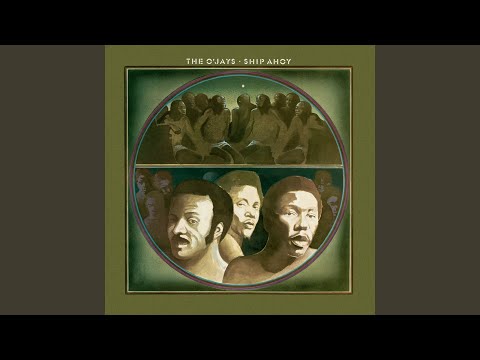
The single was drawn from the album Ship Ahoy, which stands as one of the most ambitious long-playing statements of the entire Philadelphia International era. While "Time To Get Down" occupied the lighter end of the album's emotional spectrum, Ship Ahoy also contained the epic title track, a meditation on the slave trade that ran to nearly eleven minutes and demonstrated the range Gamble and Huff demanded of their premier act. The contrast between that historical reckoning and the dancefloor invitation of "Time To Get Down" was deliberate: the album wanted listeners to hold both registers simultaneously.
Commercially, the single performed respectably if not spectacularly by the group's increasingly high standards. Its peak of thirty-three on the Hot 100 placed it below the heights "Back Stabbers" and "Love Train" had reached, but both of those predecessors were certified classics almost immediately upon release. The R&B chart performance was the more meaningful commercial story: there, the track resonated more deeply with its primary audience. Twelve weeks on the Hot 100 reflected genuine staying power in a period when radio formats were fragmenting and competition for pop airplay was fierce.
The O'Jays' place in the broader narrative of American popular music solidified rapidly during this period. Their run of Philadelphia International releases through the mid-1970s constitutes one of the most consistent bodies of work in soul history. "Time To Get Down" may occupy a secondary position within that catalog, sitting in the shadow of the group's more canonical recordings, but it documents the creative confidence of a band operating at its commercial and artistic peak, supported by a production team that was simultaneously reshaping what American rhythm and blues could sound like and what it could say.
02 Song Meaning
Joy as Purpose: The Message Inside "Time To Get Down"
"Time To Get Down" occupies a specific and deliberate position within the thematic architecture that Kenny Gamble and Leon Huff constructed for The O'Jays. Where companion tracks on Ship Ahoy confronted the horrors of the Middle Passage and the moral failures of contemporary society, this single served as the release valve: an invitation to physical movement offered not as a diversion from the serious work of living but as part of that work's necessary texture.
The title itself carries a compressed argument. "Getting down" in the parlance of early 1970s Black American vernacular meant surrendering fully to the music, to the groove, to the communal experience of shared rhythm. But the word "time" adds urgency and permission simultaneously. It is not merely permissible to celebrate; it is the correct and timely response. Gamble and Huff, who wrote and produced within an explicitly articulated social philosophy they called the Sound of Philadelphia, understood joy as an earned and purposeful state, not a retreat from political awareness but a confirmation of survival and community.
Eddie Levert's vocal delivery reinforces this reading. His performance is not frantic or desperate; it carries the warmth of an assured invitation. This is a communal summons, a call that assumes the listener belongs to a gathering already in progress. The social dimension of dancefloor music in the early 1970s was not incidental. Philadelphia International's output was explicitly designed for spaces where Black communities gathered: clubs, skating rinks, church halls repurposed for secular celebration. The music knew its room.
The relationship between this track and the larger Ship Ahoy album deepens its meaning considerably. An album that contained a nearly eleven-minute reckoning with the slave trade needed "Time To Get Down" as much as "Time To Get Down" needed that context. Neither element would carry the same weight in isolation. Gamble and Huff's sequencing argument was essentially this: you must know the history, and knowing it fully, you must still find a way to dance. Survival demands both memory and movement.
This interpretive framework distinguishes the O'Jays' celebratory material from superficially similar dancefloor records of the period. The invitation to dance carried ethical weight because it came from artists and producers who had just finished recording about slavery. The joy was not naive; it was chosen. That choice, made consciously by performers and producers who understood the political dimensions of Black cultural expression, transforms what might otherwise seem like a straightforward party record into something more carefully considered.
By 1973, the O'Jays had spent years navigating the commercial music industry's indifference before Philadelphia International provided them with both the creative framework and the production resources to reach their full potential. "Time To Get Down" therefore also carries the particular pleasure of an ensemble that knows it has finally found its home and its voice. The ease of the performance reflects the confidence of artists who trust their collaborators completely, who have been given the room to be exactly what they are. That behind-the-scenes reality inflects the music's surface mood: the joy sounds genuine because, in a significant sense, it was.
→ More from The O'Jays
View all The O'Jays hits →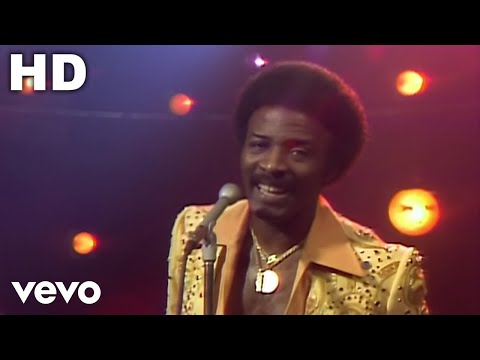

→ More from the 1970s File
View all 1970s hits →




Keep digging