The 1970s File Feature
I Love Music (Part 1)
I Love Music (Part 1): The O'Jays and the Purest Statement of Philly Soul "I Love Music (Part 1)" is one of the most uncomplicated celebrations in the histor…
01 The Story
I Love Music (Part 1): The O'Jays and the Purest Statement of Philly Soul
"I Love Music (Part 1)" is one of the most uncomplicated celebrations in the history of soul music, and in its very lack of complication lies its genius. Released by The O'Jays in late 1975 on Philadelphia International Records, the track reached number five on the Billboard Hot 100 in early 1976 and became one of the defining singles of the Philadelphia International sound at its commercial peak. For a group who had spent much of their career delivering socially engaged material, the song represented a deliberate pivot toward pure, unapologetic joy.
The O'Jays had already established themselves as one of the most important vocal groups in soul music history well before this record arrived. Composed of Eddie Levert, Walter Williams, and William Powell, the group had been recording since the early 1960s, first for smaller labels and eventually finding their artistic home at Philadelphia International, the label founded by Kenny Gamble and Leon Huff. Their work on that label defined a genre: the lush, string-heavy, politically aware sound known as Philly soul or the Sound of Philadelphia. Songs like "Back Stabbers" (1972) and "Love Train" (1973) had given them number-one hits while delivering substantive messages about social trust and universal peace.
"I Love Music" arrived in a different register. Where those earlier classics carried messages, this track carried nothing but exuberance. Produced by Kenny Gamble and Leon Huff, the architects of the Philadelphia International sound, the record was built on the famously lush orchestrations that the house production team had perfected over the preceding years. The Philadelphia International house band, known informally as MFSB (Mother Father Sister Brother), provided the instrumental foundation, and their work on this track is a masterclass in the orchestral funk that the label had made its signature.
The song's production layered strings, brass, and a crisp rhythm section in the manner that had become the Philadelphia International trademark, but with a particular brightness appropriate to its subject matter. The arrangement by Jack Faith and Thom Bell contributed textures that felt celebratory from the first bar. Where some Philly soul productions could be dense and occasionally melancholy in their opulence, this track had an airiness that suited a song whose only subject was the pleasure of the music itself.
The single peaked at number five on the Billboard Hot 100 in January 1976 and reached number four on the R&B singles chart, where it spent considerable time in the upper reaches. The album from which it came, "Family Reunion," was one of the group's strongest commercial performers of the mid-1970s, further cementing Philadelphia International's status as the dominant force in Black popular music at that moment. The label's roster, which also included Harold Melvin and the Blue Notes, Billy Paul, and Teddy Pendergrass, had made it arguably the most commercially successful Black-owned record label in the United States at the time.
The "(Part 1)" designation in the title was a conventional practice for songs expected to receive extended disco-format play, signaling that the track had been extended for club use. The late 1970s disco boom was beginning to reshape the commercial landscape of R&B, and "I Love Music" sat at the crossroads of the two genres, possessing the warmth and vocal depth of soul while adopting the rhythmic momentum and lyrical simplicity that would make disco so commercially potent.
Critical reception at the time recognized the track's excellence within the Philadelphia International catalog. Music journalists noted both its accessibility and its production sophistication, acknowledging that a song this apparently simple required enormous skill to execute at this level. The complexity was hidden beneath the surface, embedded in the arrangement and the vocal performances rather than in the lyrical content.
The track's legacy extended well beyond its initial chart run. It was sampled and interpolated by subsequent generations of producers as the hip-hop and R&B landscape sought to reconnect with the warmth of the Philly soul era. Its streaming numbers in the digital era have been healthy, confirming that the record has maintained relevance across four decades. For students of American popular music, it is frequently cited as one of the purest expressions of the Philadelphia International sound.
William Powell, the third member of the classic O'Jays lineup, was battling colon cancer during the period of this recording, and he would pass away in May 1977. His presence on the recording gives it, in retrospect, an additional poignancy, making it in part a document of the original trio at a moment before loss reshaped the group. Eddie Levert and Walter Williams continued as The O'Jays after Powell's death, but the "Family Reunion" era recordings stand as the fullest expression of what the three-man lineup could achieve together.
02 Song Meaning
Meaning and Themes: The Uncomplicated Joy of "I Love Music"
Not every great song requires a complex reading. "I Love Music (Part 1)" by The O'Jays is a record that achieves its effect precisely through its refusal of complexity, and understanding why that works requires situating the song within both the O'Jays' own artistic trajectory and the broader context of soul music in the mid-1970s. After years of substantive, message-driven material, a pure celebration of music as a force in itself represented a kind of artistic permission slip, an assertion that joy was its own sufficient justification.
The lyrical premise is as stripped-back as popular music gets: music is wonderful, it does good things to the body and spirit, and the narrator loves it. There is no narrative tension, no romantic complication, no social commentary. What the song offers instead is a sustained invitation to share in communal pleasure, a function that soul and gospel traditions had long recognized as among the most important things popular music could do. In removing every other subject and leaving only this invitation, the O'Jays were working within a lineage that included gospel shouts and jump blues, forms that had always understood the power of unequivocal joy.
The song's emotional register is deliberately without shadow, which distinguishes it from much of the O'Jays' most celebrated work. "Back Stabbers" had offered a portrait of social betrayal set to irresistibly warm music, creating that productive tension between sound and subject that soul music had explored throughout the 1960s. "I Love Music" dispensed with that tension entirely. The music and the message were perfectly aligned, both pointing in the same direction, both saying the same thing. This unity of form and content gave the track an unusual clarity of feeling.
For the O'Jays specifically, the song occupied an interesting position in the catalog. Eddie Levert's vocal performance was as accomplished as on any of the group's more serious material, and Walter Williams's harmonies were impeccable, but both men were applying those skills to material that made no demands beyond the generation of warmth. This restraint, the application of deep skill to apparently shallow material, is itself a kind of artistry, and one that not all of their contemporaries managed with equal grace.
The song also functions as a self-referential statement about the purpose of Black popular music at a particular cultural moment. By 1975, soul music had been through a period of considerable political seriousness, with artists from Curtis Mayfield to Marvin Gaye to the O'Jays themselves using the genre as a vehicle for social commentary. "I Love Music" implicitly asserted that music did not always need to carry that weight, that the experience of communal dancing and shared pleasure was itself politically meaningful, a claim that the Black Arts Movement and subsequent critical traditions would eventually validate. Music as a space of collective joy and bodily freedom has its own significance, particularly for communities whose access to other forms of public pleasure had been historically constrained.
In the broader context of the Philly soul catalog, "I Love Music" stands as the label's most complete statement of what dance music could offer at its most generous, a track that asked nothing of its listeners except that they move and feel good. That proved to be more than enough.
→ More from The O'Jays
View all The O'Jays hits →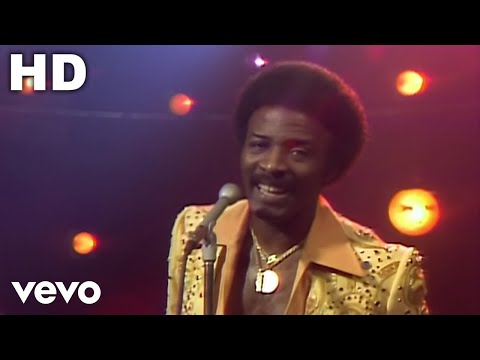

→ More from the 1970s File
View all 1970s hits →




Keep digging