The 1970s File Feature
Message In Our Music
Message In Our Music — The O'Jays and the Gamble Huff Machine at Full Power By 1976 , when The O'Jays released "Message In Our Music" on Philadelphia Interna…
01 The Story
Message In Our Music — The O'Jays and the Gamble & Huff Machine at Full Power
By 1976, when The O'Jays released "Message In Our Music" on Philadelphia International Records, the Philly soul movement that Kenny Gamble and Leon Huff had built from the ground up had already transformed American popular music. The duo had created a self-contained ecosystem of production, songwriting, arranging, and distribution centered on their label, and The O'Jays, consisting of Eddie Levert, Walter Williams, and William Powell, were its crown jewel. The group had delivered consistent hits throughout the early and mid-1970s, and "Message In Our Music" arrived as both a commercial entry and an artistic statement about the enduring purpose of soul music.
The record was produced in the classic Philadelphia International manner, recorded at Sigma Sound Studios with the collective of studio musicians known informally as MFSB, which stood for Mother Father Sister Brother. This ensemble, anchored by drummer Earl Young, bassist Ronnie Baker, and guitarist Norman Harris, had played on virtually every major Philadelphia International recording since the label's founding in 1971, and their sound was so distinctive that it had become a genre unto itself. The string arrangements, typically handled by Don Renaldo or Thom Bell's associates, gave Philly soul its characteristic sweep, while the rhythm section provided the dance-floor propulsion that kept the records commercially viable.
"Message In Our Music" entered the Billboard Hot 100 and performed strongly on the R&B chart, consistent with The O'Jays' track record throughout the decade. The group had established themselves as one of the most reliable commercial forces in Black popular music following the massive success of their 1972 breakthrough "Back Stabbers," which had reached number three on the Hot 100 and effectively launched the Philadelphia International sound into mainstream consciousness. By 1976 they were seasoned hit-makers with a sophisticated audience that expected both musical excellence and substantive lyrical content.
Gamble and Huff had always used their productions as vehicles for social commentary, and this was one of the distinguishing features of Philadelphia International compared to many of its contemporaries. Where some soul labels focused primarily on romantic themes or dance-floor entertainment, Gamble and Huff saw popular music as a platform for speaking to Black American experience in a broader sense. Their songs addressed community, spirituality, economic struggle, and the responsibilities of the music industry itself. "Message In Our Music" explicitly engaged with the latter concern, presenting music as a form of communication with deeper purpose than mere entertainment.
The production on the record is exemplary of the mid-period Philly sound, with lush orchestration balanced against a groove that could hold its own in a discotheque context. By 1976 the influence of disco was being felt across all Black popular music, and Philadelphia International was navigating that landscape with characteristic elegance, incorporating disco's rhythmic emphases without abandoning the orchestral richness that was the label's signature. The O'Jays had also released their disco-adjacent work "I Love Music" earlier that same year, demonstrating their flexibility across the spectrum of contemporary Black pop.
William Powell, one of the group's founding members, was by this point dealing with the colon cancer that would claim his life in 1977, making the recordings of this period poignant in retrospect. The group continued performing and recording through Powell's illness, a testament to both their professional commitment and the depth of their creative partnership. Sammy Strain would eventually join the group as Powell's replacement, but the recordings from this era carry the particular weight of being made in the shadow of impending loss.
The O'Jays' relationship with Gamble and Huff was one of the great producer-artist partnerships in soul music history. The producers understood exactly how to frame Eddie Levert's powerful tenor, building arrangements that supported rather than competed with his voice, and the results across more than a decade of collaboration constitute one of the most impressive bodies of work in American popular music. "Message In Our Music" stands as a representative achievement from that partnership at the height of its powers, blending the label's social consciousness with its unmatched production infrastructure to create a record that was simultaneously a commercial product and a statement of purpose.
Philadelphia International itself would face commercial headwinds in the late 1970s as tastes shifted and the label struggled to adapt to post-disco realities. But in 1976 the machine was still running at extraordinary efficiency, and "Message In Our Music" captures that moment of confidence and creative authority with considerable fidelity.
02 Song Meaning
The Purpose of Sound: Reading "Message In Our Music"
"Message In Our Music" is a song about what music is for. At its thematic center is an argument: that popular music carries responsibilities beyond entertainment, that the songs reaching people's ears in their homes and cars and on the dance floor have the capacity to instruct, inspire, and elevate. This was not a new position for Kenny Gamble and Leon Huff to take as songwriters. Throughout Philadelphia International's history, the two had inserted social and spiritual commentary into their productions with considerable consistency. But "Message In Our Music" made the argument explicitly, using the song itself as a demonstration of the principle it was advocating.
The O'Jays were an ideal vehicle for this kind of meta-commentary on music's function. Eddie Levert's voice carried natural authority, and the group's track record of delivering substantive content, from the political allegory of "Back Stabbers" to the community-building themes of other Philadelphia International recordings, gave them credibility when speaking about what music should do. They were not an act that could be accused of cynicism when making this argument; their catalog supported the claim.
The song positions music as a form of direct communication between performers and audience, arguing that the exchange carries moral weight. Gamble and Huff had long operated under the belief that Black popular music had an obligation to the community that produced and consumed it, and this record articulates that belief in its most direct form. The title itself is a declaration: what The O'Jays are transmitting is a message, not merely a product. Music here is framed as speech with consequence, as a conversation between artist and listener that neither party should take lightly.
This thematic stance puts "Message In Our Music" in conversation with a broader tradition of Black American art that insisted on the inseparability of aesthetic and social purpose. From the blues forward, African American musical traditions had carried the dual function of entertainment and testimony, providing pleasure while also bearing witness to experience. Philadelphia International's particular contribution to this tradition was to embed those testimonial functions within the most commercially sophisticated production apparatus in soul music, making the message available to the widest possible audience without diluting its content.
The emotional register of The O'Jays' performance is earnest and exhortatory rather than celebratory. This is not a party record, even if its production has enough rhythmic energy to function in a dance context. The vocal delivery suggests a kind of passionate advocacy, with Levert and Williams pushing against the lushness of the arrangement to ensure the words carry through. There is genuine conviction in the performance, which distinguishes it from similar records that might have used the same theme as a marketing position rather than a sincere belief.
Within the context of the O'Jays' catalog, the song represents the more overtly philosophical side of their work with Gamble and Huff. Many of their biggest hits dealt with interpersonal drama, romantic entanglement, or street-level social observation. "Message In Our Music" operates at a higher level of abstraction, asking questions about the music industry and the responsibilities of artists rather than narrating specific human situations. That willingness to step back and reflect on the broader context of what they were doing gives the record a distinctive place in their discography.
The song also functions as a kind of manifesto for Philadelphia International's aesthetic philosophy at a moment when the label was at the peak of its commercial and cultural authority. By 1976 Gamble and Huff had proven that socially conscious soul music could compete on the highest commercial level, and "Message In Our Music" is, in part, a celebration of that achievement. It is a song about the power of music made by people who had demonstrated that power in practice, which gives it a self-referential quality that rewards attentive listening.
→ More from The O'Jays
View all The O'Jays hits →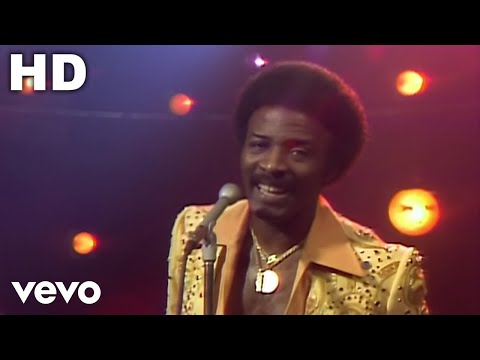

→ More from the 1970s File
View all 1970s hits →




Keep digging