The 1970s File Feature
The Story In Your Eyes
The Moody Blues Catch Fire on The Story in Your Eyes Picture the early 1970s, an era when rock bands were reaching for grandeur, weaving orchestral textures …
01 The Story
The Moody Blues Catch Fire on "The Story in Your Eyes"
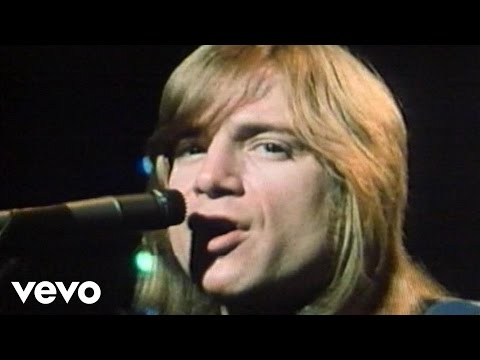
Picture the early 1970s, an era when rock bands were reaching for grandeur, weaving orchestral textures and cosmic ambitions into their albums. The Moody Blues sat near the heart of that movement, pioneers of a lush, symphonic style that had made them one of the most distinctive bands of their generation. "The Story in Your Eyes" arrived in the summer of 1971 with a surprising jolt of energy, a brighter, harder-driving single that showed the band could rock with real urgency while keeping their dreamy, philosophical spirit intact.
Pioneers of Symphonic Rock
By 1971, The Moody Blues had spent several years crafting a sound unlike anyone else, blending rock with orchestral sweep and introspective, often cosmic lyrics. Their landmark albums had helped define the progressive and art-rock movements, and they were beloved for records built around lush arrangements, the otherworldly tones of the Mellotron, and a meditative outlook. The band's chief songwriters, including Justin Hayward and John Lodge, gave the group its blend of melodic warmth and thoughtful ambition. This single came from their acclaimed album Every Good Boy Deserves Favour. The band had spent the late 1960s pioneering a fusion of rock and orchestral grandeur, and by the early 1970s they had refined that vision into a sound instantly identifiable as their own. Their concept-driven albums treated the long-playing record as a complete artistic statement rather than a collection of singles, an ambition that placed them at the forefront of the progressive movement. Even within that grand framework, they retained a gift for melody that kept their music accessible.
A Brighter, Harder Sound
The record stands out in the band's catalog for its energy and drive. Written by Justin Hayward, it pairs a propulsive, almost urgent rhythm with the band's characteristic melodic richness and layered harmonies. The guitars are crisper and more insistent than on much of their dreamier material, giving the song a momentum that made it ideal for radio. Yet it never loses the band's signature lushness or their reflective lyrical bent, balancing rock energy with the meditative quality that made them special. It was the sound of a band stretching its range.
A Strong Run on the Hot 100
The single entered the Billboard Hot 100 on August 7, 1971, at number 88 and climbed quickly, leaping to 64, then 49, 41, and 31 over its early weeks. It eventually reached a peak of number 23 during the week of October 2, 1971, and it spent 11 weeks on the chart. That was a solid showing for the band in the American singles market, helping to spread their lush, ambitious sound to listeners who might have known them only through album-oriented radio and their growing reputation.
A Highlight of a Celebrated Era
This record belongs to the most acclaimed period of The Moody Blues' career, the run of albums that cemented their reputation as innovators of symphonic rock. The song became a fan favorite and a staple of their live performances, prized for its blend of energy and atmosphere. It demonstrated that the band could deliver an exciting, hook-driven single without abandoning the depth that defined their art, a balance that few of their contemporaries managed so gracefully.
Why It Still Soars
The blend of drive and dreaminess in this record remains exhilarating, the sound of a band at the height of its powers. There is real momentum here, lifted by those gorgeous harmonies. Cue it up, turn it up, and feel the Moody Blues catch fire while keeping their heads in the clouds. The song proves that ambition and accessibility need not be at odds, that a band could think deeply and still deliver a thrilling rush of energy. That balance is rare, and it is exactly what makes the record endure. Press play and let it carry you.
"The Story In Your Eyes" — The Moody Blues' singular moment on the 1970s charts.
02 Song Meaning
What "The Story in Your Eyes" Is Really About
Beneath its driving energy, this is a song wrestling with big questions, the kind of cosmic and philosophical themes that defined much of The Moody Blues' work. It contemplates love, time, and the fate of humanity, finding hope and connection amid uncertainty. The story in the title refers to the wisdom and feeling glimpsed in a loved one's eyes, a personal anchor in a vast and troubled world.
Love as a Source of Hope
The central theme is the comfort and meaning found in human connection. Love as a refuge from uncertainty runs through the song, the narrator drawing strength from the story he reads in his beloved's eyes. Against a backdrop of larger anxieties, that intimate bond becomes a source of reassurance, a reminder that connection can offer meaning even when the wider world feels precarious.
Contemplating Time and Fate
Woven through the romance is a broader meditation on time and the future. Hope shadowed by worry defines the song's outlook, reflecting on the passage of time and the uncertain destiny of humanity. The Moody Blues often pondered such grand themes, and here those reflections give the love story a philosophical weight, situating personal feeling within a cosmic frame.
Finding Light in Darkness
For all its concern with uncertainty, the song ultimately leans toward optimism. Choosing hope over despair emerges as its guiding spirit, the conviction that love and connection can light the way forward. That hopeful resolve, characteristic of the band's outlook, gives the song an uplifting quality despite the heavy questions it raises.
A Reflection of Its Era
The early 1970s were a time of both idealism and anxiety, and rock musicians frequently turned to cosmic and philosophical themes in search of meaning. This song reflects that moment, blending personal emotion with larger reflections on humanity's path. It spoke to listeners navigating a turbulent age who found comfort in music that took the big questions seriously. The band's willingness to ponder mortality, love, and the cosmos set them apart from acts content with simpler fare, and their audience cherished that ambition. In a period shadowed by social upheaval and uncertainty, a song that wrestled openly with hope and fear offered something more substantial than mere escapism.
Why It Resonated
People connected to the song because it married irresistible energy with genuine depth, offering both a great rock single and something to think about. Its message of finding hope through love amid uncertainty struck a universal chord. The enduring appeal of "The Story In Your Eyes" lies in that balance, a song that makes you move while inviting you to reflect on what truly matters. Few records manage to be both exhilarating and contemplative, yet this one achieves that rare union, which is why it has remained a favorite among the band's admirers for so long.
→ More from The Moody Blues
View all The Moody Blues hits →


→ More from the 1970s File
View all 1970s hits →




Keep digging