The 1970s File Feature
I'm Just A Singer (In A Rock And Roll Band)
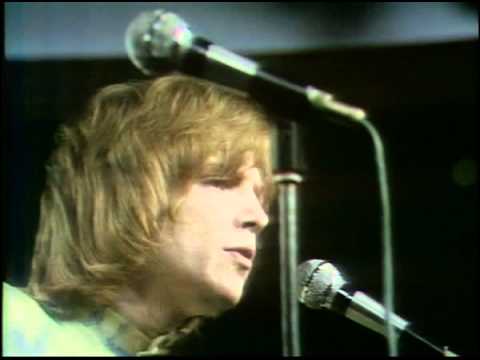
"I'm Just a Singer (In a Rock and Roll Band)" — The Moody Blues Step Back Kings of the Cosmic, Facing the Audience The Moody Blues had spent the late 1960s b…
01 The Story
"I'm Just a Singer (In a Rock and Roll Band)" — The Moody Blues Step Back
Kings of the Cosmic, Facing the Audience
The Moody Blues had spent the late 1960s building one of the most ambitious conceptual frameworks in British rock. Their run of albums from Days of Future Passed through Seventh Sojourn combined lush orchestral arrangements, philosophical lyrics, and a symphonic sense of structure that gave them a devoted following of listeners who wanted their rock music to address the big questions: time, consciousness, the nature of perception, humanity's place in the universe. By early 1973, they had become, somewhat to their own apparent surprise, the kind of band that was expected to have answers. "I'm Just a Singer (In a Rock and Roll Band)" was their response to that expectation, and it arrived as the lead single from Seventh Sojourn.
The Track and Its Context
Written by bassist and vocalist John Lodge, the song occupies a peculiar position in the Moody Blues catalog: it is a declaration of limitation delivered by a band that had been celebrated precisely for its expansiveness. The title is a kind of public disclaimer, a statement that despite everything the records seemed to promise, the musicians making them were entertainers, not prophets. The irony is that the track was itself enormously successful, which meant the disclaimer reached an enormous audience while the band's reputation for cosmic significance continued undiminished.
Musically the song is among the more driving and rhythmically direct in the Moody Blues catalogue. The production retained the warmth that had characterized the band's albums throughout their classic period, but the track moved with more urgency than the reflective, slow-building pieces that had defined albums like On the Threshold of a Dream. The guitar work has a more assertive quality, and the rhythm section pushes with greater insistence than was typical of the band's more ruminative work.
The Chart Run of Early 1973
The single debuted on the Billboard Hot 100 on February 3, 1973, entering at number 58. That initial position reflected an established fanbase ready to engage with new material, and the track moved upward quickly through the winter weeks. By March 17, 1973, it had reached its peak of number 12, spending 10 weeks on the chart in total. For a band whose music was frequently described as difficult or uncommercial, a top 15 placing on the Hot 100 was a significant achievement and confirmed that their audience extended well beyond the album-oriented listeners who might have been expected to be their primary constituency.
In the United Kingdom the band's profile was even stronger, and the track performed correspondingly well there, reinforcing their status as one of the most successful British rock acts of the era on both sides of the Atlantic.
The Paradox of the Disclaimer
There is something philosophically interesting about a band known for grand themes releasing a hit single that denies any grand intent. The disclaimer in the title and lyrics is genuine in one sense: the Moody Blues were not social reformers or spiritual teachers; they were musicians trying to make records they believed in. John Lodge's lyric is honest in that specific way, a correction of the messianic expectations that had accumulated around the band. Yet the song itself, with its sweeping production and emotional earnestness, undermines the modesty of the message just enough to be amusing.
A Closing Chapter
Seventh Sojourn, the album from which the single was drawn, marked the end of the band's classic lineup phase. After its release and tour, the members embarked on an extended hiatus that lasted several years, and when they returned the musical landscape had shifted considerably. "I'm Just a Singer" thus functions as a farewell of sorts to a particular era, the last major statement of the band's original classic period, and the song's self-aware quality gives it an additional layer of meaning in retrospect. Press play and hear one of Britain's most thoughtful rock acts at the close of their most celebrated chapter.
"I'm Just a Singer (In a Rock and Roll Band)" — The Moody Blues' singular moment on the 1970s charts.
02 Song Meaning
"I'm Just a Singer (In a Rock and Roll Band)" — Humility as Philosophy
The Weight of Being a Prophet
By the early 1970s, certain rock musicians had accumulated a kind of cultural authority that went well beyond what music-making could plausibly deliver. Audiences looked to them for guidance on how to live, how to think about consciousness and society and the future. The Moody Blues, with their symphonic concept albums and lyrics full of cosmological imagery, were among the acts that had attracted this kind of expectation. The discomfort of occupying that position comes through clearly in "I'm Just a Singer", which reads as a genuine attempt to deflect messianic weight and restore a more realistic sense of what a rock band is and is not.
The Lyrics as Disclaimer and Confession
The central argument of the track is that a musician, however talented or ambitious, is fundamentally a craftsperson in the entertainment business rather than a guide to truth. The narrator catalogues the kinds of answers he is asked to provide and politely declines to supply them, not out of indifference but out of honesty about his actual expertise. This is a more philosophically sophisticated position than it might initially appear. Acknowledging the limits of one's authority requires a clearer understanding of that authority than pretending to unlimited wisdom does.
John Lodge's lyric manages to be simultaneously modest and self-aware, threading the needle between false humility (which would be its own form of performance) and genuine honesty about what rock music can and cannot do for the people who listen to it.
Expectations and the Artist in 1973
The early 1970s were a period in which the relationship between rock musicians and their audiences was being renegotiated in interesting ways. The utopian promise of the late 1960s had not been fully delivered, and artists who had been celebrated as voices of a generation were navigating what that meant in the aftermath. Some responded by doubling down on grandiosity; others, like the Moody Blues in this track, responded by stepping back and making the case for a more modest but more honest relationship between performer and audience.
The song fits into a broader cultural moment in which rock musicians were beginning to question their own mythology, a process that would accelerate through the mid-1970s and eventually find its most extreme expression in punk's wholesale rejection of rock pretension.
The Irony of Its Success
There is an unavoidable irony in the fact that this declaration of limited ambition became one of the band's biggest American hits. A song designed to lower expectations reached a larger audience than many of the more philosophically ambitious tracks the band had recorded. This irony is not lost on careful listeners, and it gives the track a somewhat self-undermining quality: the more people heard the disclaimer, the more it became a signature, which is not quite what a disclaimer is supposed to do.
An Honest Legacy
The song's longevity rests on the honesty of its position. Listeners who had felt slightly exhausted by the grandeur of the Moody Blues' conceptual albums found in the track a moment of refreshing candor, a band admitting that they did not have all the answers and were perhaps not the right people to be consulting. That honesty turned out to be more durable than many grander claims, and the track has aged better than some of its loftier contemporaries in the band's own catalog. The message, for all its apparent self-deprecation, is actually quite confident: it takes a certain security to say you're just a singer, and mean it.
→ More from The Moody Blues
View all The Moody Blues hits →



→ More from the 1970s File
View all 1970s hits →




Keep digging