The 1970s File Feature
Kiss And Say Goodbye
"Kiss And Say Goodbye" — The Manhattans The Summer of Soul and Sorrow Picture the summer of 1976: America is celebrating its bicentennial, the country is dra…
01 The Story
"Kiss And Say Goodbye" — The Manhattans
The Summer of Soul and Sorrow
Picture the summer of 1976: America is celebrating its bicentennial, the country is draped in red, white, and blue, and the radio is alive with everything from disco anthems to soft rock ballads. In the middle of all that celebratory noise, a group of seasoned soul veterans from Jersey City, New Jersey, delivered something strikingly different. The Manhattans offered a ballad so emotionally raw, so deliberately paced, that it stopped listeners cold. "Kiss And Say Goodbye" did not compete with the party around it. It outlasted every song at that party.
The Manhattans had been recording since the early 1960s, building a loyal following on the strength of their close harmonies and their feel for romantic heartache. By the mid-1970s, they were veterans of the soul circuit without yet having achieved a genuine pop crossover moment. That moment arrived with this single, and it arrived in a way that suggested the group had been preparing for it their entire career.
A Spoken Word That Changed Everything
What sets "Kiss And Say Goodbye" apart from hundreds of other soul ballads of its era is its construction. The song opens with a spoken-word passage delivered by lead vocalist Winfred "Blue" Lovett, who recites the scene of a final goodbye with a weariness that sounds completely lived-in. The spoken intro was not a novelty device. It established an emotional register that the rest of the song then had to honor, and the vocal performance that followed, led by Gerald Alston, rose to exactly that challenge.
The production, credited to Bobby Martin, sits in that precise mid-70s zone where Philadelphia soul strings met gospel-rooted vocal arrangements. The orchestration swells without overwhelming, giving the voices room to do the real work. The result is a recording that sounds simultaneously intimate and cinematic, a difficult balance that most producers in that era were still figuring out.
Climbing to the Summit
The single entered the Billboard Hot 100 on April 17, 1976, at position 99. Its ascent was gradual and steady, the kind of chart climb that reflects genuine radio momentum rather than promotional push. Week by week it moved through the chart, gaining ground as DJs discovered how effectively it connected with listeners. By July 24, 1976, "Kiss And Say Goodbye" had reached number 1 on the Billboard Hot 100, where it remained for two weeks.
The single spent 26 weeks on the Billboard Hot 100, a tenure that speaks to sustained audience demand rather than a flash of popularity. It crossed formats readily, charting on both the R&B chart and the pop chart simultaneously, which in 1976 was still a meaningful achievement for an act primarily rooted in the soul tradition. The song reportedly sold over two million copies in the United States alone, making it one of the best-selling singles of that year.
Context on the 1976 Chart Landscape
The summer of 1976 was a fascinating moment in American popular music. Disco was tightening its grip on the dance floors but had not yet fully colonized the radio dial. Philadelphia soul, the style that had dominated the early part of the decade through acts like the O'Jays and Harold Melvin and the Blue Notes, was still commercially viable. The Manhattans fit naturally into that tradition while demonstrating a certain classicism that set them slightly apart. Their harmonies drew on doo-wop roots from the early 1960s, and their ballad sensibility owed as much to older pop conventions as to contemporary soul.
That combination proved extraordinarily durable. Listeners who were tired of four-on-the-floor rhythms found in "Kiss And Say Goodbye" a record that demanded to be listened to rather than danced to, and that demand was met with remarkable enthusiasm across demographic lines.
Legacy and Place in the Manhattans' Story
The Manhattans never replicated the commercial peak of "Kiss And Say Goodbye," though they continued recording and charting through the late 1970s and into the 1980s. The group's next major pop hit, "Shining Star," arrived in 1980 and similarly showcased their talent for emotionally resonant ballads. But it is this 1976 recording that defines their place in the popular music canon. It demonstrated that old-school vocal craft, built on harmony and emotional restraint, could still command the attention of a mass audience even as the musical landscape shifted around it.
For anyone who wants to understand what 1970s soul sounded like at its most assured, at its most heartfelt, this is the recording to reach for. Put it on, turn the volume up, and let Gerald Alston and the rest of the group do exactly what they had spent fifteen years preparing to do.
"Kiss And Say Goodbye" — The Manhattans' singular moment on the 1970s charts.
02 Song Meaning
"Kiss And Say Goodbye" — Themes and Emotional Legacy
The Architecture of Farewell
At its core, "Kiss And Say Goodbye" is a song about ending a relationship with someone you are not supposed to be with. The narrator has come to a final meeting, knowing that what follows is a permanent goodbye. The themes are those of forbidden love, of choosing obligation over desire, and of the particular grief that comes from doing the right thing when the right thing causes real pain. There is nothing triumphant in the narrator's decision. The song refuses to make the farewell feel noble or cleansing. It simply sounds like loss.
The spoken introduction sets this emotional tone before the melody even begins. In a few short sentences, the narrator establishes the geography of the goodbye: a private meeting, a final conversation, the knowledge that what is being ended cannot be revisited. That setup gives the vocal performance that follows its extraordinary weight. The listener already understands the situation completely before the singing starts.
Romantic Realism in Soul Music
One of the reasons this song resonated so deeply with its audience was its refusal to sentimentalize. Soul music of the 1960s and early 1970s often addressed heartbreak through the lens of pleading or defiance. The narrator would beg the beloved to stay, or announce their own departure with wounded pride. "Kiss And Say Goodbye" operates on different ground. The narrator is not asking for anything, not arguing, not hoping. The decision has been made. What remains is only the ceremony of ending, and the song dwells there with unusual honesty.
This directness connected with listeners across backgrounds and situations. The experience of ending something that should not have continued, of a goodbye that is both necessary and devastating, is broadly human. The Manhattans did not locate the song in any specific social context. The pain is universal rather than particular.
Social and Cultural Resonance in 1976
The mid-1970s in the United States were a period of recalibration after years of social upheaval. Divorce rates had risen sharply through the early part of the decade. Conversations about relationships, commitment, and what people owed each other were more open and more fraught than they had been in previous generations. A song about the emotional cost of ending something, about the weight of a goodbye, landed in a cultural moment primed to receive it.
Beyond that immediate context, the song carried the legacy of African American vocal group tradition into the mid-70s pop mainstream, demonstrating that the close-harmony style developed through doo-wop and early soul retained its emotional power even as musical tastes shifted around it. The Manhattans were not innovators in a genre sense. They were masters of an established form, and their mastery was what the moment called for.
Why the Song Still Holds
Decades after its release, "Kiss And Say Goodbye" continues to appear in playlists devoted to classic soul and classic pop alike. Its durability comes from several interlocking qualities. The production has aged well because it did not chase trends even when it was current. The vocal performances are technically precise without feeling clinical. And the emotional situation at the heart of the song is one that every adult listener has some version of in their own history.
The song's relatively quiet dignity sets it apart from more flamboyant exercises in heartbreak. There are no soaring runs deployed for their own sake, no orchestral swells that overwhelm the lyrical content. Everything serves the feeling, and the feeling is allowed to be exactly as painful as it is. That discipline is rare in any era, and it is what keeps the song alive when countless contemporaries have faded.
→ More from The Manhattans
View all The Manhattans hits →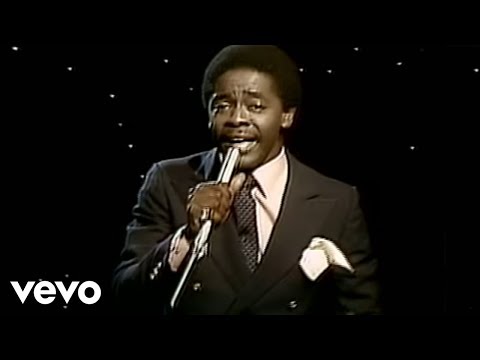

→ More from the 1970s File
View all 1970s hits →




Keep digging