The 1970s File Feature
I Kinda Miss You
"I Kinda Miss You" — The Manhattans' Velvet Touch in 1976 The Art of the Slow Burn There is a particular kind of soul ballad that operates below the level of…
01 The Story
"I Kinda Miss You" — The Manhattans' Velvet Touch in 1976
The Art of the Slow Burn
There is a particular kind of soul ballad that operates below the level of dramatic announcement, that communicates its feeling through accumulation rather than declaration, through the steady application of warmth rather than a single overwhelming emotional gesture. The Manhattans built their career on exactly this approach, and "I Kinda Miss You," which appeared on the Billboard Hot 100 in the autumn of 1976, represents the group in full command of their signature method. The tentative word in the title, "kinda," signals the whole aesthetic: this is music about feeling that is acknowledged obliquely rather than announced, about the quiet pull of absence that grows stronger the longer you try to ignore it.
By 1976, the Manhattans had been performing together for well over a decade. The group had formed in Jersey City, New Jersey in the early 1960s, and their longevity in the competitive world of soul vocal groups spoke to a genuine quality and consistency that outlasted many of their contemporaries. Lead vocalist Gerald Alston had become one of the most distinctive voices in contemporary soul, capable of communicating emotional nuance with a subtlety that distinguished the Manhattans from groups that relied on more theatrical vocal approaches.
The Columbia Records Period
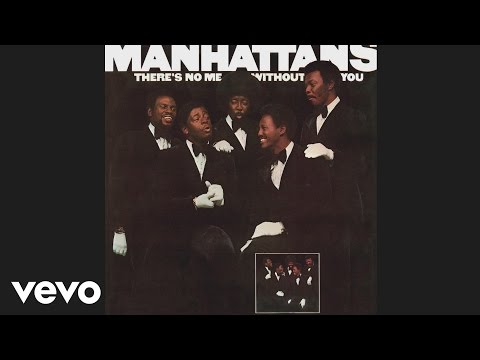
The mid-1970s marked the Manhattans' most commercially productive period. After years of recording for smaller labels, including Carnival Records, the group had signed with Columbia Records, and the resources and promotional infrastructure of a major label gave their recordings wider distribution and more substantial radio support. The Columbia years produced some of their most enduring work, with the 1976 album There's No Me Without You establishing the template for the kind of sophisticated, adult-oriented soul ballad that would define their commercial identity.
"I Kinda Miss You" emerged from this period of creative momentum. The production carries the characteristic warmth of mid-seventies soul recording: strings arranged with taste rather than excess, a rhythm section that provides structure without dominating, and the vocal blend that the Manhattans had spent years perfecting. The record debuted on the Billboard Hot 100 on October 30, 1976, entering at number 81, and over eight weeks it climbed steadily to its peak position, driven by the consistent radio support that the group's Columbia affiliation helped secure.
Eight Weeks and a Steady Climb
The chart progression of "I Kinda Miss You" traced a reliable upward path through the autumn of 1976. From 81 at debut, the record moved to 69 the following week, then continued through the 50s as November progressed. By late November it had reached 49, and the record peaked at number 46 on December 11, 1976, a performance that reflected the group's established presence with their audience rather than a breakthrough moment. For a vocal group operating in the soul and R&B market in this period, consistent mid-chart performances on the Hot 100 combined with stronger showings on the more format-specific R&B rankings constituted a sustainable commercial foundation.
The eight weeks on chart demonstrated that the record was connecting with listeners rather than simply cycling through promotional rotation. Soul ballads require the kind of listener patience that radio programmers do not always reward, and the Manhattans had developed an audience that followed their work with precisely that kind of attention.
The Sound of Sophisticated Soul
What the Manhattans were selling by 1976 was a particular kind of musical sophistication. The soul landscape had diversified considerably through the decade, with funk and disco claiming increasing commercial territory while the ballad tradition continued to find its audience among listeners who wanted music that rewarded sustained attention rather than demanding immediate physical response. The Manhattans inhabited this latter space with a consistency and quality that earned them genuine loyalty.
The group's vocal arrangements reflected years of development, with harmonies that moved between close unison passages and more adventurously stacked chords. Alston's lead voice provided the emotional center while the supporting vocals gave the recordings a textural richness that single-voice performances could not achieve. This was ensemble singing at a high level, and it was the product of long experience together.
Setting the Stage for Greater Success
The work the Manhattans did in 1976, including "I Kinda Miss You," prepared the ground for their greatest commercial moment, which arrived the following year with "Kiss and Say Goodbye," a record that reached number one on the Billboard Hot 100 in 1976 and became one of the best-selling soul singles of the era. But that triumph did not emerge from nowhere. It was built on the accumulated quality of years of recordings, on the audience loyalty earned through consistent work, and on the musical identity that tracks like "I Kinda Miss You" helped to define and sustain.
For listeners coming to the Manhattans' catalog for the first time, "I Kinda Miss You" offers a reliable introduction to their mid-period work: warm, accomplished, emotionally direct in the understated way that was their signature. It does not announce itself; it simply settles in, and somewhere around the third or fourth listen you realize it has been there all along.
"I Kinda Miss You" — The Manhattans' singular moment on the 1970s charts.
02 Song Meaning
"I Kinda Miss You" — Longing, Restraint, and the Vocabulary of Absence
The Eloquence of Understatement
The phrase "I kinda miss you" is remarkable for what it withholds. A more direct declaration would have been "I miss you terribly" or "I need you back." The qualifier transforms the emotional statement into something more psychologically accurate and more interesting: the admission of longing that tries to protect itself by minimizing, the feeling that a person might acknowledge to themselves before they are ready to acknowledge it fully to another person. The Manhattans built an entire song around this emotional register, and the choice proved to be as artistically satisfying as it was commercially effective.
Restraint as a communicative strategy has deep roots in American popular music, particularly in the soul tradition that the Manhattans inhabited. The most affecting soul performances often worked through what was held back rather than what was released, and Gerald Alston's vocal approach on this recording embodies that philosophy throughout. He does not push the feeling to its breaking point; he holds it at the precise tension where the listener feels it most acutely.
The Psychology of Missing Someone
Songs about absence and longing address one of the most universal human experiences, but they address it in very different ways depending on where they place the emotional center of gravity. "I Kinda Miss You" locates its emotion in the early stages of that experience, before the longing has fully crystallized into something that can be articulated cleanly. The narrator is in the process of recognizing what he feels, and the song captures that process rather than its fully formed result.
This temporal placement, in the moment of recognition rather than the aftermath of acknowledged loss, is relatively unusual in the ballad tradition, which more often positions its narrators in the full grip of feeling rather than at its threshold. The resulting intimacy feels genuine because it reflects a psychological reality that most listeners will recognize: the experience of finding oneself thinking about someone and having to admit, even tentatively, that the thinking has a quality of longing about it.
Soul Music and Adult Experience
The Manhattans' commercial identity in the mid-1970s was built around music addressed to an adult audience with adult emotional experiences. This was not teenage romance music, not the first-flush excitement of new love that dominated much pop production. It was music about relationships that had histories, about people who had been together long enough to have accumulated a shared life, about the specific quality of absence that only someone genuinely known can leave behind.
The adult contemporary soul market that the Manhattans inhabited was often underestimated by critics who paid more attention to the genre's more overtly dramatic forms. But the audience for this music was real, substantial, and genuinely responsive to the emotional specificity that groups like the Manhattans consistently delivered. The market's commercial scale over the following decades would prove how right those listeners were.
The Craft Behind the Feeling
What sounds effortless in the Manhattans' recordings is the product of decades of accumulated craft. Vocal harmony at this level requires not just technical skill but an intuitive responsiveness between singers, a sensitivity to each other's timing and emphasis that allows the group to move as a single expressive unit. The blend achieved on recordings like "I Kinda Miss You" is the result of years of performance together, of thousands of repetitions that have burned the musical relationship into something that no longer requires conscious effort.
The production equally reflects this level of craft: the arrangement serves the vocal without competing with it, providing the emotional and textural context that allows the performance to be heard at its best. String arrangements in soul of this period could easily become overwhelming, but here they remain in their proper supporting role, beautiful and appropriate but never assertive enough to pull attention from the voices at the center. The result is a recording that sounds easy to make, which is the surest sign of how difficult it actually was.
→ More from The Manhattans
View all The Manhattans hits →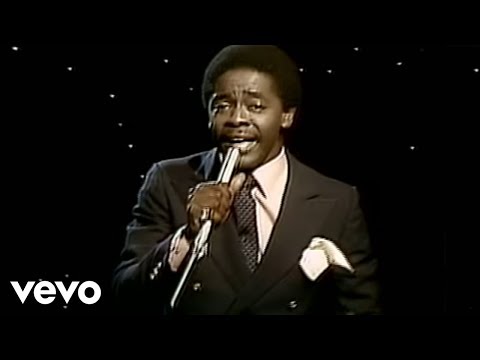


→ More from the 1970s File
View all 1970s hits →




Keep digging