The 1970s File Feature
I Love You For All Seasons
I Love You For All Seasons: The Fuzz and the Sound of 1971 "I Love You For All Seasons" by The Fuzz was one of the more distinctive vocal group soul recordin…
01 The Story
I Love You For All Seasons: The Fuzz and the Sound of 1971
"I Love You For All Seasons" by The Fuzz was one of the more distinctive vocal group soul recordings to emerge in 1971, a year in which the American R&B landscape was in transition between the raw emotional energy of the late 1960s soul tradition and the more orchestrated, sophisticated sound that Philadelphia and other producers were developing for the decade ahead. The Fuzz were a Washington, D.C.-based vocal group whose sound bridged these two moments, offering a combination of genuine street-corner group harmony and a production approach that reached toward sophistication without fully departing from its roots.
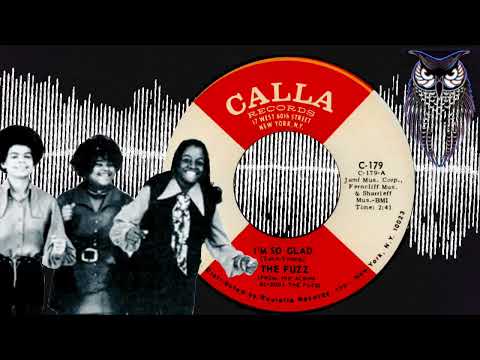
The song was released on Calla Records, an independent label that had a brief but notable period of activity in the late 1960s and early 1970s. Calla's catalog during this period included a range of soul and R&B material, and The Fuzz represented one of its more commercially promising acts. The label's independent status meant that the group's chart success was achieved without the promotional infrastructure of a major label, which made its performance on the Billboard Hot 100 particularly impressive as an indication of the song's genuine appeal to radio programmers and audiences.
The Fuzz consisted of three young women, Sheila Young, Barbara Gilliam, and Val Williams, whose harmonies gave the group a distinctive sound within the vocal group landscape of the era. Female vocal groups occupied an important place in early 1970s soul, from the Supremes' final recordings through the emergence of new groups that would define the decade's R&B sound. The Fuzz's specific combination of voices had a quality that suited the intimate, seasonal romance of their hit material.
"I Love You For All Seasons" reached the upper portions of the R&B charts in 1971, demonstrating genuine crossover appeal and establishing The Fuzz as a group worthy of attention beyond their regional base. The song's production reflects the transitional moment it occupied, with arrangements that acknowledge both the stripped-down directness of late-1960s soul and the orchestral ambitions that were beginning to define the new decade's approach to R&B production. The balance between these influences gives the recording a distinctive character that neither fully inhabits one tradition nor the other.
The lyrical conceit of love across all seasons was a well-established romantic convention, but The Fuzz's treatment of it had a freshness that came partly from the youth and genuine feeling in the group's vocal delivery. Their voices, not yet smoothed into the professional polish that some groups achieved after years of studio experience, carried an unaffected quality that suited the song's emotional directness. The song charted during a period when authentic-feeling vocal group performances were valued highly by both radio programmers and record-buying audiences.
The commercial context of 1971 was favorable for well-crafted vocal group soul. The music industry was still oriented around physical singles sales and radio airplay, and a song with genuine melodic appeal and accessible emotional content could achieve national visibility through these traditional channels even on an independent label. Calla's distribution arrangements gave The Fuzz enough market reach to make the most of the song's commercial potential.
The Fuzz's subsequent career did not sustain the commercial momentum generated by "I Love You For All Seasons," a pattern familiar from the histories of many vocal groups of the era who produced one or two notable recordings before fading from commercial visibility. The music business of the early 1970s was littered with groups that had briefly achieved national attention before the specific combination of song, timing, and promotional support that had produced their initial success proved impossible to replicate. For The Fuzz, this single nonetheless represented a genuine contribution to the vocal group tradition of the period.
The song's historical significance rests on its role as evidence of the breadth and depth of early 1970s R&B vocal group culture, a tradition that extended far beyond the major labels and their flagship acts to encompass a wide range of groups working at regional and independent levels with varying degrees of commercial and artistic success. "I Love You For All Seasons" documented the vitality of that broader tradition and gave The Fuzz a permanent place in the history of the era's popular music.
02 Song Meaning
I Love You For All Seasons: Permanence and the Constancy of Devotion
"I Love You For All Seasons" grounds its emotional argument in one of the most familiar structures in the human experience of time: the cycle of the natural year. By promising love across spring, summer, autumn, and winter, the narrator makes a claim about permanence that goes beyond the immediate feeling of romantic passion. Seasonal love, in the song's framework, is not contingent on warmth or ease; it persists through the cold months as reliably as through the pleasant ones, through difficulty and depletion as reliably as through abundance. This is love understood as commitment rather than merely as emotion.
The seasonal structure also allows the song to acknowledge change while asserting continuity. Seasons change, by definition, and anyone claiming to love across all of them is acknowledging that conditions vary, that circumstances will not always be favorable, that the relationship will need to sustain itself through periods of challenge and loss. This acknowledgment distinguishes the song's emotional claim from more naive declarations of permanent bliss; it recognizes the reality of change and asserts that the love survives it anyway.
The vocal group format of The Fuzz is itself meaningful in the context of the song's themes. Harmonies, by definition, require multiple voices to sustain a shared musical purpose simultaneously, and the experience of hearing several voices maintain a unified sound is a sonic embodiment of the kind of sustained, coordinated commitment that the lyrics describe. The group's ability to maintain harmonic integrity across a song's duration mirrors the narrator's promise to maintain emotional integrity across the seasons. This is not a coincidence of musical form but a fundamental connection between the medium and the message.
The song's emotional register is one of quiet certainty rather than passionate proclamation. The most enduring declarations of love in popular music are often delivered with this quality of settled assurance rather than desperate intensity, and "I Love You For All Seasons" belongs to that tradition. The narrator does not need to shout the claim; its truth is evident in the steadiness of its delivery. This tonal quality of assured constancy is part of what makes the song emotionally effective beyond its melodic surface appeal.
For The Fuzz as artists, the song represents a thematic alignment between their material and their mode of performance. Their youth and relative inexperience in the studio gave their voices a quality of unaffected directness that served this kind of sincere, uncomplicated declaration particularly well. The song did not require irony or sophistication to work; it required honest delivery of an honest emotion, and The Fuzz provided exactly that.
Within the broader context of early 1970s R&B and soul, the song's themes of devoted, enduring love were representative of the genre's values during this period. Soul music of the era was deeply committed to the idea of genuine romantic devotion as both an emotional reality and a moral value, and "I Love You For All Seasons" participates in that commitment without irony or reservation. The song's straightforwardness was itself a kind of artistic statement, asserting against the period's countercultural skepticism about traditional emotional commitments that such commitments were real, worthwhile, and expressible in song without embarrassment.
→ More from The Fuzz
View all The Fuzz hits →
→ More from the 1970s File
View all 1970s hits →




Keep digging