The 1970s File Feature
Show Biz Kids
Show Biz Kids — Steely Dan Hollywood Cynicism on Wax Los Angeles in the early 1970s was a city running on mythology and cocaine. The entertainment industry h…
01 The Story
Show Biz Kids — Steely Dan
Hollywood Cynicism on Wax
Los Angeles in the early 1970s was a city running on mythology and cocaine. The entertainment industry had never been more visible or more self-conscious, and the gap between its glamorous surface and the transactions happening beneath it was wider and more cynical than at almost any point in its history. Into this environment arrived Walter Becker and Donald Fagen, two New Yorkers with jazz training, literary sensibilities, and an instinctive suspicion of the showbiz machinery they were simultaneously exploiting. Steely Dan was their vehicle for that ambivalence, and Show Biz Kids became one of its most direct expressions.
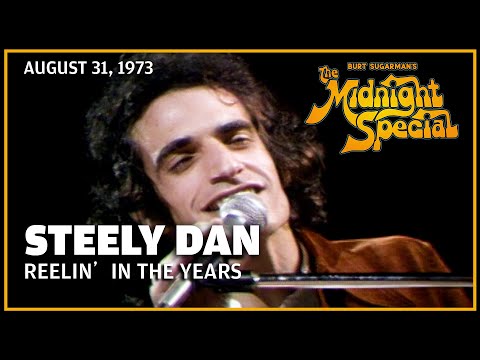
By the summer of 1973 the band had released two albums, Can't Buy a Thrill in 1972 and Countdown to Ecstasy in June 1973. The latter was the album that contained Show Biz Kids, and it represented a step toward the more ambitious, jazz-inflected sound that would define Steely Dan's later work. The band was still touring at this stage, though Becker and Fagen would later retreat entirely into studio operations. The live incarnation of Steely Dan in 1973 retained enough rock energy to reach a pop audience while the writing was already reaching toward something considerably more complex.
The Track Itself
The recording has a loose, swaggering quality that contrasts sharply with the tight studio precision Steely Dan would later become famous for. A slow, grinding rhythm guitar riff anchors the track, while the horns and keyboards fill the spaces with a kind of studied carelessness. The groove is deliberate, heavy without being hard rock, funky without being dance music. It sits in its own zone, exactly the kind of idiosyncratic territory Becker and Fagen liked to occupy.
Jeff "Skunk" Baxter played guitar on the track, contributing the slide work that gives the recording much of its textural interest. The horn section added a sardonic punctuation to the verses, as if the arrangement itself was smirking at the lyric's targets. Becker and Fagen co-produced the album with Gary Katz, the production team that would remain at the center of Steely Dan's studio operations through the rest of the decade.
Show Biz Kids debuted on the Billboard Hot 100 on July 28, 1973, entering at number 95. It spent eight weeks on the chart and reached its peak of number 61 on September 1, 1973. The chart performance was modest, and by the time the single was climbing the Hot 100, Steely Dan's commercial fortunes were shifting toward album sales and FM radio, where their sophisticated sound found a more natural audience than the AM pop format.
FM Radio and the Cult of Craft
The early 1970s saw FM radio emerge as an alternative broadcast environment for music that was too long, too strange, or too knowing for AM playlists. Steely Dan was an ideal FM band, their tracks dense with detail that rewarded multiple listenings, their production exacting enough to benefit from the format's superior fidelity. Show Biz Kids received significant FM play that supplemented its modest Hot 100 showing, reaching an audience of serious rock listeners who were increasingly distinguishing between commercial pop and something they considered more musically substantial.
The album Countdown to Ecstasy itself was a critical success without matching the commercial breakthrough of the debut. Its ambition was evident and respected, and the tracks it contained demonstrated that Becker and Fagen were operating on a longer timeline than most pop acts, building a body of work rather than chasing individual hit singles.
A Signature Statement
Show Biz Kids has endured as one of the essential Steely Dan recordings, not because it represents their most polished work, but because it captures a specific attitude in a specific moment. The heavy groove, the acerbic lyric, and the studied cool of the performance placed it at the center of a particular 1970s aesthetic, the knowing, jazz-literate rock that stood apart from both the sentimentality of soft rock and the bluster of heavy metal.
Decades of retrospective attention have confirmed the track's significance in the Steely Dan catalog, and it remains a staple of FM classic rock programming. If you want to understand what made Becker and Fagen different from everyone else making pop music in 1973, this is as good a starting point as any. Put the needle down and let that guitar riff tell you everything.
"Show Biz Kids" — Steely Dan's singular moment on the 1970s charts.
02 Song Meaning
Show Biz Kids — Satire, Hollywood, and the Price of the Dream
A Dispatch from the Entertainment Industry
Very few pop songs in 1973 turned a satirical eye on the entertainment industry itself with the precision and contempt that Show Biz Kids achieved. Walter Becker and Donald Fagen were genuinely embedded in the Los Angeles music business, watching the machinery of fame up close, and the lyric they produced reads as a document of that observation. The targets were not abstract; they were the specific types that populated the Los Angeles scene: the entitled children of privilege who moved through the industry on connections and confidence, the hierarchies of access that excluded ordinary people, the conspicuous consumption that functioned as a substitute for genuine feeling.
The satirical register is what separates the song from simple complaint. Becker and Fagen did not write from the perspective of wounded outsiders; they wrote as knowing participants who saw through the spectacle while remaining inside it. That dual position gave the lyric its edge and its moral complexity. The song never quite resolves its own ambivalence, which makes it more interesting than a straightforward critique would be.
Money, Class, and Access
The core tension in the song involves access and exclusion. The figures being described occupy spaces and enjoy privileges closed to most people, and their enjoyment of these privileges seems entirely automatic, unreflective, driven by the inheritance of social position rather than any earned achievement. The lyric observes this with a mixture of contempt and fascination that feels authentic rather than performed.
In the America of 1973, class anxiety was a live cultural issue. The counterculture had promised a leveling of social hierarchies, a democratization of possibility, and the early 1970s were teaching a harder lesson about how durable those hierarchies actually were. Steely Dan's satire connected with listeners who had encountered the entertainment industry's gatekeeping firsthand, who understood that talent was necessary but never sufficient, that the system rewarded its own with a consistency that merit alone could not explain.
The Jazz Sensibility and Sardonic Distance
Part of what makes the song work as satire is the coolness of the musical setting. A groove that is simultaneously relaxed and slightly menacing, combined with a lyric delivered in a tone of almost amused detachment, creates a productive tension. The musical sophistication signals that the authors are not naive complainers; they know exactly what they are describing and have chosen irony over outrage as their mode of response.
This ironic distance was central to Steely Dan's aesthetic identity. Becker and Fagen came from literary and jazz backgrounds that valued complexity and ambiguity, and they brought those values to pop music in ways that most of their contemporaries did not attempt. The result was a body of work that rewarded attentive listeners and confounded those looking for simple emotional payoffs.
The Song's Cultural Afterlife
The track has remained in circulation not just as a Steely Dan deep cut but as a point of reference for discussions about the relationship between the music industry and the broader entertainment complex it inhabits. Its observations about privilege, access, and the self-satisfaction of the entertainment class have lost none of their relevance in the intervening decades. The combination of musical sophistication and lyrical acuity gives the song a durability that purely topical satire rarely achieves, its targets may wear different clothes in each generation but the essential social dynamic remains constant. That is the signature achievement of Becker and Fagen at their sharpest.
→ More from Steely Dan
View all Steely Dan hits →



→ More from the 1970s File
View all 1970s hits →




Keep digging