The 1970s File Feature
Do It Again
Do It Again: Steely Dan's Jazz-Tinged Debut on the Hot 100 "Do It Again" arrived in late 1972 as the debut single from Steely Dan, the studio project anchore…
01 The Story
Do It Again: Steely Dan's Jazz-Tinged Debut on the Hot 100
"Do It Again" arrived in late 1972 as the debut single from Steely Dan, the studio project anchored by songwriters and multi-instrumentalists Walter Becker and Donald Fagen. The two had met at Bard College in the late 1960s and spent several years attempting to break into professional music in New York before signing with ABC/Dunhill Records, where producer Gary Katz gave their ambitious, unorthodox pop vision its first proper commercial platform. The song served as the lead single from the group's debut album, "Can't Buy a Thrill," and announced immediately that Steely Dan operated according to rules of its own devising.
The production built around a distinctive bossa nova-inflected rhythm, anchored by Jim Hodder's crisp, steady drumming and a hypnotic electric piano figure that cycled throughout the arrangement without significant variation. That circular, almost meditative quality was deliberate: Becker and Fagen were drawing on jazz compositional principles, particularly the use of modal loops and repetitive harmonic patterns, and grafting them onto a rock and pop song structure. The result had a groove that was simultaneously accessible and more sophisticated than nearly anything else on pop radio in the fall of 1972.
David Palmer handled lead vocal duties on the track, an unusual choice given that Fagen would become the primary voice of Steely Dan across the band's subsequent catalog. Palmer's performance has a smooth, slightly detached quality that suits the song's lyrical themes of compulsion and cyclical behavior. The arrangement around him is notably spare by the standards of rock production at the time, with the electric piano, bass, drums, and subtle percussion doing the majority of the work without the dense layering that characterized much of the era's mainstream rock.
Commercially, the single achieved significant success. "Do It Again" reached number six on the Billboard Hot 100, a strong debut performance for a new band with a genuinely unconventional sound. The single also performed well on album-oriented rock radio, where its slightly extended running time and jazz-influenced structure were assets rather than liabilities. The album it introduced, "Can't Buy a Thrill," reached the top forty on the Billboard 200 and established Steely Dan as a commercially viable act capable of sustaining an album-length statement rather than merely producing individual singles.
Gary Katz's production philosophy, developed in close collaboration with engineer Roger Nichols, proved essential to the record's impact. Nichols's crisp, detailed sound captured the interplay between the musicians with a clarity that highlighted the sophistication of the rhythm section work and the distinctive texture of the electric piano. The recording quality became a hallmark of the Steely Dan sound across all their subsequent work, and this debut single established the sonic standard they would refine over the following decade.
The cultural positioning of "Do It Again" in the landscape of 1972 popular music was striking. The year was dominated by soft rock, singer-songwriter confessionalism, and the ongoing evolution of arena rock, none of which particularly resembled what Becker and Fagen were attempting. Their sardonic, literate approach to lyric writing combined with jazz-influenced harmonic language and a studio perfectionism that set them apart from virtually every other act making rock and pop records at the time. The single's chart success demonstrated that this unusual combination could find a substantial popular audience.
The song's legacy within Steely Dan's own catalog is secure as a founding document, the first public evidence of what Becker and Fagen could accomplish when given proper studio resources and commercial infrastructure. It established several patterns that would persist throughout their career: the modal or circular harmonic approach, the groove-centered arrangement philosophy, the cool emotional register in the vocal performances, and the sense that the lyrics were engaging with subject matter at a slight angle to conventional pop topics. Radio programmers who initially gambled on the single's peculiar, hypnotic charm were rewarded with a record that aged particularly well, remaining in rotation on classic rock and jazz-pop formatted stations for decades after its initial release.
02 Song Meaning
Do It Again: Compulsion, Fate, and the Steely Dan Worldview
"Do It Again" introduces the defining tension of Steely Dan's entire body of work in its first three minutes of commercial existence: the collision between self-awareness and self-destruction, between knowing better and doing it anyway. The song's narrator describes a pattern of behavior that he recognizes as harmful and yet repeats without apparent ability to stop. The subject matter, a compulsive cycle of destructive choices in love, gambling, and general self-undoing, is treated with a kind of resigned clarity rather than moral outrage or sentimental regret.
The musical structure reinforces the thematic content with unusual precision. The circular, looping arrangement, built on a repeated harmonic pattern that cycles without obvious resolution, enacts the very compulsion the lyric describes. The song does not build to a climactic moment of change or enlightenment because the narrator never achieves change or enlightenment; the groove simply continues, just as the behavior it describes continues. This formal unity between subject and structure was characteristic of Becker and Fagen's compositional intelligence and helps explain why the song works as both a pop record and a piece of careful artistic construction.
The emotional register is deliberately cool and ironic, which was new territory for pop songwriting in 1972. Where most songs about cyclical behavior in love employed high emotional drama, Becker and Fagen chose detachment, treating their narrator's failures with something closer to anthropological observation than heartbroken confession. This ironic distance became the hallmark of the Steely Dan lyrical voice across two decades of work, but "Do It Again" is where it first appeared fully formed in a commercial context.
The song's relationship to fate and free will is genuinely ambiguous. The narrator acknowledges his patterns but frames them as things that happen to him as much as things he chooses. This blurring of agency and compulsion gives the song a philosophical depth uncommon in top-ten pop records. Fagen and Becker were drawing on literary models, particularly the sardonic American literary tradition, as much as on pop songwriting conventions, and that unusual lineage gives "Do It Again" its distinctive intellectual texture even within a perfectly crafted pop framework.
Within the arc of Steely Dan's catalog, the song stands as the clearest early statement of their thematic preoccupations: moral ambiguity, the persistence of human weakness, and the gap between self-knowledge and self-improvement. All of these concerns would recur across subsequent albums with increasing sophistication, but the essential framework was already present and fully functional in this debut single. For listeners discovering Steely Dan through later and more elaborately produced records, returning to "Do It Again" reveals how completely the artistic vision was formed from the very beginning, before the studio perfectionism of albums like "Aja" and "Gaucho" gave it a more polished surface. The song's meaning is ultimately about the human condition rendered in miniature: we know what we do, we cannot stop doing it, and the groove plays on.
→ More from Steely Dan
View all Steely Dan hits →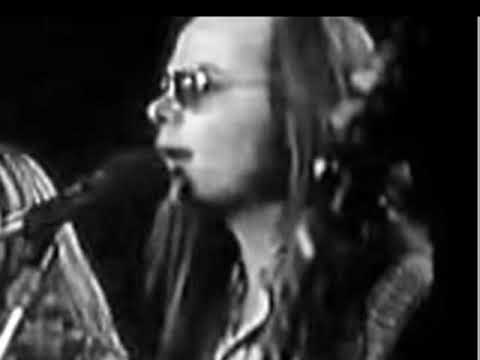



→ More from the 1970s File
View all 1970s hits →




Keep digging