The 1970s File Feature
My Old School
My Old School: Steely Dan, the Bard College Bust, and the Art of Disguised Autobiography In February 1969, Bard College in Annandale-on-Hudson, New York, bec…
01 The Story
My Old School: Steely Dan, the Bard College Bust, and the Art of Disguised Autobiography
In February 1969, Bard College in Annandale-on-Hudson, New York, became the site of an incident that would eventually find its way into one of the most celebrated rock songs of the early 1970s. A drug raid by law enforcement led to the arrest of several students, among them a young woman whose name was subsequently invoked in a Steely Dan song in a slightly disguised form. The student was Josephine Nichols, whose name was transmuted in the song into "Wilhelmina," though listeners and critics quickly connected the pseudonym to the actual event. The two Steely Dan principals most directly involved were Walter Becker and Donald Fagen, both students at Bard at the time of the incident, and both already developing the sardonic, literarily sophisticated sensibility that would define their subsequent work.
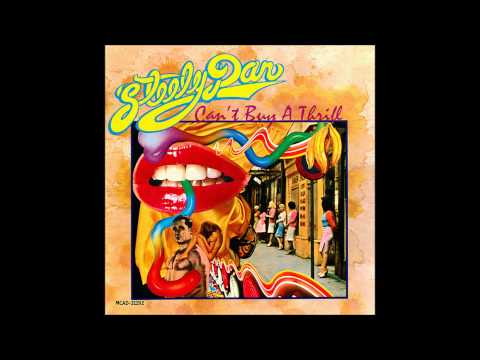
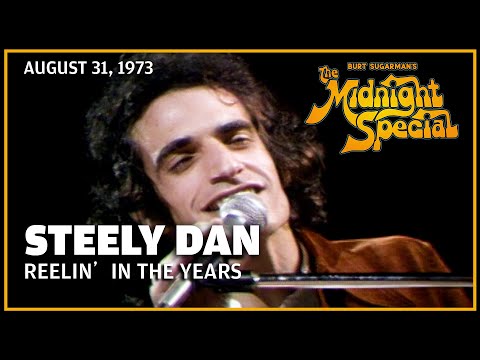
By 1973, when "My Old School" was recorded and released as part of Steely Dan's second album Countdown to Ecstasy, Becker and Fagen had already established themselves as one of the more distinctive acts in the emerging album-rock format. Their debut album Can't Buy a Thrill had produced two Top 20 singles in "Do It Again" and "Reelin' in the Years," demonstrating that the duo's complex, jazz-influenced approach to rock composition could find a broad commercial audience. Countdown to Ecstasy, by contrast, was a more demanding record, denser in its arrangements and more insistent in its complexity, and it produced fewer radio hits as a result. The album reached number thirty-five on the Billboard 200 but was widely recognized by critics as an advance in artistic terms over the debut.
"My Old School" entered the Billboard Hot 100 on November 3, 1973, debuting at number ninety-seven. Its climb through the chart was gradual, moving through the eighties and seventies before reaching its peak position of number sixty-three during the week of December 1, 1973. The record spent nine weeks on the chart in total, a performance that reflected both the song's genuine commercial appeal and the relative inaccessibility of the album from which it was drawn. The single edit softened some of the track's more abrasive qualities without fundamentally compromising its character.
The musical arrangement of "My Old School" was among the most complex Steely Dan had yet attempted. The horn arrangement, contributed by the band's touring ensemble, gave the track a brassy, aggressive quality that suggested genuine anger beneath the ironic surface of the lyric. Guitarists Denny Dias and Jeff Baxter traded riffs against a rhythm section that managed to be simultaneously funky and technically demanding. The result was a track that defied easy genre classification: too complex for straightforward rock radio, too abrasive for pop, and too knowing for folk. It occupied a category that Steely Dan was essentially creating as they recorded it.
Donald Fagen's vocal delivery on the track was characteristically detached and cool, a quality that gave the song's anger a distinctive coloring. Where most rock singers of the era communicated fury through volume and rawness, Fagen's flat, sardonic delivery turned the song's narrative into something closer to testimony: an account given after the fact, with all the clarity and bitterness of retrospection. The contrast between that vocal coolness and the churning musical arrangement beneath it created a productive tension that was quintessentially the Steely Dan approach.
The narrative of the song, which depicted the aftermath of the drug raid and the narrator's vow never to return to his old school, was wrapped in enough literary sophistication to operate simultaneously as autobiography and as character study. The line between Fagen-as-narrator and the fictional persona he was inhabiting was deliberately blurred, a technique that Steely Dan would refine across their subsequent albums into one of the most recognizable signatures in rock songwriting. Real events became the raw material for something that transcended the merely personal.
Becker and Fagen had both been enrolled at Bard as students of literature and music respectively, and the intellectual atmosphere of the college clearly influenced the character of their songwriting. Bard in the late 1960s was a community of considerable artistic and intellectual ambition, and the drug raid represented not merely a legal inconvenience but a collision between that culture and the enforcement apparatus of the surrounding society. The song's vow of non-return, which forms its emotional climax, carried weight both as personal declaration and as cultural statement.
Steely Dan largely ceased performing live after 1974, becoming a studio entity that used rotating casts of session musicians to execute increasingly elaborate arrangements. "My Old School" thus belongs to the relatively brief period when the band was a functioning live ensemble, and recordings from their 1973 touring schedule confirm that the song translated effectively to the concert stage, its horn-driven arrangement proving well suited to live performance. When Becker and Fagen reunited for concert tours beginning in the 1990s, the song became a reliable set-list staple, audiences responding to it with recognition and enthusiasm across the decades of its existence.
02 Song Meaning
The Meaning Behind My Old School: Betrayal, Disillusionment, and the Ironist's Farewell
"My Old School," recorded by Steely Dan for the 1973 album Countdown to Ecstasy, is a song about betrayal and the particular disillusionment that follows the collapse of an institution one had trusted. The institution in question is the college: Bard, thinly fictionalized as "Guadalajara," the destination promised to the narrator by the woman who is figured as complicit in the drug raid that forms the song's narrative backstory. But the song's emotional range extends well beyond the specifics of that incident, touching on the broader question of what loyalty and community mean and how they can be destroyed by a single act of treachery.
The song's narrator occupies a position of retrospective clarity, looking back on an experience that has permanently altered his relationship to a place and a community. The vow never to return to his old school is not melodramatic; it is stated in the measured, matter-of-fact tone that characterizes Donald Fagen's vocal delivery throughout the track. This tonal choice is crucial to the song's meaning. A more overtly emotional delivery would have invited the listener to sympathize with the narrator's grievance; the sardonic coolness instead positions the narrator as someone who has processed his anger and arrived at a settled, if unforgiving, judgment.
The question of institutional betrayal, as opposed to personal betrayal, gives "My Old School" its particular cultural resonance. Colleges in the late 1960s had represented, for many of their students, communities of relative freedom and intellectual exploration. The drug raid at Bard in 1969 represented a violent reassertion of external authority over that community, and the specific mechanism of the raid, which apparently involved information provided by an informant, converted the violation from impersonal enforcement into something more intimate and personal. Becker and Fagen's conversion of that experience into song was an act of both artistic processing and cultural documentation.
The Steely Dan ironic sensibility operates here through a characteristic displacement. The anger that the song clearly contains is never expressed directly; it is filtered through narrative, through the cool delivery, through the sardonic edge of the lyric's specific details. This technique, borrowed partly from the literary tradition of unreliable and detached narrators that both Becker and Fagen had studied at Bard, turned personal grievance into something that felt simultaneously intimate and universal. Any listener who had experienced the collapse of an institution they had trusted could find their own experience in the song's framework.
The song's musical setting reinforces its emotional content through contrast. The churning, aggressive horn arrangement and the funky rhythm section beneath the vocal suggest barely contained energy, a musical representation of the anger that the narrator's cool delivery refuses to articulate directly. The gap between the song's surface composure and its musical agitation is itself a kind of meaning, suggesting that the settled judgment of the narrator costs something, that the detachment is achieved rather than natural.
The college as a setting carries specific class and cultural associations in American life that the song also engages. Bard was and remains a college associated with a particular kind of artistic and intellectual aspiration, and the violation of that community by law enforcement carried implications about the limits of the relative privilege that such institutions offered their students. The narrator's vow to "never going back" to his old school is not merely personal resolution; it is a recognition that the institution he had believed in was not what he had imagined it to be.
Decades of subsequent listening have confirmed "My Old School" as one of Steely Dan's most emotionally accessible compositions, despite or because of its characteristic ironic distance. The song's core experience, the discovery that a community has been compromised and that a return is no longer possible, is one that listeners across generations and circumstances have found immediately recognizable, giving the song a durability that transcends its specific autobiographical origins.
→ More from Steely Dan
View all Steely Dan hits →

→ More from the 1970s File
View all 1970s hits →




Keep digging