The 1970s File Feature
That's Rock 'N' Roll
That's Rock 'N' Roll — Shaun Cassidy (1977) Note: This entry covers Shaun Cassidy's cover version of "That's Rock 'N' Roll," originally written and recorded …
01 The Story
That's Rock 'N' Roll — Shaun Cassidy (1977)
Note: This entry covers Shaun Cassidy's cover version of "That's Rock 'N' Roll," originally written and recorded by Eric Carmen. Cassidy's version, released in 1977, was the commercially dominant recording of the song.
By the summer of 1977, Shaun Cassidy had established himself as one of the most commercially potent teen idol acts in the American market, operating in a direct line of succession from the pop-star machinery that had produced his half-brother David Cassidy earlier in the decade. Shaun's success rested on a combination of his television visibility through the series "The Hardy Boys Mysteries" and a recording career managed with careful strategic attention. His label, Warner/Curb Records, understood that his audience was young, devoted, and highly responsive to melodically bright, energetically performed pop-rock that did not challenge or complicate but delivered pleasure with absolute reliability.
"That's Rock 'N' Roll" was written by Eric Carmen, the former frontman of the Raspberries, a power-pop band from Cleveland that had made a series of critically celebrated but commercially underperforming albums in the early 1970s. Carmen had moved into a solo career after the Raspberries dissolved, scoring a major hit with "All by Myself" in 1975. The song "That's Rock 'N' Roll" was originally recorded by Carmen himself, but it was Cassidy's cover version that achieved the wider commercial reach. Carmen's songwriting in general demonstrated a gift for distilling the essential pleasures of rock and roll into concise, hook-laden compositions, and this song was an exemplary instance of that skill: a celebration of the music itself, its energy, its communal function, and its emotional directness.
Cassidy's recording was produced with a bright, clean pop-rock sound that suited AM radio's specifications in 1977. The production emphasized the track's momentum and melodic clarity, giving the record the kind of immediate accessibility that drove repeat listening from young audiences who experienced the song primarily through Top 40 radio and American Bandstand-style television exposure. The arrangement captured the enthusiasm of the song's subject matter without tipping into the harder-edged production that characterized the emerging album-rock format of the same period.
The single climbed to number 3 on the Billboard Hot 100 in 1977, making it one of the highest-charting singles of Cassidy's career and one of the most successful cover versions of an Eric Carmen composition. The chart performance confirmed that Cassidy's audience, already devoted through his television work and previous singles, was prepared to follow him through material that had an explicit rock-and-roll theme rather than the more straightforwardly romantic subject matter that had characterized some of his earlier hits.
The timing of the single's success was significant. 1977 was a year of considerable turbulence in the American music market, with punk rock beginning to assert itself as a cultural force in the United Kingdom, disco reaching its commercial peak in the United States, and the album-rock format maturing through the major FM radio stations. Within that contested landscape, Cassidy's brand of clean, enthusiastic pop-rock occupied a specific and commercially vital niche: the teen market that was too young for disco's adult sensibility but too mainstream for punk's confrontational aesthetics.
Cassidy had scored his first major Hot 100 success with a cover of the Crystals' "Da Doo Ron Ron" earlier in his career, establishing a pattern of reaching back into rock and roll history to find material that he could reframe for his own audience. "That's Rock 'N' Roll" fit this approach but added a self-referential dimension: a song about rock and roll performed by one of the era's most commercially successful rock-and-roll-adjacent teen acts created a kind of playful circularity, with the performance enacting the celebration the lyric described.
The commercial infrastructure surrounding Cassidy's recording career in 1977 was substantial. Warner/Curb had developed efficient promotional pipelines that connected television exposure, radio airplay, and teen magazine coverage into a mutually reinforcing promotional cycle. A new Shaun Cassidy single received support across all those channels simultaneously, creating the kind of saturation that could drive a record to the top of the chart before casual radio listeners had fully registered that they were hearing something new. The machinery was not notably different from what had driven David Cassidy's career earlier in the decade, but it operated with particular efficiency during Shaun's commercial peak.
Eric Carmen's authorship of the song brought him meaningful publishing income from Cassidy's chart success, and the cover version introduced Carmen's songwriting to a generation that might not have encountered the Raspberries' more sophisticated power-pop recordings. The relationship between the original and the cover illustrated a recurring dynamic in American pop: a songwriter with critical credibility but limited mass commercial success providing material that a more commercially calibrated act could deliver to a broader audience. Carmen's facility as a writer was the essential ingredient in either version; Cassidy's commercial infrastructure ensured the song reached its maximum audience.
02 Song Meaning
Meaning and Themes: That's Rock 'N' Roll (Shaun Cassidy, 1977)
Note: This analysis covers Shaun Cassidy's 1977 recording, a cover of the Eric Carmen composition. The song's meaning operates both at the level of the original composition and through the specific cultural context of Cassidy's performance.
"That's Rock 'N' Roll" is a song of celebration and identification, a musical statement that claims rock and roll as the primary vehicle for emotional authenticity and communal joy. Written by Eric Carmen, the song belongs to a tradition of rock-about-rock compositions that use the music's own formal vocabulary to articulate what makes it essential. The subject matter is the music itself: its energy, its immediacy, its capacity to express what more measured forms of communication cannot reach. Carmen understood this territory intuitively from his work with the Raspberries, whose entire artistic project was built on an unironic, enthusiastic engagement with the pleasures of rock and roll.
The song positions rock and roll not as a genre or a set of sonic conventions but as an emotional truth, a way of feeling and expressing that bypasses the complications and evasions of everyday social interaction. This is a romantic conception of the music, one that draws on the mythology of rock and roll as liberation that had been central to the form's self-understanding since its 1950s origins. By 1977, that mythology was well established enough to be cited, celebrated, and slightly nostalgized, and Carmen's lyric engaged with it from a position of genuine affection rather than ironic distance.
When Shaun Cassidy performed this song, the meaning acquired an additional layer of complexity. Cassidy was, by the definitions that serious rock critics of 1977 would have applied, a pop star rather than a rock artist, a performer whose primary cultural function was to provide a safe, appealing, and commercially efficient version of rock and roll energy for teenage audiences. His performing the song that declares "that's rock 'n' roll" as an affirmation of authentic feeling created a productive tension: was the performance itself an instance of what the lyric celebrated, or was it a sophisticated commercial simulation of it? For Cassidy's actual audience, overwhelmingly young and unbothered by such distinctions, the question was irrelevant. The song delivered the feeling it described.
The Hot 100 peak of number 3 suggested that the feeling was genuine enough in its commercial effect to compete at the highest level of the American singles market. Whatever philosophical questions one might raise about the nature of teen idol pop's relationship to rock and roll authenticity, the record's performance confirmed that it connected with listeners in the direct, immediate way that the lyric claimed rock and roll should. The circularity was complete: a song about connection through music creating connection through music.
For Cassidy's catalog, "That's Rock 'N' Roll" represented a meaningful artistic statement in the context of his teen-pop identity. By choosing material that explicitly engaged with the broader tradition of rock and roll rather than confining himself to romantic ballads and lightweight pop, he signaled an aspiration to something beyond the purely commercial. Whether that aspiration was fulfilled by the recording is a matter of critical judgment, but the ambition itself was legible in the choice of song and the energy of the performance. The record stands as a document of a specific moment in American pop when the boundary between teen entertainment and rock authenticity was actively negotiated on the charts, often through the medium of well-chosen cover versions.
→ More from Shaun Cassidy
View all Shaun Cassidy hits →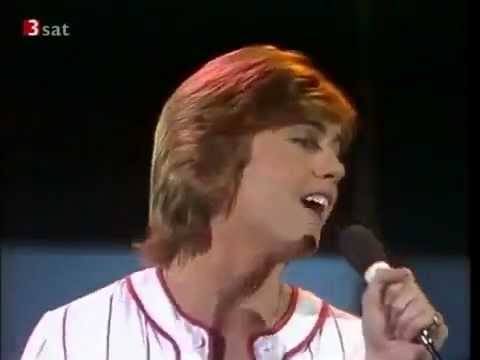
→ More from the 1970s File
View all 1970s hits →




Keep digging