The 1970s File Feature
Hey Deanie
Shaun Cassidy, Eric Carmen, and the Teen Idol Machinery Behind "Hey Deanie" In the autumn of 1977, "Hey Deanie" completed what had become an almost formulaic…
01 The Story
Shaun Cassidy, Eric Carmen, and the Teen Idol Machinery Behind "Hey Deanie"
In the autumn of 1977, "Hey Deanie" completed what had become an almost formulaic trajectory for Shaun Cassidy: a carefully chosen single, built for maximum appeal to a young female demographic, climbing the Billboard Hot 100 with the kind of inexorable momentum that only a fully mobilized teen-idol promotional machine could generate. The song debuted at number 77 on November 12, 1977, and spent sixteen weeks climbing to a peak of number 7, reached on January 14, 1978. That ascent told the story of a pop phenomenon operating at the height of its commercial effectShaun Cassidy had arrived at his teen-idol status through a combination of genetic inheritance, timing, and shrewd management. The son of actor and singer Jack Cassidy and actress Shirley Jones, and the half-brother of David Cassidy, who had dominated the teen market earlier in the decade through "The Partridge Family," Shaun had a certain hereditary claim to the demographic that Warner Bros. Records was eager to exploit. His debut album and its singles had proved that the claim was legitimate; "Da Doo Ron Ron," a cover of the Crystals' Phil Spector-produced classic, reached number one in the summer of 1977 and established him as one of the best-selling new artists of the year.ists of the year.
"Hey Deanie" arrived as the follow-up, and the choice of material demonstrated that Cassidy's team was operating with considerable musical intelligence beneath the glossy teen-pop surface. The song was written by Eric Carmen, the Cleveland-born singer-songwriter who had led the Raspberries before embarking on a successful solo career built on melodically sophisticated power pop and ballads of romantic yearning. Carmen's songwriting gifts were considerable; he had demonstrated a particular skill for constructing songs that worked simultaneously as hook-driven pop and as emotionally substantive narratives, and "Hey Deanie" was a strong example of that dual competence.
The song's title invoked a specific cultural reference point: Deanie Stratford, the character played by Natalie Wood in Elia Kazan's 1961 film "Splendor in the Grass," a film about repressed desire and the psychological cost of conformity in a small American town. Whether Carmen intended the reference to operate explicitly or merely as a name that carried a particular emotional connotation is a matter of some debate among pop music historians, but the invocation of that character lent the song a layer of romantic intensity that went slightly beyond the typical teen-pop vocabulary. It suggested a narrator who understood that love could be dangerous, that desire could have consequences, and that the person being addressed was not a simple romantic object but a complex individual capable of inspiring genuine emotional upheaval.
The production given to "Hey Deanie" by Cassidy's team was characteristically polished: bright guitar work, a rhythm section that emphasized propulsive forward motion, and the kind of backing vocal arrangements that had become standard in the teen-pop production aesthetic. Cassidy's own vocal was warm and earnest, free of the studied sophistication that might have alienated his core audience but possessed of enough genuine feeling to prevent the recording from sounding hollow. His voice at this point in his career was suited to the material in the way that a particular instrument is suited to a particular composition: not because it had the most impressive technical range but because its specific qualities matched the emotional requirements of the song.
The broader context of 1977 teen pop is essential to understanding "Hey Deanie's" commercial success. The mid-to-late 1970s had produced something of a renaissance in the teen-idol market, with artists like Cassidy, Leif Garrett, and Andy Gibb (in his more pop-oriented moments) filling a space that had been somewhat vacant since David Cassidy and the Osmonds had dominated the earlier part of the decade. The Tiger Beat and 16 Magazine ecosystem that supported this market was not merely promotional but genuinely formative for the young women who consumed it, providing a space in which romantic and emotional experience could be explored in relatively safe, mediated form.
"Hey Deanie" functioned within that ecosystem with particular effectiveness because it offered its audience something more than generic romantic aspiration. The song's narrator was not simply declaring love; he was pleading, reaching, acknowledging the possibility of rejection and persisting anyway. This vulnerability made Cassidy, within the context of the recording, a more interesting romantic figure than his physical attractiveness alone would have made him. His audience responded to the emotional honesty of the material, and the chart position reflected that response.
Eric Carmen would continue writing for other artists throughout the late 1970s and into the 1980s, and his contribution to Cassidy's catalog represents one of the more interesting collaborations of the teen-idol era: a songwriter of genuine craft placing material with a performer whose fame was based largely on extramusical factors, and producing a recording that transcended those circumstances through the quality of the composition itself.
02 Song Meaning
Longing, Reference, and the Emotional Stakes of "Hey Deanie"
"Hey Deanie" is a song organized around address: the narrator speaks directly and urgently to a specific person, identified by name, whose significance to him is immediately apparent from the intensity of the appeal. This direct address mode creates an intimacy unusual in pop songs of the era, most of which operated through more generalized romantic declarations. Eric Carmen's lyrical strategy was to make the audience feel they were overhearing something private, a genuine plea from one specific person to another, rather than a public statement of romantic interest designed for mass consumption.
The name "Deanie" carries cultural weight that extends beyond its use as a convenient rhyme-word or melodic placeholder. Deanie Stratford, the character from Elia Kazan's 1961 film "Splendor in the Grass," was an emblem of frustrated desire and the emotional damage that social conformity can inflict on young people who want more from life than their circumstances permit. By invoking that name, Carmen positioned his narrator's beloved as someone similarly complex and potentially out of reach: not merely a pretty face to be pursued but a person with depth, with her own internal world, with the capacity to inspire in the narrator a feeling that goes beyond simple attraction.
This is pop songwriting that trusts its audience to make connections, to bring their own cultural awareness to the material and to enrich the song's emotional content through that awareness. Teen-pop had a reputation, not entirely undeserved, for operating at the shallowest possible emotional level; "Hey Deanie" used a single cultural reference to push against that reputation, suggesting that the feelings being expressed were real enough to carry literary and cinematic weight.
Shaun Cassidy's delivery of the material emphasized its earnestness rather than its cultural allusiveness. His vocal approach was sincere and unironic, which was appropriate for the audience he was addressing; teenage listeners in 1977 were not primarily interested in postmodern commentary on the conventions of the genre but in the direct experience of romantic feeling expressed with conviction. Cassidy provided that experience, and the cultural depth available in Carmen's writing was accessible to listeners who wanted to find it without being required for listeners who simply wanted to feel something.
The song's structure follows the logic of escalating emotional investment. The narrator's initial address establishes his awareness of the beloved; subsequent sections develop the intensity of his feeling and the urgency of his need for reciprocation. There is no resolution offered in the conventional sense, no assurance that the beloved will respond as the narrator hopes. This openness of ending was characteristic of Carmen's songwriting approach, which tended to find more emotional truth in yearning than in fulfillment, more narrative interest in the uncertainty of pursuit than in the satisfaction of arrival.
For the young women who made "Hey Deanie" a top-ten hit in early 1978, the song functioned as an emotional permission structure: proof that the feelings they were experiencing, the intensity of wanting and being uncertain of being wanted in return, were real and significant enough to be the subject of serious artistic attention. This is one of the underappreciated social functions of teen pop at its best, and "Hey Deanie" discharged that function with considerable grace and musical skill. The song's peak of number 7 on the Billboard Hot 100 was a measure not merely of Cassidy's celebrity but of Carmen's songwriting and the genuine emotional resonance that the recording achieved within its intended audience.
→ More from Shaun Cassidy
View all Shaun Cassidy hits →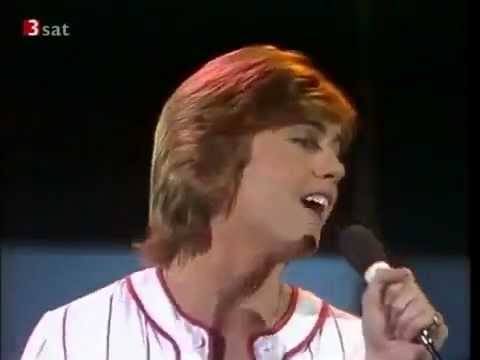
→ More from the 1970s File
View all 1970s hits →




Keep digging