The 1970s File Feature
Only You
"Only You" — Ringo Starr's Top Six Ballad and Beatles Echo Life After the Beatles By late 1974, the world had had four years to adjust to the fact that the B…
01 The Story
"Only You" — Ringo Starr's Top Six Ballad and Beatles Echo
Life After the Beatles
By late 1974, the world had had four years to adjust to the fact that the Beatles were over, and the former members had spent those years demonstrating, each in his own way, that there was creative life after the greatest group in rock history. John Lennon had produced his most confrontational and his most tender work. Paul McCartney had rebuilt a commercial empire with Wings. George Harrison had staged the Concert for Bangladesh and scored a number one with "My Sweet Lord." And Ringo Starr, the drummer whose charm and self-deprecating humor had always been the group's warmth, had quietly assembled one of the most consistently likable solo careers of the four.
Ringo had something that his bandmates sometimes lacked: an unpretentious relationship with pop music's pleasures. He did not strain to make Art; he made records that were fun to listen to and that connected with large audiences without demanding anything complicated from them. His 1973 album Ringo had produced two number one singles, "Photograph" and "You're Sixteen," and demonstrated that an ex-Beatle could chart on the strength of a genuinely good record rather than merely on the residual goodwill generated by the group. By the time he turned to "Only You," he had established himself as a credible solo pop artist.
A Platters Classic Reimagined
"Only You (And You Alone)" was not an original composition but a cover of the 1955 Platters classic, one of the great romantic songs of the doo-wop era and a record that had become deeply embedded in American musical culture. The original Platters recording had reached number five on the Billboard pop chart and remained one of the most beloved love songs of the decade. For Ringo to record a version was both an act of personal tribute and a calculated pop move; the song's immediate recognizability gave it a built-in emotional advantage with audiences who already loved the melody.
Ringo's version updated the arrangement without abandoning the sentimentality at the song's core. The production framed his distinctive voice, warm and slightly rough-edged, in a setting that felt appropriate to 1974 without trading away the song's nostalgic character. The result was a record that worked simultaneously as a period-appropriate pop release and as a loving nod to a simpler era of romantic song. Producer Richard Perry, who had helmed the Ringo album, was involved in Ringo's mid-1970s output and brought his characteristic attention to sonic detail to the project.
A Thirteen-Week Climb to Number Six
The single entered the Billboard Hot 100 on November 16, 1974, at position 63, and began a steady ascent through the holiday season. The chart run was a long one for this period: thirteen weeks in total, with the climb extending through December into January. The track peaked at number 6 on the chart dated January 11, 1975, Ringo's highest American chart position since "You're Sixteen" the previous year. A Top Ten showing at the start of 1975 was a meaningful commercial achievement, particularly for a cover version of a song from nearly two decades earlier.
The timing of the peak, in the first weeks of January 1975, placed it at a moment when holiday radio programming was transitioning back to regular rotation and competition for chart positions was intensifying. That "Only You" held its ground through that transition and reached the Top Ten despite the competition speaks to the strength of the recording's appeal across demographics. The song drew both younger listeners who knew Ringo from his Beatles past and older listeners who carried fond memories of the Platters original.
Ringo Among the Ex-Beatles
The ex-Beatles solo careers have always been assessed comparatively, and Ringo's has often received less analytical attention than those of his three bandmates, despite being commercially substantial. His gift was an emotional directness that cut through any ironic distance; Ringo sang as if he meant every word, and audiences responded to that sincerity. "Only You" suited his particular strengths precisely: the song demanded emotional commitment rather than vocal pyrotechnics, and Ringo's performance delivered exactly that.
The Beatles connection was also an asset with listeners who had grown up with the group and retained deep affection for everything associated with it. Hearing Ringo's voice, immediately recognizable from years of Beatles recordings, invested the performance with a layer of nostalgic feeling that no other artist could have replicated. The specific warmth generated by that voice was part of what the record offered, and it was an asset that only one person in the world possessed.
The Staying Power of a Classic Song
The success of Ringo's "Only You" demonstrated what the best cover versions always demonstrate: that a great song can speak to successive generations when the right voice brings it to life again. The Platters had made an immortal record in 1955. Ringo's 1974 version did not replace it; it added another dimension to it, proving that the emotional territory the song mapped was not historically limited but perennially available. Put on either version, or both in sequence, and the essential humanity of the melody becomes clear. Some songs simply endure, and this is one of them.
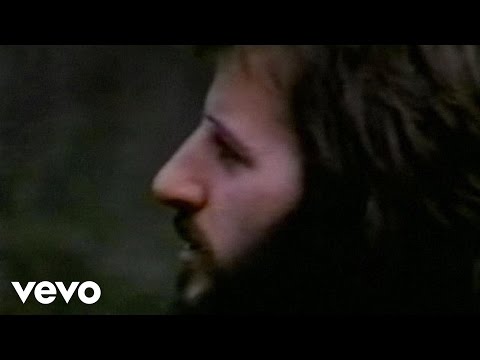
"Only You" — Ringo Starr's singular moment on the 1970s charts.
02 Song Meaning
The Singular Focus of Love: What "Only You" Means
The Grammar of Devotion
"Only You" is a song built on exclusivity. The title is not "Also You" or "Especially You" or even "Above All, You." The word "only" performs a specific grammatical function that carries enormous emotional weight: it eliminates all other possibilities. The song's central declaration is one of complete singularity, the statement that one person, and no other, is the source of everything the narrator needs. This absolute construction was as old as romantic poetry, but in the context of popular song it hit with particular force because the melody made it feel discovered rather than declared.
Buck Ram and the Platters' Original Vision
To understand Ringo's version of "Only You," it helps to understand what Buck Ram created in the original 1955 Platters recording. Ram, who wrote and managed the group, had a gift for melody that translated complex emotional states into simple, singable lines. The Platters' original "Only You" was remarkable for its economy: very few words, doing a great deal of work, supported by a melody that moved with the inevitability of something discovered rather than composed. The song felt less like a creation than a natural object, something that had always existed and had simply been transcribed.
When Ringo covered the song, he inherited this quality of apparent inevitability. The melody was already so deeply embedded in the cultural memory of anyone who had grown up with the radio on that it arrived pre-loaded with meaning. Ringo's performance did not need to build the case for the song's emotional validity; it had been built over two decades. His task was to inhabit the feeling authentically, and his particular vocal quality was well suited to that task.
Nostalgia as a Form of Honesty
A cover version is always a statement about the past. When an artist in 1974 chooses to record a 1955 hit, the choice carries implications about time, memory, and the persistence of feeling. Ringo's "Only You" was a record that admitted its nostalgia openly and used that admission as a creative strategy. In an era when much popular music was straining toward the contemporary, the future-facing, the new, there was something quietly courageous about making a record that looked backward with unambiguous affection.
The early 1970s were a period when nostalgia was actually in fashion, with American Graffiti, Happy Days, and the broader cultural phenomenon of 1950s revival pointing toward a hunger for the simpler emotional landscape that the decade before rock's complications seemed to represent. Ringo's choice to record "Only You" was in tune with that cultural moment, offering audiences a chance to feel something uncomplicated and beautiful.
What the Voice Adds
Any song's meaning changes depending on who sings it and how. Ringo Starr's voice carried specific associations in 1974 that no other voice in popular music shared. For millions of listeners, his voice was inextricably linked to memories of the Beatles, of specific moments when those recordings had been part of their lives. Hearing Ringo sing "only you" activated those memories alongside the song's own emotional content, creating a layered experience in which personal history and musical history were simultaneously present.
This was not a calculation on Ringo's part; it was simply an irreducible aspect of his situation as a recording artist in the post-Beatles landscape. Every record he made came with this additional dimension, and "Only You" proved to be a song that could contain and benefit from that dimension rather than being overwhelmed by it. The song was strong enough to hold the weight of all those associations and still speak directly to listeners who were encountering Ringo's voice without any Beatles context at all. That flexibility is a mark of genuine quality.
"Only You" — Ringo Starr's singular moment on the 1970s charts.
→ More from Ringo Starr
View all Ringo Starr hits →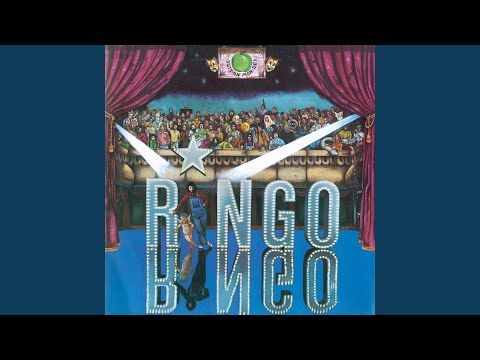
→ More from the 1970s File
View all 1970s hits →




Keep digging