The 1970s File Feature
No No Song/snookeroo
No No Song / Snookeroo — Ringo Starr's Double-Sided Triumph in 1975 Life After the Beatles Imagine the position Ringo Starr occupied in early 1975. The great…
01 The Story
No No Song / Snookeroo — Ringo Starr's Double-Sided Triumph in 1975
Life After the Beatles
Imagine the position Ringo Starr occupied in early 1975. The greatest band in pop history had dissolved less than five years earlier, and its four members were all releasing solo material of wildly varying quality and commercial success. John Lennon was making confrontational political music. Paul McCartney was building Wings into a mainstream juggernaut. George Harrison had scored an enormous early hit with All Things Must Pass but was facing diminishing commercial returns. And Ringo, the drummer, the one most critics had assumed would struggle most without the others, was coming off an unexpected run of hits that had made him one of the more commercially reliable of the four former Beatles in the early part of the decade.
Ringo's 1973 album Ringo had been a remarkable success, featuring contributions from all three of his former bandmates on different tracks, a reunion-by-proxy that charmed critics and audiences alike. He had scored top-five hits with "Photograph" and "You're Sixteen," establishing that he could carry a solo career on genuine pop merit rather than mere nostalgia. By 1975 he was working on Goodnight Vienna, his follow-up effort, and the double A-side he released from that album demonstrated both his commercial instincts and his willingness to make records with a sense of humor.
Two Songs, One Single
The coupling of "No No Song" and "Snookeroo" on a single release gave radio programmers a choice, and different markets responded differently, though both tracks received substantial airplay. "No No Song," written by Hoyt Axton, was the side that climbed higher on most charts: a good-natured, comedic novelty about a recovering party animal who keeps politely declining various intoxicants. The song's gentle humor and bouncy arrangement made it an easy, nonthreatening listen.
"Snookeroo," written by Elton John and Bernie Taupin, demonstrated the depth of talent surrounding Ringo at this stage of his career. Having Elton John and Bernie Taupin contribute a song was a signal of the post-Beatles goodwill that continued to draw top-tier collaborators to Ringo's projects. The track had a warmer, more narrative character, describing the ambitions of a young working-class dreamer, and it fit naturally within the Elton John stylistic territory of the early-to-mid 1970s.
Climbing to Number Three
The single entered the Billboard Hot 100 on February 8, 1975, at position 78, a solid debut for a double A-side release. The chart trajectory was impressive: 58 in the second week, then 40, then 31, then 25, the song continuing to build audience as winter turned to spring. By April the momentum was undeniable, and the track peaked at number 3 on April 5, 1975, spending 14 weeks on the chart in total. A top-three Hot 100 finish for a drummer turned solo artist seven years into his post-Beatles career was a remarkable result.
The peak came during a period when Ringo's commercial standing was still very much intact, and the chart position stood as further evidence that the goodwill generated by the Ringo album had not been exhausted. American audiences were clearly willing to keep following him.
The Goodnight Vienna Sessions
The album Goodnight Vienna was produced by Richard Perry, who had also overseen the successful Ringo sessions. Perry's production approach was glossy and polished in the best sense, favoring a warm, radio-friendly sound that gave the arrangements space to breathe. Richard Perry was one of the most commercially reliable producers of the early 1970s, having worked with artists including Carly Simon, Harry Nilsson, and Barbra Streisand. His aesthetic complemented Ringo's naturally upbeat sensibility.
The album also featured contributions from John Lennon, who co-wrote the title track and appeared on the recording, maintaining the tradition of inter-Beatle collaboration that had made Ringo so notable. These cameos reflected the genuine affection that persisted between the former bandmates even as their public and business relationships became increasingly complicated.
Humor and Heart in Equal Measure
What distinguished Ringo's best solo work was the balance between light entertainment and genuine musical craft. The records were fun without being shallow, and they benefited from a quality that often goes unremarked: Ringo actually had excellent taste in material. Choosing a Hoyt Axton song about substance-free good cheer, or accepting a Elton John and Bernie Taupin contribution, required the kind of judgment that the best pop artists exercise constantly. Ringo's solo career demonstrated that his contributions to the Beatles had included taste and judgment as much as drumming skill. Press play on this single and that quality is immediately audible.
"No No Song/Snookeroo" — Ringo Starr's singular moment on the 1970s charts.
02 Song Meaning
No No Song / Snookeroo — Humor, Ambition, and the Art of the Light Touch
The Rare Gift of Musical Comedy Done Well
Comedy in pop music is a notoriously difficult register to sustain. What sounds playful in the studio can curdle into forced jokiness by the second listen, and novelty tracks tend to feel precisely that: novel once, tiresome thereafter. The "No No Song" avoided that trap through a combination of genuine craft in the writing and a performance that committed fully to the bit without winking at the audience. Hoyt Axton's lyric is structured as a series of polite refusals, each one declining a different temptation with the same cheerful firmness. The humor comes from the repetition, the escalation, and the narrator's unflappable good nature through it all.
Ringo Starr was uniquely suited to this kind of material. His public persona, shaped by years of Beatle press coverage, emphasized warmth, self-deprecating humor, and an uncomplicated likeability. He was the Beatle most associated with accessibility and good cheer, and those qualities translated naturally into a performance of a song built on the same values.
Snookeroo and the Working-Class Dream
The pairing of "No No Song" with "Snookeroo" on the same single created an interesting tonal contrast. Where the A-side was comic and bouncy, "Snookeroo" carried a warmer, more narrative emotional weight. Written by Elton John and Bernie Taupin, the song described the aspirations of a young man with humble origins and large ambitions, a subject that Taupin had explored across much of Elton John's early catalog with characteristic empathy and specificity.
Bernie Taupin's lyrical gift was for elevating ordinary lives into something worth singing about, and "Snookeroo" reflected that gift. The working-class dreamer at the song's center is not a romantic hero or a tragic figure; he is simply a person who wants more than his circumstances have offered him and believes, without sentimentality, that more is available. Ringo's delivery brought a matter-of-fact warmth to that premise.
The Post-Beatles Context of Recovery and Identity
For a listener in 1975, hearing Ringo succeed with double A-side material of this quality carried a particular resonance. The Beatles had ended with considerable acrimony, and the question of whether their individual members could sustain creative and commercial relevance had been answered with very different results. Ringo's continued presence on the upper rungs of the Hot 100 suggested that his considerable gifts, for choosing material, for projecting warmth, for being genuinely likeable on record, were portable beyond the context that had revealed them.
The song's chart success was partly a referendum on Ringo's post-Beatles viability, and the answer it returned was affirmative. He had not been riding the Beatles' coattails since 1970; he had been building something of his own, and audiences were choosing to follow it.
Why Lightness Deserves Respect
Popular music's tendency to rank emotional gravity above other qualities has frequently led critics to undervalue records that prioritize entertainment, craft, and good humor. The "No No Song" is not trying to change anyone's life or capture some permanent truth about the human condition. It is trying to make its three minutes as enjoyable as possible, and it succeeds at that goal with enough craft and personality that the result holds up to repeated listening. That consistency across repeated plays is the real test of quality in pop music, more reliable than any first-impression sparkle.
Ringo Starr's 1970s solo catalog, and this single in particular, deserves reassessment by anyone who dismissed it as post-Beatles nostalgia bait. The records were made with genuine care by someone who loved pop music and understood what it was for.
→ More from Ringo Starr
View all Ringo Starr hits →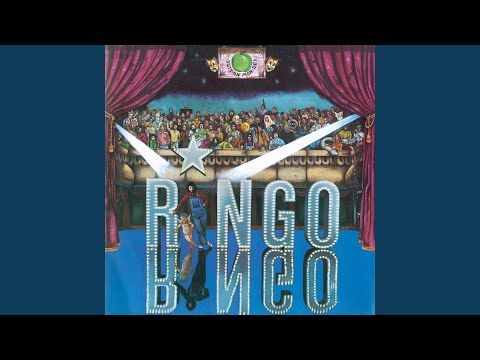
→ More from the 1970s File
View all 1970s hits →




Keep digging