The 1970s File Feature
Show Me The Way
Show Me The Way — Peter Frampton (1976) Few songs in the rock canon arrived under circumstances quite as dramatic as Peter Frampton's "Show Me The Way." By t…
01 The Story
Show Me The Way — Peter Frampton (1976)
Few songs in the rock canon arrived under circumstances quite as dramatic as Peter Frampton's "Show Me The Way." By the time it reached the Billboard Hot 100 in the spring of 1976, the track was already more than two years old, having originated during the sessions that produced Frampton's 1973 studio album Frampton's Camel. Yet it was not until the extraordinary commercial explosion of the double live album Frampton Comes Alive! that the song found its vast audience and became one of the defining rock radio anthems of the decade.
Peter Frampton had spent the early 1970s grinding through a series of critically appreciated but commercially modest solo records after leaving Humble Pie, the hard-rock outfit he had co-fronted with Steve Marriott. Albums like Wind of Change (1972) and Somethin's Happening (1974) built Frampton a loyal live following, particularly on the American touring circuit, but none of them broke through to mainstream radio. His manager Dee Anthony and A&M Records grew convinced that the best representation of Frampton's gifts was his stage performance, where he could showcase both his melodic songwriting and his guitar pyrotechnics.
The idea of recording a live album had been circulating for some time, and Frampton spent much of 1975 playing sold-out club and arena shows that were being considered as recording candidates. The tapes that ultimately became Frampton Comes Alive! were captured primarily at Winterland Ballroom in San Francisco in June 1975, with additional material recorded at other venues during the same tour. The album was produced by Frampton himself alongside Bob Mayo and engineer Eddie Kramer, whose credits included landmark recordings for Jimi Hendrix and Led Zeppelin.
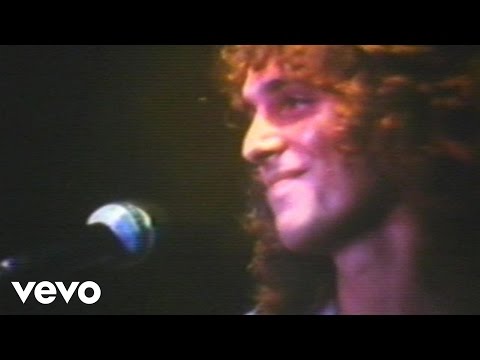
Released by A&M Records in January 1976, Frampton Comes Alive! caught an unexpected wave of popular enthusiasm. Radio programmers discovered that the live versions of Frampton's songs, longer and warmer than their studio counterparts, resonated powerfully with audiences who had seen him perform. "Show Me The Way" was among the first tracks to receive significant airplay, its combination of earnest romanticism and Frampton's showmanship proving irresistible.
The song's most celebrated sonic element is Frampton's use of the talk box, a device that routes guitar sound through a tube into the performer's mouth, allowing the performer to shape the guitar's tone using the resonance of mouth and throat. The effect gives the guitar a vocal, almost speech-like quality, and Frampton's manipulation of it on "Show Me The Way" was widely heard as one of the most inventive guitar performances on rock radio at the time. The talk box was not Frampton's invention, but his deployment of it on this song and on "Do You Feel Like We Do" cemented it in the popular imagination as his signature sound.
Commercially, the results were staggering. "Show Me The Way" reached number six on the Billboard Hot 100, giving Frampton his first major American hit. The parent album performed at a level that no one at A&M had anticipated: Frampton Comes Alive! spent ten weeks at number one on the Billboard 200 album chart and ultimately sold more than eight million copies in the United States alone, making it the best-selling live album in American history up to that point. It was certified eight-times platinum by the RIAA.
The album's success transformed Frampton from a well-regarded touring act into a genuine superstar almost overnight. His face appeared on the covers of Rolling Stone and countless other magazines. He was suddenly ubiquitous on FM radio, which was in its golden era of album-oriented rock programming, and "Show Me The Way" became one of the cornerstones of that format's playlist architecture throughout 1976 and into 1977.
Critically, the song was received as a showcase for Frampton's melodic instincts and his ability to build emotional momentum in a live setting. The studio original from Frampton's Camel was considered a competent piece of early-1970s rock, but the live version possessed an expansiveness and an intimacy simultaneously, qualities that resonated with audiences looking for music that felt both grand and personal.
The cultural moment of 1976 was well-suited to the song. American rock radio was transitioning from the harder-edged sounds of the early decade toward a softer, more melodic style that would later be labeled arena rock or soft rock depending on the critic. Frampton stood at the center of that transition, and "Show Me The Way" served as a kind of flagship for the sensibility: big enough for arenas, melodic enough for pop radio, and guitar-driven enough to satisfy rock purists.
The song was also featured in the 1978 film Sgt. Pepper's Lonely Hearts Club Band, a musical film starring Frampton alongside the Bee Gees that received extremely poor reviews and is widely considered a commercial and creative failure. That experience, combined with a serious automobile accident in 1978 and subsequent commercial disappointments, meant that the extraordinary peak Frampton had reached in 1976 proved difficult to sustain. But the legacy of "Show Me The Way" endured independently of his later career fortunes, continuing to receive regular airplay on classic rock radio formats for decades.
By the 1990s the song had entered the permanent canon of classic rock radio, a status it has maintained into the streaming era. Frampton Comes Alive! was selected for preservation in the Grammy Hall of Fame, and Frampton himself received recognition for his influence on the development of arena rock guitar. "Show Me The Way" remains the track most closely associated with his name and the one most likely to introduce new listeners to the era-defining sound of mid-1970s rock at its most commercially triumphant.
02 Song Meaning
The Meaning of "Show Me The Way" by Peter Frampton
"Show Me The Way" operates in the space between romantic vulnerability and spiritual searching, a combination that gave the song an emotional breadth unusual in mainstream rock of the mid-1970s. At its core, the lyric describes the experience of longing, specifically the longing for guidance and connection from someone who seems to hold answers the narrator does not. The tone is earnest without being maudlin, urgent without being desperate, and that balance is a significant part of why the song communicated so effectively to such a large audience.
The central metaphor running through the song involves vision and direction. The narrator describes seeing something at night, catching a glimpse of something larger than ordinary waking life, and then appealing to another person for help in understanding it. There is an implicit argument here that the beloved possesses a kind of wisdom or clarity that the narrator lacks, and that the act of love, or at least the pursuit of love, is itself a form of navigation. This is a romantic framing, but it carries enough ambiguity that listeners could also hear it as a prayer or as a more general existential appeal.
Frampton has described the song as emerging from a place of genuine personal uncertainty about relationships and direction, and that sincerity comes through in the performance. The live recording amplifies this quality: the crowd's audible response throughout the song suggests that listeners recognized something authentic in the appeal being made. The narrator is not performing confidence; he is performing need, and in the mid-1970s rock context, that was a somewhat radical emotional posture for a male rock performer.
The talk box guitar, which appears at the song's emotional climax, effectively makes the guitar a second voice in the conversation. The instrument appears to "speak" back to the narrator's appeals, creating a call-and-response dynamic between human voice and guitar that reinforces the song's theme of seeking a response, seeking to be heard and answered. This is not accidental: Frampton's use of the device serves the emotional content of the lyric rather than functioning as mere technical novelty.
The song also benefits from its placement within the larger context of Frampton Comes Alive!, an album that built an arc of emotional engagement across its four sides of vinyl. "Show Me The Way" appeared early in the sequence, establishing the album's emotional register: open, yearning, and intensely focused on human connection. Against the more raucous material elsewhere on the record, it provided a moment of genuine vulnerability that helped define Frampton's public persona as something more than a guitar technician.
In terms of what the song meant for Frampton's catalog, its success was both a vindication and a complication. It confirmed that his melodic, emotionally direct approach to songwriting had genuine popular appeal, something his earlier studio albums had suggested but never proven at scale. It also established a template that his subsequent work would be measured against, which proved a burden when the extraordinary commercial circumstances of Frampton Comes Alive! could not be replicated.
For listeners who encountered the song on FM radio in 1976, "Show Me The Way" arrived as part of a broader cultural conversation about sincerity in rock music. As the genre moved toward the larger spectacles of arena rock on one side and the stripped-down directness of punk on the other, Frampton's approach occupied a middle ground that valued both technical facility and emotional transparency. The song's enduring presence on classic rock radio suggests that this combination retained its appeal long after the specific cultural moment that produced it had passed.
The prayer-like quality of the appeal at the song's center also resonated in ways that extended beyond romantic interpretation. Many listeners heard in it a more general search for meaning and direction, particularly relevant in the mid-1970s American context of post-Vietnam disillusionment and post-Watergate cynicism. A song about needing guidance, delivered with obvious sincerity, spoke to a cultural mood in which certainties had dissolved and answers seemed genuinely hard to find. That the song offered no resolution, only the earnest request itself, may have been part of its appeal: it did not pretend to have answers, only to share the longing for them.
→ More from Peter Frampton
View all Peter Frampton hits →

→ More from the 1970s File
View all 1970s hits →




Keep digging