The 1970s File Feature
Baby, I Love Your Way
"Baby, I Love Your Way" — Peter Frampton's Live Phenomenon The Summer When Frampton Was Everywhere There is a specific quality to mid-1970s AM radio that is …
01 The Story
"Baby, I Love Your Way" — Peter Frampton's Live Phenomenon
The Summer When Frampton Was Everywhere
There is a specific quality to mid-1970s AM radio that is almost impossible to reconstruct for anyone who did not experience it firsthand: the warm, slightly compressed sound of a song drifting through a car window on a hot afternoon, the sense that wherever you were, millions of other people were hearing the same thing at roughly the same moment. In the summer of 1976, "Baby, I Love Your Way" by Peter Frampton was that song for huge portions of North America. It emerged from one of the most successful live albums in rock history, and its journey from concert recording to radio staple is one of the more remarkable stories of mid-decade rock.
Frampton Comes Alive and the Live Album Revolution
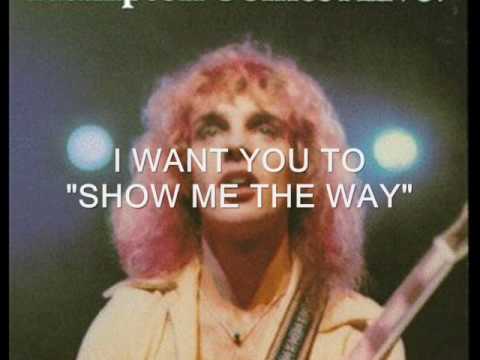
Frampton Comes Alive!, the double live album released in January 1976, became one of the defining commercial events of the decade. Before its release, Peter Frampton was a moderately successful rock artist, known to serious music fans but not a mainstream phenomenon. The live album changed everything, eventually selling more than six million copies in the United States alone and establishing Frampton as one of the biggest names in rock for a remarkable stretch of time. "Baby, I Love Your Way" appeared on Frampton Comes Alive! as a studio track that had originally appeared on his 1975 album Frampton, but the live version, with its extended arrangement and the electricity of a responding audience, was what captured the public's imagination.
The Song's Construction
Frampton wrote "Baby, I Love Your Way" as a straightforward romantic ballad, built around a simple and effective melodic framework that accommodated his guitar playing as naturally as it did his vocal performance. The talk box effect that Frampton had popularized, in which guitar sounds are modulated through the performer's vocal cavity, became one of the signature sonic features associated with this era of his work, though the song itself is built more on the strength of its melody and chord progression than on any specific technical novelty. The acoustic guitar that opens the track creates an intimate atmosphere that contrasted effectively with the heavier rock material around it in live performance, giving audiences a moment of quiet before the next wave of energy.
The Billboard Performance
On the Billboard Hot 100, "Baby, I Love Your Way" debuted on June 26, 1976, entering the chart at position 77. Over the following weeks it climbed steadily through the summer, reaching its peak position of number 12 on August 28, 1976. The track spent sixteen weeks on the Hot 100, a substantial run that reflected its position as a cornerstone of one of the year's dominant albums. The chart journey tracked the sustained momentum of Frampton Comes Alive! itself, which spent more than 97 weeks on the Billboard 200 album chart, one of the longest chart runs in that chart's history at the time.
Legacy and Rediscovery
The song has proven remarkably durable, resurfacing multiple times across subsequent decades. Will Smith and DJ Jazzy Jeff sampled it for a 1988 recording; Big Mountain covered it in 1994, reaching the top twenty in several countries; and Frampton himself has continued to perform it as an anchor of his live sets. The melody's accessibility and emotional warmth are what have sustained it across all these contexts, allowing it to survive translation into reggae, hip-hop interpolation, and repeated live performance without losing its essential character. A song that can travel that widely across genre and time is doing something right at a fundamental level of melodic construction.
Go back to the live version from Frampton Comes Alive! if you want the full experience: there is something in the crowd noise and the relaxed performance that the studio recording alone cannot replicate.
"Baby, I Love Your Way" — Peter Frampton's singular moment on the 1970s charts.
02 Song Meaning
"Baby, I Love Your Way" — Meaning, Themes, and Enduring Romantic Simplicity
The Beauty of the Direct Statement
In an era when rock songwriting was often reaching for conceptual complexity, allegorical ambition, and progressive structural experimentation, "Baby, I Love Your Way" made a different choice: it said something simple and meant it completely. The song describes watching someone at dusk, noticing the way natural light plays across a scene, and feeling the uncomplicated weight of affection and longing. There is no narrative arc, no dramatic complication, no twist in the final verse. The song's entire emotional content is contained in the observation of an ordinary moment made luminous by the presence of someone loved. That clarity is harder to achieve than complexity, and Frampton managed it.
The Romantic Gaze and Sensory Attention
The lyrical approach in "Baby, I Love Your Way" operates through a quality of attention, a careful observation of light, shadow, and natural detail that takes on emotional significance because of who is being observed. This mode of romantic expression, in which love manifests as heightened awareness of the beloved's surroundings rather than direct declaration, has a long literary tradition. The song locates itself in that tradition without academic self-consciousness, arriving at it through genuine emotional instinct. Frampton describes specific visual details with the care of someone who wants to remember exactly what this moment looks like, and that carefulness communicates tenderness as effectively as any more overtly expressive approach could.
Mid-1970s Rock and the Space for Softness
The mid-1970s rock landscape had room for a range of emotional registers that the harder-edged rock of the late 1960s and early 1970s had sometimes squeezed out. The acoustic guitar ballad was a respectable form, practiced by artists from James Taylor to Elton John to Paul McCartney, and audiences accustomed to this gentler mode of rock expression were receptive to what Frampton offered. The live album context was also significant: heard in the flow of a full concert set, "Baby, I Love Your Way" functioned as a moment of intimacy between artist and audience, a shift in dynamic that made the surrounding harder material hit harder by contrast.
Why It Has Survived So Many Translations
The fact that "Baby, I Love Your Way" has been successfully covered, sampled, and adapted across wildly different musical contexts points to something essential in its construction. Songs that survive translation tend to carry their meaning in their melody and chord structure rather than in production-specific elements that can become dated. The chord progression and melodic line are emotionally self-sufficient, capable of communicating warmth and tenderness in a reggae arrangement, a hip-hop sample, or a contemporary pop production without requiring the specific sonic palette of the 1976 original. That structural generosity is the mark of genuinely well-crafted songwriting, as opposed to songs that are compelling primarily as products of a particular production moment.
"Baby, I Love Your Way" — Peter Frampton's singular moment on the 1970s charts.
→ More from Peter Frampton
View all Peter Frampton hits →

→ More from the 1970s File
View all 1970s hits →




Keep digging