The 1970s File Feature
Sweet Sticky Thing
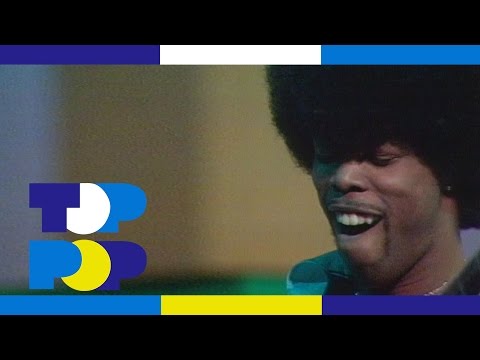
"Sweet Sticky Thing" — Ohio Players The Funk Empire at Its Commercial Height In the autumn of 1975, the Ohio Players were one of the most commercially potent…
01 The Story
"Sweet Sticky Thing" — Ohio Players
The Funk Empire at Its Commercial Height
In the autumn of 1975, the Ohio Players were one of the most commercially potent funk acts in America, and they knew it. The Dayton, Ohio group had spent years developing a style that was all sharp edges and slinky grooves, a music that was simultaneously intellectually structured, with genuine instrumental sophistication at its core, and viscerally immediate on a dancefloor. Their album Honey had generated "Love Rollercoaster," which would become one of the defining singles of the decade. And the summer of 1975 had already seen them at the top of the charts. "Sweet Sticky Thing" arrived in this environment as further evidence of a group operating at full creative and commercial velocity.
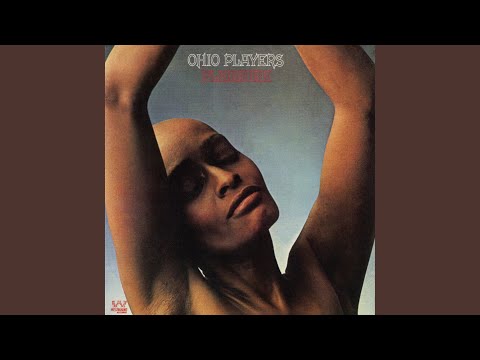
The Ohio Players had earned their commercial peak through years of independent-label work before signing to Mercury Records in 1974. Their Mercury output, beginning with Skin Tight and continuing through Fire and Honey, represented one of the more sustained commercial hot streaks in mid-1970s Black American music. Their album covers, notorious for their provocative imagery, and their live performances, legendarily tight and energetic, created a comprehensive artistic identity that extended beyond the records themselves.
The Chart Ascent
The single entered the Billboard Hot 100 on September 20, 1975, debuting at number 64. Over the following weeks it moved with the steady confidence that characterized Ohio Players releases in this period: from 64 to 52 to 44 to 38 to 34, before reaching its peak of number 33 on October 25, 1975. The record spent eight weeks on the Hot 100, a run that extended through the autumn radio season when the group's music seemed to be everywhere simultaneously.
Reaching number 33 placed "Sweet Sticky Thing" comfortably in the mainstream pop chart's upper tier without positioning it among the group's biggest commercial moments, a list that included number one singles with "Fire" in late 1974 and "Love Rollercoaster" in early 1976. But a consistent top-40 showing was, by this point, simply the Ohio Players operating as expected.
The Music and Its Construction
The arrangement of "Sweet Sticky Thing" showcased the specific qualities that distinguished Ohio Players from their funk contemporaries. The horn section carried a hard, punchy precision that reflected the group's years of live performance, where musical tightness was a matter of professional survival. The rhythm section operated with the kind of locked-in groove that George Clinton and Sly Stone had also taught their bands to achieve. But the Ohio Players brought something slightly more acrobatic to their arrangements: an unexpected melodic turn, a harmonic move that surprised without disrupting the dance momentum.
The track's production was consistent with what Mercury had developed with the group across the preceding albums. The sonic palette was rich without becoming cluttered, the mix placing the groove at the center while allowing the individual instrumental voices to breathe and assert themselves. The overall effect was of music that rewarded both casual listening and close attention, which is a rarer combination than it might appear.
Funk and the Culture of 1975
The autumn of 1975 found American popular culture in a moment of considerable creative vitality in Black music. Funk, soul, and the beginning of disco's commercial rise were competing and cross-pollinating on the charts and on dancefloors. The Ohio Players sat at an interesting intersection of these trends: too rooted in live band performance and traditional funk architecture to be absorbed into disco's more mechanical production values, but popular enough to coexist profitably with the genre's rise.
Their commercial success in this period was a genuine achievement. Maintaining chart presence through a transitional moment in popular music, when the audience was fracturing across new genre definitions, required both artistic consistency and commercial instinct. The Ohio Players demonstrated both across the full run of their Mercury output.
The Ohio Players' Lasting Footprint
The group's influence on subsequent generations of funk and hip-hop producers has been substantial. Their recordings, including "Sweet Sticky Thing" and its Honey album companions, have been sampled extensively, introducing their instrumental precision and rhythmic ingenuity to listeners who came to the original material through those echoes. That sampling legacy is a meaningful measure of how well the recordings have aged. Press play and let the groove do the rest.
"Sweet Sticky Thing" — Ohio Players' singular moment on the 1970s charts.
02 Song Meaning
"Sweet Sticky Thing" — Desire, Double Meaning, and Funk's Coded Language
Reading the Layers
Funk music of the mid-1970s developed a sophisticated tradition of double entendre and coded meaning that allowed sexually suggestive content to circulate on mainstream radio and in family-friendly retail settings. The Ohio Players were among the most adept practitioners of this art. "Sweet Sticky Thing" operates on this level with considerable skill: the surface language of the lyric is technically benign, organized around the metaphor of something sweet and adhesive, while the emotional and physical subtext is perfectly clear to any adult listener. The pleasurable ambiguity was a feature, not an accident, and it accounts for much of the track's charm.
This tradition of coded language in Black American popular music has deep historical roots, extending back through blues and R&B to forms of cultural expression that had long required coded communication for various social and practical reasons. By 1975, the tradition was operating more openly, with artists using it as a source of playfulness and sophistication rather than strict necessity. The Ohio Players leaned into the wit of the approach.
The Body and the Dance
There is a dimension of "Sweet Sticky Thing" that operates entirely below the level of language, in the physical response to the track's groove. Funk's fundamental project is to make bodies move, and the Ohio Players constructed their records with that goal as an organizing principle. The relationship between lyrical desire and physical groove in a track like this is not incidental; the music is itself an enactment of the pleasure it describes. The groove in the rhythm section, the push and release of the horn arrangements, the way the track builds and sustains momentum, all of this mirrors the emotional and physical experience the lyrics are circling.
This integration of lyrical content and musical form is one of the hallmarks of great funk production, and the Ohio Players achieved it more consistently than most of their contemporaries. The meaning of the music is not separable from how the music feels in the body.
Gender and Desire in Mid-1970s Funk
The way "Sweet Sticky Thing" frames desire reflects the broader conventions of mid-1970s funk and soul. The male vocal addresses an object of desire in terms that are admiring and covetous simultaneously, a dynamic that was standard in the genre's lyrical tradition. By the standards of what soul and R&B had been doing since the late 1950s, this was a familiar frame. What the Ohio Players added was a particular kind of knowing wit, a sense that both the singers and the audience were in on the game being played, that the double meaning was shared knowledge rather than genuinely concealed content.
This self-awareness gave the song a playfulness that prevented the desire from feeling predatory or heavy. The track is fundamentally good-humored, and that quality is inseparable from how it actually worked on radio and on dancefloors in 1975.
The Track's Place in the Ohio Players Legacy
Placed within the full context of the Ohio Players' mid-1970s output, "Sweet Sticky Thing" represents a consistent expression of their creative identity: musically sophisticated, rhythmically irresistible, lyrically playful. The group never pursued the kind of transcendent social commentary that characterized some of their contemporaries, and that was a considered artistic position. Pleasure and craftsmanship were their chosen territory, and within that territory they produced work of genuine excellence.
The track endures as a document of what funk could accomplish when skilled musicians applied real craft to the project of making music that felt good. In an era that sometimes treated hedonism and seriousness as incompatible, the Ohio Players consistently demonstrated otherwise.
→ More from Ohio Players
View all Ohio Players hits →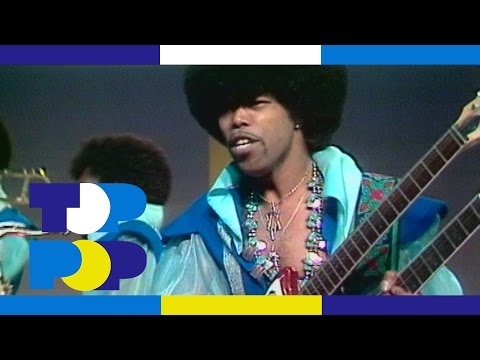
→ More from the 1970s File
View all 1970s hits →




Keep digging