The 1970s File Feature
I'm A Believer
"I'm A Believer" — Neil Diamond's 1971 Return to His Own Song There are songs so completely identified with one performance that recording them yourself requ…
01 The Story
"I'm A Believer" — Neil Diamond's 1971 Return to His Own Song
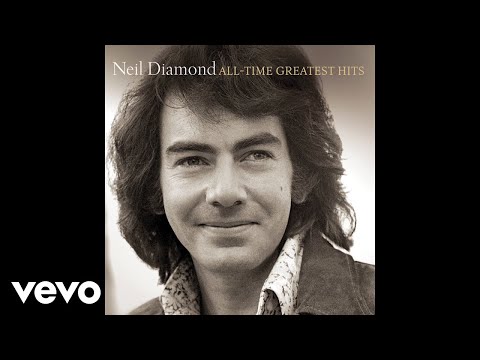
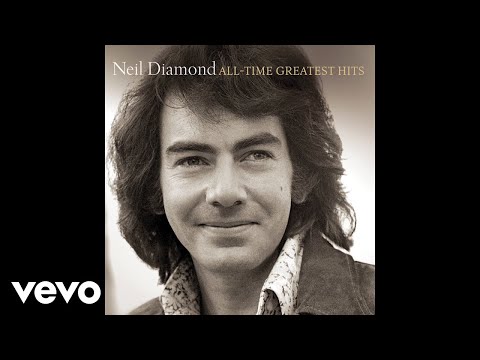
There are songs so completely identified with one performance that recording them yourself requires a kind of artistic audacity. By mid-1971, "I'm A Believer" had been a number-one hit for The Monkees for five years, had logged weeks atop the charts on both sides of the Atlantic, and had become one of the most recognized recordings of the decade. Neil Diamond, who had written the song, now stepped forward to record his own version, which is a stranger and more interesting decision than it might initially appear.
Neil Diamond and the Song He Gave Away
Neil Diamond's story in the late 1960s is one of the more unusual trajectories in pop music history. He had been a professional songwriter working in the Brill Building tradition, crafting songs for other artists while struggling to establish himself as a performer. "I'm A Believer" was among the most commercially successful things he wrote for another act: The Monkees took it to number one in November 1966 and held that position for seven weeks, making it one of the defining hits of that era. By 1971, Diamond himself had emerged as a major solo star, with a string of hits that demonstrated his ability to write for himself as effectively as he had written for others.
Recording the Original for Himself
When Diamond finally recorded his own version of "I'm A Believer" in 1971, the creative context was entirely different from the one in which the song had been conceived. The Monkees version was a product of Brill Building professionalism at its most commercial: bright, bouncy, designed for radio saturation. Diamond's own recordings by this point had developed a more personal, expansive quality. His version of the song brought a different emotional weight to the lyric, reflecting the sensibility of a writer who had grown considerably as an artist in the five years since the original had become a phenomenon. The arrangement was updated to reflect early 1970s production values without abandoning what made the song work.
The Chart Performance
The song debuted on the Billboard Hot 100 on June 26, 1971, entering at number 98. It climbed steadily over the following weeks, moving through the 70s and mid-50s before reaching its peak of 51 on the week of July 31, 1971. Eight weeks on the Hot 100, peaking at number 51: a solid showing for a re-recording of a song that had a five-year-old number-one association already in public memory. Convincing radio audiences to hear the same song twice, even when the second version is by its original author, requires a substantial commercial push and genuine artistic differentiation.
The Career Context of 1971
By 1971, Neil Diamond was in the most commercially confident period of his career to date. "Cracklin' Rosie," "Sweet Caroline," and "Song Sung Blue" were establishing him as one of the most reliably successful artists in American pop. His concerts were selling out, his albums were charting, and his reputation as both a songwriter and a performer was at a high point. Recording "I'm A Believer" in this context was an act of reclamation: Diamond reasserting his authorial relationship to a song that the public associated primarily with someone else's performance.
Legacy: Author Meets Monument
The Diamond version of "I'm A Believer" occupies an interesting position in the song's long and complicated afterlife. It is not the version that most people know, and it is probably not the version that will persist in cultural memory as the definitive one. But as a document of a songwriter claiming his own work, it is historically significant. The decision to record it tells you something about Diamond's relationship to his own creative output, his refusal to let the most commercially successful thing he ever wrote belong entirely to someone else's narrative.
Go back to the summer of 1971 and hear what happens when an author finally gets to read his own work aloud.
"I'm A Believer" — Neil Diamond's singular moment on the 1970s charts.
02 Song Meaning
Believing Again: The Meaning of Neil Diamond's "I'm A Believer"
When Neil Diamond wrote "I'm A Believer," he was working in a commercial context that did not encourage depth of personal expression. The Brill Building model was professional songwriting at scale: you wrote what you were assigned, you delivered it on time, and its commercial success was more important than its autobiographical truth. Yet the song he produced for The Monkees contains within it a genuine emotional insight about how people change their minds about love, and that insight is part of what made it so durable.
Cynicism Overturned
The song's central dramatic move is the reversal. The narrator begins from a position of earned cynicism about love, having tried and failed, and then describes the moment when that cynicism was dismantled by actual experience. This is not the wide-eyed declaration of a first love; it is the more complicated affirmation of someone who had stopped believing and then, against their own better judgment, started again. That second-order belief, the belief that arrives after disillusionment, is a more interesting and more credible thing than simple romantic enthusiasm, and the song is built around it.
What Changed the Mind
The lyric is appropriately vague about the specific details of the transformation, which is part of what gives it universal applicability. The narrator was not convinced by argument or evidence; the change came through something that felt less like a decision and more like an overwhelming. This is emotionally accurate: the experience of falling in love, particularly against one's own resistance, is rarely a rational process. The song honors that irrationality rather than explaining it away, which is one of the marks of a well-observed lyric regardless of the commercial context in which it was written.
Neil Diamond's Voice on His Own Words
When Diamond recorded the song himself in 1971, he was bringing a different set of life experiences to the lyric than The Monkees had in 1966. He was older, he had built a solo career, and he had developed a performance style that favored emotional directness over pop brightness. His version foregrounds the vulnerability in the lyric, the exposure that comes with admitting that you were wrong about love and have allowed yourself to be wrong again. That reading of the song is more adult than the original recording, and it reflects how lyrical meaning shifts depending on who delivers it and when.
Conversion as a Universal Experience
Songs about changing your mind, about moving from one position to its opposite under the pressure of experience, resonate because everyone has had this experience in some domain of their life. The specific context of romantic love makes the conversion legible and emotionally accessible, but the underlying structure, the old belief undermined, the new belief tentatively adopted, is something the human mind does constantly. What makes the song's treatment of this experience effective is its lack of self-consciousness: the narrator does not analyze the transformation; they simply report it, which is exactly how such transformations feel from the inside.
The Ownership Question
Diamond recording his own song raises an interesting question about where a song's meaning lives: in the composition or in the performance? The Monkees' version and Diamond's version contain the same notes and words, but they produce meaningfully different experiences. This suggests that meaning in popular music is a collaboration between text and performance, that the song itself is a kind of script that different actors can interpret in different ways. Both versions of "I'm A Believer" are real and complete, and the existence of both tells us something about the richness of the material that neither version exhausts on its own.
→ More from Neil Diamond
View all Neil Diamond hits →


→ More from the 1970s File
View all 1970s hits →




Keep digging