The 1970s File Feature
Torn Between Two Lovers
From Unknown to Number One: The Remarkable Chart Journey of Mary Macgregor's "Torn Between Two Lovers" Few debut singles in the history of the Billboard Hot …
01 The Story
From Unknown to Number One: The Remarkable Chart Journey of Mary Macgregor's "Torn Between Two Lovers"
Few debut singles in the history of the Billboard Hot 100 have traced as dramatic an arc as Mary Macgregor's "Torn Between Two Lovers." The song entered the chart on November 20, 1976, at number 87, giving no particular indication of what was to come. Over the following ten weeks, it climbed with a persistence that confounded expectations, ultimately reaching the top position on February 5, 1977, where it remained for two consecutive weeks. The total chart run extended to twenty-two weeks, a figure that speaks not merely to the song's initial commercial appeal but to its capacity to sustain listener interest well beyond the typical pop single's lifespan.
The origins of the song lie in a creative collaboration that brought together a folk music icon and a relatively unknown songwriter. Peter Yarrow, best known as one third of the legendary folk trio Peter, Paul and Mary, co-wrote the song with Phil Jarrell. Yarrow's involvement lent the project credibility and connections; he also produced the recording and played an active role in shaping its sound. The arrangement he and his collaborators arrived at was spare and intimate, built around acoustic guitars, a gentle rhythm section, and Macgregor's clear, unaffected soprano voice. It belonged unmistakably to the soft rock and adult contemporary tradition that had been gaining commercial momentum through the mid-1970s.
Mary Macgregor herself was a Minnesota-born singer who had spent time as a session vocalist before Yarrow's involvement gave her the opportunity to record the song that would define her public profile. Her voice, warm and direct without excessive ornamentation, was ideally suited to the material. She delivered the song's emotionally complicated narrative with a naturalness that helped listeners accept the situation the narrator describes rather than reflexively judging it. That quality was essential to the recording's success, given that the song's subject matter generated genuine controversy upon its release.
Radio programmers and listeners responded with divided reactions to a song whose narrator describes loving two men simultaneously and being unable to choose between them. Some stations initially hesitated to add the record, and certain markets were slower to embrace it than others. Yet the controversy ultimately served as amplification rather than suppression. The song became a topic of conversation beyond the usual pop music discourse, drawing attention from people who might not have otherwise followed chart activity closely. By the time it reached the upper reaches of the Hot 100, it had accumulated the kind of cultural momentum that transforms a hit single into a genuine social moment.
The production choices Yarrow made were central to the recording's impact. Rather than surrounding Macgregor's voice with elaborate studio embellishment, the arrangement trusted the performance to carry the emotional content. The result was a record that felt confessional rather than calculated, as though the listener was being admitted into a private admission rather than sold a product. That quality aligned the song with a broader strain of 1970s popular music that prized authenticity and emotional directness over spectacle.
"Torn Between Two Lovers" also achieved significant success on the adult contemporary chart, where its soft dynamics and melodic accessibility made it an ideal fit for the format. The crossover appeal between adult contemporary and the broader Hot 100 was a key factor in its sustained chart presence. Radio stations across multiple formats found the record suitable for their playlists, multiplying the spins it received each week and contributing to the kind of broad, format-spanning airplay that sustains a song's chart position over many weeks.
The song's peak at number one in early 1977 placed it among the defining chart moments of that particular pop era, a period characterized by the dominance of soft rock and the consolidation of adult contemporary as a commercially powerful radio format. Macgregor found herself in the company of artists like Barbra Streisand, James Taylor, and Carole King, whose success had established the commercial viability of intimate, melodically sophisticated pop music aimed at adult listeners. Her two weeks at the summit represented genuine achievement in a competitive field, and the song's total run of twenty-two weeks demonstrated lasting commercial vitality.
Despite the song's enormous commercial success, Macgregor's subsequent recordings did not replicate that peak. "Torn Between Two Lovers" remained her signature, the recording by which she has been primarily remembered in the decades since its release. As a cultural artifact, it captures a specific moment in American popular music when the soft rock aesthetic commanded the center of the commercial mainstream, and when a song about romantic ambivalence could command the attention of a nation for nearly half a year.
02 Song Meaning
The Emotional Arithmetic of Divided Love: Understanding "Torn Between Two Lovers"
"Torn Between Two Lovers" occupies unusual territory in the landscape of popular love songs. Most songs in the romantic tradition present love as singular, exclusive, and ultimately clarifying: one person is right, another is wrong, a choice is made, and the story resolves. Mary Macgregor's 1977 number-one hit refuses that resolution. Its narrator does not choose. She describes the experience of loving two people genuinely and differently, and she does not frame this condition as shameful, though she acknowledges its complexity with evident distress.
The song's thematic content generated controversy at the time of its release precisely because it treated a morally ambiguous situation with empathy rather than condemnation. The narrator does not present herself as a villain. She presents herself as a person caught in an emotional reality she did not engineer and cannot easily escape. This framing was unusual in 1970s pop radio, where most romantic narratives followed more conventional moral trajectories. The willingness to inhabit moral complexity without resolving it gave the song a quality of psychological realism that resonated powerfully with listeners who recognized the scenario from their own experience.
Written by Peter Yarrow and Phil Jarrell, the song is careful to distinguish between the two relationships the narrator describes. Her primary relationship is characterized by depth, history, and the particular comfort of established love; the second connection is newer, electrifying, and defined by qualities the first relationship no longer provides. Neither is presented as superior to the other. They are instead complementary in ways that make the narrator's dilemma genuinely irresolvable rather than artificially complicated. She is not simply confused or indecisive; she is experiencing two authentic forms of love simultaneously.
This distinction carries significant thematic weight. The song implicitly argues that love is not a finite resource that, once given to one person, is depleted for others. The narrator's love for one person does not cancel or diminish her love for the other. This is a psychologically sophisticated position, one that much popular culture resists because it complicates the narrative clarity that romantic fiction tends to prefer. "Torn Between Two Lovers" insists on that complication rather than papering over it, and that insistence is a large part of what makes the song feel emotionally honest in a way that more conventional romantic narratives do not.
Macgregor's vocal delivery amplifies the song's thematic content through consistent understatement. She does not oversell the narrator's anguish, nor does she perform the complexity in a way that feels theatrical. Her tone throughout is reflective and genuine, as though she is thinking through the situation in real time rather than presenting a rehearsed position. That quality makes the listener feel like a confidant rather than an audience, a relationship that the song's confessional structure actively cultivates.
The song's title itself is the key to its meaning. Being "torn" implies active suffering; the narrator is not comfortably managing two relationships in parallel but is experiencing genuine emotional conflict that causes her real pain. The song is not a celebration of romantic plurality but an honest account of what that plurality costs. That distinction is important for understanding how the song asks to be heard: not as an endorsement of infidelity but as a truthful account of human emotional complexity.
→ More from Mary Macgregor
View all Mary Macgregor hits →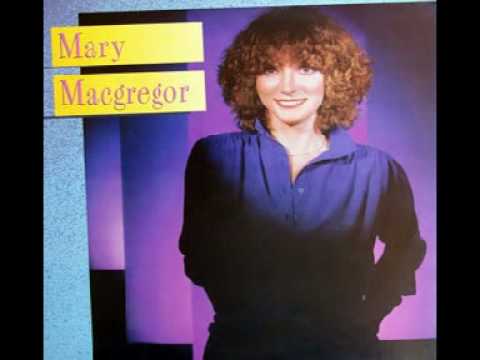

→ More from the 1970s File
View all 1970s hits →




Keep digging