The 1970s File Feature
Love To The World
L.T.D. and "Love To The World": Jeffrey Osborne's Group at the Threshold of Stardom When L.T.D. released "Love To The World" in January 1977, the group was o…
01 The Story
L.T.D. and "Love To The World": Jeffrey Osborne's Group at the Threshold of Stardom
When L.T.D. released "Love To The World" in January 1977, the group was on the cusp of a commercial breakthrough that would eventually make their lead vocalist, Jeffrey Osborne, one of the most celebrated figures in contemporary R&B. Love, Togetherness and Devotion, abbreviated to L.T.D., had formed in Greensboro, North Carolina, in 1968, evolving through several years of regional touring and personnel changes before signing with A&M Records and beginning to craft the funk and soul sound that would define their commercial peak. "Love To The World" was among the earliest signals of what the group was capable of, entering the Billboard Hot 100 in late January 1977 and spending three weeks on the chart with a peak position of 91 in the third week, alongside significantly stronger performance on the R&B chart where the group had already established a presence.
The mid-1970s funk and R&B landscape in which L.T.D. operated was extraordinarily competitive. Earth, Wind and Fire, under the creative direction of Maurice White, had established a benchmark for large-ensemble Black popular music that combined musical sophistication, spiritual aspiration, and commercial accessibility in a package that seemed to set an almost impossibly high standard. Parliament and Funkadelic, under George Clinton's increasingly elaborate conceptual direction, were defining the more adventurous end of the funk spectrum. Kool and the Gang, the Ohio Players, and Bar-Kays were also producing successful recordings. For a group like L.T.D. to break through in this environment required genuine musical quality and a distinctive enough identity to be distinguishable within a crowded field.
L.T.D.'s distinctive quality lay substantially in Jeffrey Osborne's voice, a tenor of remarkable range and emotional expressiveness that could move from falsetto passages to full-chest singing with an ease and control that set him apart from his contemporaries. Osborne had joined the group as its drummer and was initially reluctant to step forward as its primary lead vocalist, but his voice proved impossible to ignore, and the group's A&M recordings increasingly featured him as the focal point of their commercial identity. "Love To The World" was an early showcase for this vocal presence, built around a thematic foundation of universal affirmation consistent with the era's tendency toward expansive, optimistic soul music.
The song's chart entry at position 99 on January 29, 1977, followed by improvement to 96 the second week and a peak of 90 in the third week, represented modest but real pop crossover for a group whose primary commercial base remained the R&B market. The three-week Hot 100 run was brief, but it established L.T.D. in the consciousness of pop radio programmers and audiences in a way that would matter for their subsequent commercial ascent. The group's A&M label relationship was supportive of their development, and the infrastructure for a larger breakthrough was being assembled even as "Love To The World" was making its modest Hot 100 showing.
The title's thematic ambition, offering love not to a specific romantic partner but to the entire world, positioned the song within the tradition of late-1960s soul and early-1970s funk recordings that had used the language of love to make implicitly political statements about community, solidarity, and social aspiration. Marvin Gaye's What's Going On, Stevie Wonder's extended suite of socially conscious albums from the early 1970s, and Earth, Wind and Fire's affirmative spiritual messaging had all demonstrated that R&B audiences were receptive to music that located personal emotion within a larger framework of collective concern. L.T.D.'s approach on "Love To The World" drew on this tradition, though with a lighter touch appropriate to a group still establishing its commercial profile.
The band's commercial trajectory after "Love To The World" was upward and ultimately very successful. Their 1977 single "Every Time I Turn Around) Back in Love Again" reached number four on the Hot 100, and subsequent releases confirmed L.T.D. as one of the premier soul and funk acts of the late 1970s. Osborne launched a successful solo career in the 1980s with hits including "On the Wings of Love" and "You Should Be Mine (The Woo Woo Song)," carrying the vocal capabilities developed through his years with L.T.D. into a new commercial context.
"Love To The World" occupies a specific place in this larger story: it was the recording at which L.T.D.'s pop crossover potential became first visible on the national charts, a brief but genuine signal of what was to come from a group that would spend the next several years delivering on the promise that this early single only partially fulfilled. The song's Hot 100 appearance in early 1977 was a quiet announcement that something significant was developing within the Greensboro-originated ensemble that had been refining its craft for nearly a decade.
02 Song Meaning
The Universal Reach of "Love To The World" by L.T.D.
"Love To The World" represents a specific and meaningful tradition within Black popular music: the extension of the language of personal love to encompass a communal or universal object. Where most love songs direct their emotional attention toward a specific partner or romantic situation, this kind of universalized love song proposes that the same emotional capacity, properly understood and expressed, can encompass not just individuals but entire communities, and ultimately the world itself. L.T.D.'s engagement with this tradition in 1977 placed them within a lineage that included some of the most ambitious and celebrated recordings in the history of soul and funk.
The tradition from which "Love To The World" emerges was shaped significantly by the social and political context of Black American experience in the late 1960s and early 1970s. Following the civil rights movement, the assassinations of major leaders, and the urban upheavals of the late 1960s, Black popular music developed a strand of affirmative, outward-reaching expression that used the language of love to make a statement about solidarity and collective aspiration. Marvin Gaye, Stevie Wonder, and Curtis Mayfield were among the most prominent architects of this approach, producing music in which the personal and the political were understood as inseparable.
L.T.D.'s "Love To The World" belongs to this lineage, though it approaches the universal subject with a lighter musical touch appropriate to a group working within the dance-oriented funk format. The message of universal love was by 1977 well established within the genre, but the delivery mattered: the song had to communicate genuine feeling rather than ideological affirmation for its thematic content to be effective. Jeffrey Osborne's vocal performance achieved this by grounding the universal aspiration in the specific emotional textures of his singing, making the expansive sentiment feel personal and felt rather than programmatic.
The phrase "love to the world" also participates in the spiritual resonance that runs through much of the best mid-1970s soul and funk. Earth, Wind and Fire's music was explicitly drawing on Egyptian mysticism and positive spiritual philosophy, Stevie Wonder's albums were dense with spiritual aspiration, and the communal element of funk performance itself, the participatory structure of groove-based music that invited audiences to embody rather than simply observe the music's energy, had a quasi-religious dimension. L.T.D.'s title and thematic orientation placed them within this spiritual current without the elaborate conceptual apparatus that some of their contemporaries employed.
For listeners in 1977, the song's invitation to expand one's emotional reference from the personal to the universal was legible within a specific cultural grammar. The post-civil rights generation was working through the implications of the previous decade's struggles and aspirations, and music that proposed love as a force with genuinely universal reach participated in a broader cultural conversation about what the future might look like if the best impulses of the moment were allowed to develop. The optimism embedded in "Love To The World" was not naive; it was the hard-won aspiration of a community that understood the distance between its vision and the present reality, and that chose to affirm the vision anyway.
Decades later, the song retains its meaning as both a historical artifact and a genuine expression of enduring aspiration. The desire to extend love beyond its ordinary personal boundaries, to make it a force that connects rather than merely binds, is one that speaks across the specific circumstances of its original moment to something persistently human and persistently necessary in any era.
→ More from L.T.D.
View all L.T.D. hits →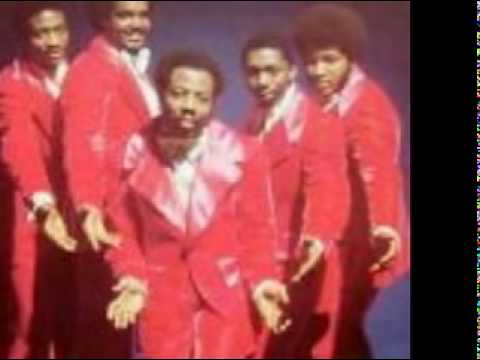
→ More from the 1970s File
View all 1970s hits →




Keep digging