The 1970s File Feature
Pretty Lady
Pretty Lady — Lighthouse and the 1973 Canadian Invasion A Canadian Band With an Orchestra and a Vision Lighthouse was one of the more ambitious musical enter…
01 The Story
Pretty Lady — Lighthouse and the 1973 Canadian Invasion
A Canadian Band With an Orchestra and a Vision
Lighthouse was one of the more ambitious musical enterprises to emerge from the Canadian rock scene of the late 1960s and early 1970s. Founded by Skip Prokop and Paul Hoffert, the band pursued a vision of music that fused rock energy with orchestral and jazz elements at a time when such crossovers were both fashionable and genuinely difficult to execute. At their peak, the group operated with a large ensemble of musicians, blending brass, strings, electric instruments, and powerful vocalism into a sound that defied easy genre labeling. By 1973, they were experienced performers with a devoted Canadian following and ambitions that stretched well beyond their home country.
The Record and Its Sound
Pretty Lady represented Lighthouse reaching for a more direct commercial appeal without entirely abandoning the orchestral ambition that defined them. The track had the kind of melodic accessibility that worked on radio: a strong central hook, confident vocals, and production that balanced their signature brass-and-rock fusion with the streamlined requirements of a hit single. Early-1970s rock radio had space for artists who could make this kind of record: ambitious enough to be interesting, focused enough to be listenable on a car radio at full volume. Lighthouse understood that balance, and Pretty Lady demonstrated their ability to achieve it.
Climbing the Billboard Hot 100
The single debuted on the Billboard Hot 100 on November 3, 1973, entering at position 100. The climb was steady and consistent: by the week of November 24 the song had reached 67, and it continued upward through December. It peaked at number 53 during the week of December 15, 1973, spending a total of eight weeks on the chart. For a Canadian act without the promotional infrastructure that supported major American artists, reaching the mid-chart range on the Hot 100 was a genuine achievement. It meant their record was getting airplay and finding listeners well beyond the Canadian market.
The Musical World of Late 1973
The autumn and winter of 1973 were a rich season on American radio. Progressive rock was asserting itself with sprawling albums; Motown was shifting from its classic period toward a more contemporary sound; and AM radio continued to favor melodically direct pop-rock that rewarded repeated listening. The soft rock and country-rock movements were producing some of the decade's most commercially successful material. Lighthouse fit into this landscape as something slightly distinctive: their Canadian identity gave them a slight outsider quality, and their orchestral ambitions placed them apart from pure rock acts, but the warmth of a song like Pretty Lady connected across those distinctions.
Legacy Within a Distinctive Catalog
Lighthouse was never a band that received the retrospective critical attention their ambition deserved. Their fusion of rock, jazz, and classical elements placed them in a category alongside American acts like Chicago and Blood Sweat and Tears, but they always remained somewhat in the shadow of those more famous contemporaries. Pretty Lady is a reminder that the band could match American radio-rock craft when they chose to apply their considerable skills in that direction. It is a warm, well-made record from a group that consistently aimed higher than the market required. Press play and let it take you back to a particular kind of early-1970s afternoon.
Canadian Music and the American Market in 1973
The early 1970s represented an important transitional moment for Canadian popular music in relation to the American market. Policy changes related to Canadian content requirements on domestic radio were helping build an infrastructure for Canadian artists at home, and a small but growing number of acts were finding that their domestic success could translate into genuine American chart presence. Lighthouse was among the more ambitious of these crossover attempts, and their orchestral rock sound had enough of an international character to potentially bridge the gap. Pretty Lady demonstrated that the bridge could hold: a Canadian band, recording in a distinctly Canadian context, making a record that American radio programmers were willing to play and American listeners were willing to embrace. The song's mid-chart Hot 100 performance was modest by blockbuster standards but significant as evidence of what Canadian acts could accomplish in the American market when their material was strong enough to compete on pure musical terms.
“Pretty Lady” — Lighthouse's singular moment on the 1970s charts.
02 Song Meaning
The Meaning Behind “Pretty Lady” by Lighthouse
Admiration in the Key of Rock
Pretty Lady occupies a well-worn lyrical space in rock and pop music: the song of admiration directed at a woman who has captivated the narrator's attention. What gives any particular song in this tradition its character is not the territory itself but the specific texture of the telling, including the emotional register, the sonic environment the voice inhabits, and the degree to which the admiration feels genuine rather than formulaic. Lighthouse brought a fullness of sound to this material that gave the emotional content more weight than a simpler arrangement might have allowed. Their orchestral instincts meant that even a relatively direct statement of attraction arrived with a kind of grandeur.
Sincerity as a Musical Strategy
Early 1970s rock operated within a cultural conversation about authenticity. The late-1960s counterculture had placed enormous value on genuine feeling as opposed to commercial artifice, and even as that movement's idealism faded, the premium on sincerity remained. A song like Pretty Lady had to navigate that expectation: it needed to feel like a real expression of feeling rather than a product designed purely for radio play. The key was in the vocal performance and the arrangement, both of which communicated something that sounded like genuine investment in the emotional content rather than mechanical delivery of a marketable commodity.
The Orchestral Rock Tradition and Its Stakes
Lighthouse's place in the orchestral rock tradition is worth understanding as context for Pretty Lady. Acts like Chicago, Blood Sweat and Tears, and the Electric Light Orchestra all pursued the idea that rock music could absorb classical and jazz elements without losing its visceral energy. This was a serious artistic project, and it attracted musicians of considerable technical skill. Lighthouse shared that ambition, though they brought a distinctly Canadian sensibility to the enterprise. Their larger ensemble gave them a vocabulary for emotional expression that four-piece rock bands simply did not possess: dynamics, counterpoint, the weight of brass against the crunch of guitars, the lift of strings beneath a vocal phrase.
What the Song Says About Romance in 1973
The cultural attitudes toward romance in 1973 were in genuine flux. Second-wave feminism had begun the work of fundamentally reshaping how women were depicted in popular culture, and the entertainment industry was slowly, unevenly responding. Songs of admiration directed at women occupied a contested space: they could be heard as affirmation or as objectification, depending on the specific language and the emotional context of the performance. Pretty Lady arrives on the more affectionate, celebratory side of that register, presenting its subject as someone remarkable rather than merely decorative. The tone is warmer than predatory, more smitten than acquisitive.
A Small Gem From a Distinctive Career
What makes Pretty Lady worth revisiting is what it demonstrates about Lighthouse's range. A band capable of elaborate musical architecture could also make a compact, radio-friendly record that delivered emotional satisfaction in three minutes. That kind of flexibility is a mark of genuine musicianship, the ability to serve the song rather than the impulse to show off. The result is a record that wears its ambitions lightly, suggesting the larger Lighthouse sound without requiring it, giving listeners a welcoming entry point into a catalog that rewards deeper exploration. For anyone who came to the band through their more elaborate work, Pretty Lady is a pleasant reminder that simplicity and skill are not mutually exclusive.
→ More from Lighthouse
View all Lighthouse hits →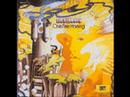

→ More from the 1970s File
View all 1970s hits →




Keep digging