The 1970s File Feature
One Fine Morning
One Fine Morning — Lighthouse's Sunburst Moment on the 1970s Charts A Canadian Band Finds Its Voice Picture a summer morning in 1971, when album rock and bra…
01 The Story
One Fine Morning — Lighthouse's Sunburst Moment on the 1970s Charts
A Canadian Band Finds Its Voice
Picture a summer morning in 1971, when album rock and brass-drenched pop were competing for the same radio real estate and nobody quite knew which direction the dial would land. Into that contest stepped Lighthouse, a Toronto-based ensemble whose ambition dwarfed the average rock group. They brought together electric guitars, a full horn section, strings, and vocal harmonies in a package that defied easy genre labeling. The band had been recording since the late 1960s, releasing adventurous records that blended jazz sensibilities with rock energy, but mainstream chart recognition had remained just out of reach.
Lighthouse was founded in 1969 by drummer Skip Prokop and pianist Paul Hoffert, two veterans of the Toronto music scene who wanted to build something larger than a conventional band. At its peak the group numbered more than a dozen members, a size that reflected their theatrical ambitions as much as their musical ones. By 1971 they had sharpened their songwriting and leaned into a more accessible sound without abandoning the ensemble complexity that set them apart.
The Making of a Brass-Driven Classic
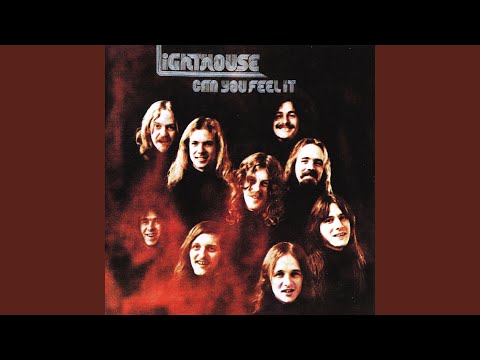
Released in the summer of 1971, One Fine Morning appeared on the album One Fine Morning, also the band's breakthrough long-player in North America. The song itself is built on a relentless groove, propelled forward by stacked horns and a rhythm section that refuses to let up. The arrangement radiates confidence, the kind of arrangement that could fill an outdoor festival stage as easily as it could blast from a car radio. The production favored a live, almost celebratory feel, capturing the ensemble energy that made Lighthouse concerts such an event.
Skip Prokop handled lead vocals on the track, and his delivery carried the energy of a frontman who genuinely believed in the material. The song's lyrical spirit centers on optimism and forward motion, a feeling of possibility that matched the early-morning imagery of its title. At a moment when some artists were reaching for darker, more introspective sounds, Lighthouse offered something uncomplicated and joyful, and that choice turned out to be exactly right for the moment.
Climbing the Hot 100
The single debuted on the Billboard Hot 100 on September 11, 1971, entering at position 75. What followed was a steady, methodical climb that demonstrated genuine audience traction rather than a marketing spike. Week by week the track moved upward: 66, then 48, then 41, then 36, continuing to gain altitude through the autumn months. The track peaked at number 24 on November 6, 1971, after 12 weeks on the chart, a respectable run that established the band as a genuine crossover act outside their Canadian home market.
In Canada the song performed even more dramatically, reaching the top of the charts and cementing Lighthouse as one of the country's most significant rock exports of the era. The contrast was instructive: a song that connected deeply at home found a substantial but secondary audience in the United States, a pattern familiar to many Canadian acts trying to break through the border.
The Brass-Rock Moment
To appreciate what One Fine Morning accomplished, it helps to understand where brass rock stood in the pop landscape of 1971. Chicago and Blood, Sweat and Tears had proven that horn-driven rock could reach enormous audiences, and their success opened space for ensembles willing to invest in the complexity those arrangements required. Lighthouse occupied a slightly different lane, one that incorporated more jazz voicings and less of the arena-rock bombast that would define later horn bands. Their sound was warmer, more communal, less interested in power chords than in the collective breath of a full ensemble playing together.
Radio programmers in 1971 were still willing to take chances on longer tracks and more elaborate productions, and that window of openness benefited a song like this one. The track's runtime and arrangement would have faced steeper resistance in a more format-driven era.
A Legacy That Outlasts the Chart Position
Lighthouse never fully replicated the commercial momentum of One Fine Morning in the American market, but that single remains the clearest evidence of what the group could accomplish when ambition and accessibility aligned. The band's influence on Canadian rock history is substantial, acknowledged by their induction into the Canadian Music Hall of Fame, and this song is the centerpiece of that argument. It captured an ensemble at full confidence, playing music that could move bodies and lift spirits without condescending to do either.
Decades later, the song still appears in retrospectives of early-1970s pop, often cited as an example of the genre's potential for genuine complexity within a commercially friendly package. The recording aged with grace because it was never chasing a trend; it was simply Lighthouse being Lighthouse at the peak of their powers. Put it on and you'll understand immediately what all those autumn-1971 radio listeners heard in it.
"One Fine Morning" — Lighthouse's singular moment on the 1970s charts.
02 Song Meaning
One Fine Morning — The Sound of Collective Joy
The Emotional Architecture of Optimism
There are songs that document despair and songs that document transcendence, and One Fine Morning belongs firmly to the second category. The lyrical frame is deceptively simple: the imagery of a fresh morning, a feeling of release, the sense that something difficult has been left behind and something brighter is approaching. Lighthouse built an entire emotional landscape around that premise, using the sheer scale of their ensemble to make the feeling of optimism physical and unavoidable. You cannot remain detached when sixteen musicians are collectively insisting the day is going to be fine.
The central theme is renewal, that specific kind of relief that follows a period of difficulty. The song does not dwell on what came before; it simply inhabits the moment of emergence. That restraint is part of what gives it emotional staying power. Listeners in 1971 could map their own particular struggles onto the general contour of moving from darkness toward light.
Communal Music in an Era of Individualism
The cultural context of 1971 matters here. The counterculture of the late 1960s had fractured under the weight of its own contradictions: the optimism of Woodstock had curdled into the tragedy of Altamont, political assassinations had reshaped the national mood, and the Vietnam War continued to divide communities. Many artists responded with increasingly private, confessional music. The singer-songwriter movement was pulling listeners inward.
Lighthouse chose the opposite direction. Rather than retreating into individual testimony, they invested in ensemble sound, in music that required collective participation to exist at all. A horn section cannot be the project of a single person; it demands cooperation, coordination, and mutual trust. The song's emotional message of shared optimism was thus embodied in its very making.
Genre Fluidity as Artistic Statement
Part of what made One Fine Morning resonate across different listener types was the way it refused to be pinned down. Jazz listeners could appreciate the horn voicings and the rhythmic sophistication. Rock audiences responded to the energy and the prominent rhythm section. Pop listeners found a catchy, accessible melody at the song's core. That genre fluidity was not an accident but a reflection of who Lighthouse actually were as musicians: trained players from multiple traditions who genuinely enjoyed each other's company.
The song's arrangement serves as a kind of argument for musical pluralism. Nothing in it suggests that jazz and rock and pop must remain separate territories. They coexist comfortably, each tradition enriching the others, producing a whole that feels more generous than any single genre could manage alone.
Why It Still Resonates
Decades remove a song from its original context and test whether it retains independent life. One Fine Morning passes that test. The specific anxieties of 1971 are no longer present for most listeners, but the underlying emotional need the song addresses remains constant. People still want music that insists, against available evidence, that things can get better. The song's approximately 1.9 million YouTube views represent listeners who found it long after its chart run ended, curious about where that sound came from and grateful it still holds up.
The legacy of Lighthouse in Canadian music is sometimes reduced to a footnote in histories that focus on American acts, but One Fine Morning is a reminder of what the group achieved at their peak. It is joyful without being naive, complex without being inaccessible, and optimistic without denying that optimism requires some courage to sustain.
→ More from Lighthouse
View all Lighthouse hits →
→ More from the 1970s File
View all 1970s hits →




Keep digging