The 1970s File Feature
Love's Grown Deep
Love's Grown Deep — Kenny Nolan (1977) Kenny Nolan arrived at the soft-rock moment of the late 1970s carrying credentials most singer-songwriters could only …
01 The Story
Love's Grown Deep — Kenny Nolan (1977)
Kenny Nolan arrived at the soft-rock moment of the late 1970s carrying credentials most singer-songwriters could only envy. Before his own recording career gathered momentum, he had already placed his name on a pair of major hits as a composer: Labelle's sultry Lady Marmalade and Kristine W's later cover notwithstanding, the song that truly demonstrated his commercial instincts was I Like Dreamin', his debut solo single that reached the top five of the Billboard Hot 100 in early 1977. That success gave Nolan the leverage to record and release a follow-up on 20th Century Records, and the song he chose was the lush, unhurried ballad Love's Grown Deep.
The recording emerged from the Los Angeles studio culture of the period, a world shaped by string arrangers, session players of extraordinary proficiency, and producers who understood that AM radio rewarded clarity of melody above almost everything else. Nolan handled the writing himself, crafting a piece that leaned on the same warm, confessional register that had distinguished his debut. The production was designed for the format: gentle acoustic guitar, layered strings, a rhythm section kept deliberately understated so that the vocal could sit at the center of the mix without competition. The overall aesthetic placed Love's Grown Deep squarely within the soft-rock tradition that occupied a large share of radio real estate in 1977, a tradition populated by artists such as England Dan and John Ford Coley, Andrew Gold, and Player.
Released in the summer of 1977, the single climbed the Billboard Hot 100 steadily through the late summer and early autumn months. It reached a peak position inside the top twenty of the chart, a strong commercial showing that confirmed Nolan as a genuine presence in a competitive marketplace rather than a one-release wonder. The single also performed respectably on the adult contemporary chart, where its unhurried tempo and polished production made it a natural fit for the format. Adult contemporary programmers of the era were particularly receptive to ballads that combined romantic sincerity with professional gloss, and Love's Grown Deep offered both qualities in abundance.
The commercial context of 1977 was demanding for any artist attempting to sustain momentum. Disco had become the dominant commercial force, reshaping radio playlists and putting pressure on softer material. That Love's Grown Deep managed a top-twenty placement in this environment testified to Nolan's songwriting ability and to the enduring appetite among radio audiences for a well-constructed ballad. The Hot 100 of that period was genuinely eclectic, accommodating disco, country crossover, progressive rock, and soft-pop ballads simultaneously, and Nolan found his audience within that broad field.
Critics of the period generally received Nolan's recordings as competent, melodically appealing examples of the adult-oriented soft-rock mode. The consensus view acknowledged the craft behind the songwriting without elevating Love's Grown Deep to the status of an artistic landmark. That was, in many ways, a fair assessment: the song was built for radio consumption and delivered exactly what its format demanded. Its virtues were those of precision and accessibility rather than experimentation or bold artistic ambition, and those virtues served it well in the marketplace.
The 20th Century Records roster of that era included a range of artists working in pop and soul idioms, and Nolan's releases were among the label's more commercially reliable soft-rock offerings. The label, distributed through a major network, gave his recordings adequate promotional support, and radio picked up Love's Grown Deep without significant resistance. Airplay was the primary engine of pop chart performance in 1977, before the streaming metrics and algorithmic discovery tools that define the modern music landscape, and the fact that the song accumulated enough spins to reach the top twenty reflects genuine enthusiasm from programmers at key stations.
In the decades since its release, Love's Grown Deep has maintained a modest but affectionate following among collectors and enthusiasts of the soft-rock era. Reissues and compilation appearances have kept the recording available, and it tends to appear on retrospective playlists devoted to the mellow, studio-polished pop of the Carter administration years. Nolan's broader catalog, including his work as a songwriter for other artists, has received renewed scholarly and critical attention as music historians have revisited the commercial pop of the 1970s with greater seriousness than earlier generations were inclined to bring. Within that catalog, Love's Grown Deep stands as a clear illustration of his abilities: a song built on a genuine melodic gift, shaped by the studio conventions of its moment, and delivered to a public that responded warmly to exactly those qualities.
The recording remains a representative document of 20th Century Records at a particular moment in its history, and of the broader soft-rock genre that shaped so much of the American pop landscape in the years between the decline of the classic singer-songwriter era and the full commercial arrival of the new wave. For listeners who return to that period with curiosity and sympathy, Love's Grown Deep offers a generous, melodically satisfying example of what the era did best.
02 Song Meaning
Love's Grown Deep — Meaning and Themes
Love's Grown Deep belongs to a tradition of ballads concerned not with the electric shock of new attraction but with the quieter, more durable experience of a relationship that has had time to settle and deepen. Kenny Nolan's lyric explores the emotional register of long-established intimacy, the kind of love that does not announce itself with drama but asserts its presence through accumulated shared time and habitual closeness. This thematic territory was well-trodden in popular songwriting by 1977, but Nolan approached it with a directness and warmth that gave the recording genuine resonance.
The central conceit of the song is botanical, an extended metaphor in which love is figured as something that has taken root and grown over time, acquiring depth and strength through the same patient process that governs living things in the natural world. This kind of organic imagery carried specific emotional weight in the soft-rock era, when a generation of singer-songwriters was drawing heavily on pastoral and naturalistic language to describe interior emotional states. The metaphor is unpretentious and accessible, which was a deliberate choice: Nolan was writing for a mass audience, and he understood that elaborate conceits alienated listeners rather than engaging them.
The emotional register of the lyric is one of grateful recognition. The narrator is not pursuing love or mourning its loss but acknowledging its presence with something close to wonder. There is a quality of surprised gratitude in the song's central emotional stance, as though the speaker has looked up from the business of daily life and noticed that something rare and valuable has been quietly growing around them. This is a psychologically specific and rather mature observation about how enduring love actually works, and it gives the song more emotional texture than a simple declaration of affection would provide.
Within Kenny Nolan's catalog as a songwriter, Love's Grown Deep occupies an interesting position. His earlier work had shown a capacity for sensual directness, most notably in the composition that became Lady Marmalade for Labelle. Love's Grown Deep represents the other pole of his songwriting identity: reflective, gentle, and domestic in its emotional focus. The contrast illustrates the range of his compositional voice and his ability to calibrate register and tone to the demands of a particular song. As a solo artist, he consistently chose material that foregrounded sincerity and melodic accessibility, and this song is the fullest expression of that choice.
The production choices reinforce the thematic content in deliberate ways. The string arrangements that support the vocal are lush but not overwhelming, suggesting warmth and comfort rather than grandeur. The acoustic guitar at the heart of the arrangement roots the song in the singer-songwriter tradition rather than in the more elaborate orchestral pop that some of Nolan's contemporaries favored. These production decisions communicate stability and organic growth, mirroring the lyrical content in sonic terms. The song sounds like something that has been carefully tended rather than quickly assembled.
For listeners in 1977 and in the decades since, Love's Grown Deep has functioned as an expression of commitment and endurance in romantic life. Its emotional appeal rests on the reassurance it offers: that love is not only a feeling of initial intensity but a living thing that continues to develop and deepen over time. In an era when popular culture was saturated with images of romantic flux and instability, that reassurance had genuine value. The song answered a real emotional need in its audience, which goes some way toward explaining its commercial success despite the competitive pressures of a market dominated by more aggressively produced material.
→ More from Kenny Nolan
View all Kenny Nolan hits →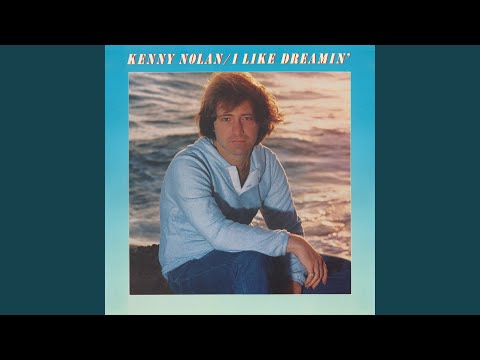

→ More from the 1970s File
View all 1970s hits →




Keep digging