The 1970s File Feature
I Like Dreamin'
I Like Dreamin': Kenny Nolan's Soft-Rock Ballad and His Top-Three Hot 100 Moment "I Like Dreamin'" gave Kenny Nolan one of the most successful commercial mom…
01 The Story
I Like Dreamin': Kenny Nolan's Soft-Rock Ballad and His Top-Three Hot 100 Moment
"I Like Dreamin'" gave Kenny Nolan one of the most successful commercial moments of the mid-1970s soft-rock era, reaching number three on the Billboard Hot 100 in early 1977 and spending an extended period in the upper reaches of the chart. Released on 20th Century Records, the single demonstrated that Nolan, already well established as a songwriter, possessed the performing talent to translate his commercial instincts into personal chart success of the first order.
Nolan had built his reputation primarily through songwriting credits that had generated significant commercial activity for other artists before "I Like Dreamin'" established him as a chart presence in his own right. Most notably, he had co-written "Lady Marmalade" for LaBelle, which had reached number one on the Hot 100 in 1975 and become one of the most discussed singles of that year. He had also contributed to the songwriting of "Get Dancin'" for Disco Tex and the Sex-O-Lettes. These credits placed him among the more commercially successful pop and soul songwriters of the mid-1970s and gave him the industry credibility and financial resources to pursue a recording career with serious investment behind it.
The recording of "I Like Dreamin'" placed Nolan firmly within the soft-rock ballad tradition that was one of the dominant commercial forces in mid-to-late-1970s pop radio. This was a format defined by smooth production, melodic accessibility, romantic subject matter treated with emotional sincerity, and vocal performances that prioritized warmth and clarity over dramatic intensity. Artists like Barry Manilow, England Dan and John Ford Coley, and Air Supply were among the major commercial forces in this territory, and Nolan's single competed directly with their work both on radio and on the album-oriented and adult contemporary charts that tracked this audience's preferences.
The production on "I Like Dreamin'" was polished and carefully constructed, reflecting the investment that 20th Century Records was willing to make in a single from a songwriter of Nolan's proven commercial track record. The arrangement built around keyboards, strings, and a clean rhythm section in a combination characteristic of the best mid-1970s soft-rock production, creating a sonic environment that was simultaneously warm and sophisticated. Nolan's voice, which had a pleasant, slightly airy quality well suited to the dreamy subject matter, was placed prominently in the mix and given space to carry the melody without technical interference.
The chart performance of "I Like Dreamin'" was exceptional. Reaching number three on the Hot 100 placed the single among the most successful individual recordings of the survey period in which it appeared, and its extended presence in the top ten reflected both its immediate commercial appeal and its staying power on radio rotations. Adult contemporary radio, which tracked the format most closely aligned with the song's sonic identity, was equally enthusiastic, and the song's crossover between Hot 100 and Adult Contemporary formats demonstrated the kind of broad demographic reach that the major labels of the era prized above almost all other commercial attributes.
The 20th Century Records promotional effort behind the single was substantial, reflecting the label's recognition that a songwriter of Nolan's reputation had generated material with major commercial potential. The label's distribution infrastructure ensured that the single reached radio programmers across the country efficiently, and the quality of the recording gave those programmers strong reasons to add it to their rotations. The combination of professional promotional support and genuine musical quality was essential to the song's commercial success.
Following "I Like Dreamin'," Nolan continued to record and to maintain his songwriting career, though he did not again achieve the same level of Hot 100 success with a self-performed single. This pattern, in which a successful songwriter achieves a significant but ultimately singular commercial moment as a performer, was not unusual in the 1970s pop landscape, where the specialist distinction between songwriter and performer was less absolute than in later decades but still meaningful in terms of how the industry allocated its promotional resources.
The song's cultural footprint extended beyond its initial chart run through adult contemporary radio, where ballads of this type continued to receive airplay long after their initial chart activity concluded. Adult contemporary programming of the late 1970s and into the 1980s maintained a substantial catalog of mid-decade soft-rock hits in regular rotation, and "I Like Dreamin'" benefited from this tendency toward sustained playlist presence in a format whose audience valued consistency and familiarity as highly as novelty.
02 Song Meaning
I Like Dreamin': Fantasy, Romantic Longing, and the Soft-Rock Ballad's Emotional Logic
"I Like Dreamin'" is organized around a simple but emotionally resonant distinction between the experiences available in the waking world and those available in dreams or fantasies. The narrator finds in imagined scenarios a richness and a fulfillment that the actual world does not consistently provide, and the song treats this preference not as a form of escapism to be apologized for but as a natural and pleasurable human capacity deserving of celebration and acknowledgment.
The emotional register is gentle and reflective rather than urgent or conflicted, which was characteristic of the soft-rock ballad form at its most commercially successful. Kenny Nolan was not writing or performing a song about desire frustrated by circumstances or love complicated by real-world obstacles, but about the simple and pleasant experience of letting the imagination wander toward idealized versions of romantic experience. The absence of conflict gave the song a particular quality of comfort and ease that made it well suited to the radio formats that embraced it most warmly.
The song participates in a tradition of pop music organized around the pleasures of romantic imagination rather than the complications of actual relationships. This tradition recognized that a significant portion of the audience's relationship with popular love songs was itself a form of fantasizing, of projecting personal feeling onto the situations the songs described. By making this dynamic explicit rather than simply enacting it, "I Like Dreamin'" gave its listeners a kind of permission to enjoy their own tendencies toward romantic imagination, framing those tendencies as something charming and human rather than something to be overcome.
The production environment created by the arrangement reinforced the song's thematic content. The keyboard and string textures gave the recording a slightly hazy, warm quality that matched the mental state the lyric described, creating an atmosphere of reverie that the listener could inhabit along with the narrator. This alignment between sonic environment and lyrical content was characteristic of the best soft-rock production of the mid-1970s, in which producers understood that the arrangement was not merely an accompaniment to the words but a means of creating a complete experiential world that the listener could enter.
The Hot 100 success of the single, reaching number three on the Billboard Hot 100, reflected the degree to which this particular emotional proposition was resonating with a broad listening public in late 1976 and early 1977. The soft-rock format was at a commercial peak during this period, with audiences demonstrating consistent appetite for well-crafted ballads that offered emotional clarity and romantic warmth without demanding the kind of sustained emotional engagement that more complex or challenging material required. "I Like Dreamin'" delivered these qualities with impressive craft.
Nolan's performance brought an element of personal sincerity to the material that prevented it from seeming merely calculated or generic. The slight vulnerability in his vocal tone, the sense that the narrator genuinely preferred his imagined world to the world of difficult reality, gave the song an emotional specificity that lifted it above the many competitors working in similar territory during the same commercial period. The best soft-rock ballads of the era had this quality of personal conviction even when the material itself was simple, and Nolan achieved it effectively on this recording.
Within the broader history of the decade, "I Like Dreamin'" represents a precise and accomplished example of what mid-1970s adult pop aspired to be: melodically beautiful, emotionally accessible, thematically gentle, and produced with enough sophistication to distinguish it from merely competent commercial work. That it reached the top three on the Hot 100 was confirmation that these aspirations, when executed as well as Nolan and his production collaborators executed them, could produce results at the very highest commercial level of their era.
→ More from Kenny Nolan
View all Kenny Nolan hits →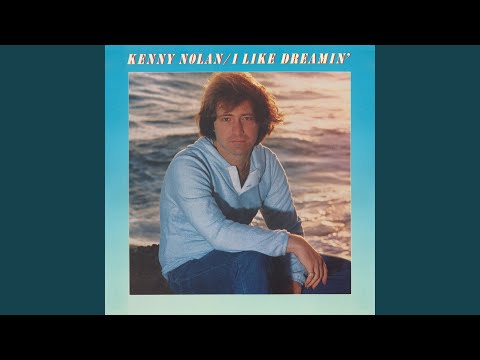

→ More from the 1970s File
View all 1970s hits →




Keep digging